How to Write a Mission Statement That Inspires and Defines Your Goals
Learning how to write a mission statement is important for individuals, businesses, schools, and organizations that want to define their purpose clearly. A mission statement explains what someone stands for, what goals they want to achieve, and how they plan to make an impact. It acts as a guiding principle that helps shape decisions, strategies, and long-term direction.
A strong mission statement is usually short, clear, and meaningful. It should communicate values, vision, and purpose in a way that inspires both the creator and the audience. Whether used for personal development, business growth, or academic planning, a mission statement helps create focus and direction.
Many successful companies and organizations rely on mission statements to strengthen their identity and connect with people. Individuals can also benefit from writing one because it helps clarify personal goals and motivations.
How to Write a Personal Mission Statement
Understanding how to write a personal mission statement can help people gain a stronger sense of purpose in life and career planning. A personal mission statement reflects individual values, goals, and the type of person someone wants to become.
The first step is identifying personal priorities and passions. Some people focus on family, creativity, education, leadership, or helping others. Thinking about long-term goals and core beliefs can make it easier to create a meaningful statement.
A personal mission statement should feel authentic and motivating. Instead of using complicated language, it is often better to write clearly and honestly. The statement should reflect personal identity and future ambitions.
For example, someone passionate about education and community support might create a mission statement focused on inspiring others and promoting lifelong learning. Another person interested in entrepreneurship may focus on innovation, growth, and leadership.
Reviewing and updating the statement over time is also helpful because goals and priorities may change. A mission statement should continue to reflect personal growth and evolving aspirations.
Having a clear mission statement can improve confidence, decision-making, and motivation. It serves as a reminder of what truly matters and helps maintain focus during challenges.
How to Write a Vision and Mission Statement in Academia
Many students and educational leaders want to learn how to write a vision and mission statement in academia because educational institutions often rely on these statements to communicate goals and values.
In academic settings, the mission statement usually explains the institution’s purpose, educational philosophy, and commitment to students.
A strong academic mission statement should emphasize learning, research, innovation, and student development. It often reflects the institution’s dedication to academic excellence, diversity, and community engagement.
When writing academic statements, clarity and inspiration are extremely important. Schools and universities want to communicate trust, professionalism, and educational quality. The language should sound professional while still being easy to understand.
For example, an academic institution may create a mission statement centered around empowering students through knowledge, critical thinking, and ethical leadership. The vision statement might focus on becoming a leading center for innovation and global education.
Academic mission and vision statements also help guide decision-making for teachers, administrators, and students. They shape educational programs, research goals, and institutional culture.
Creating thoughtful and meaningful statements can strengthen an institution’s identity and help attract students, faculty members, and community support.
How to Write a Mission and Vision Statement
Knowing how to write a mission and vision statemen is valuable for businesses, nonprofits, schools, and personal projects. Although these two statements are closely related, they serve different purposes.
A mission statement explains the present purpose and core activities of a person or organization. It answers questions about what the organization does, who it serves, and why it exists.
A vision statement, on the other hand, focuses on future goals and long-term aspirations. It describes what the organization hopes to achieve or become over time.
The process usually begins by identifying key values and objectives. Organizations should think carefully about their audience, goals, and the impact they want to make. Simple and memorable language often works best because it is easier for people to remember and connect with.
An effective mission statement should remain focused and realistic. A vision statement can be more inspirational and future-oriented. Together, these statements create a strong foundation for strategic planning and brand identity.
Businesses often use mission and vision statements to motivate employees and communicate their purpose to customers. Nonprofit organizations use them to explain their social impact and attract supporters.
How to Write a Good Mission Statement
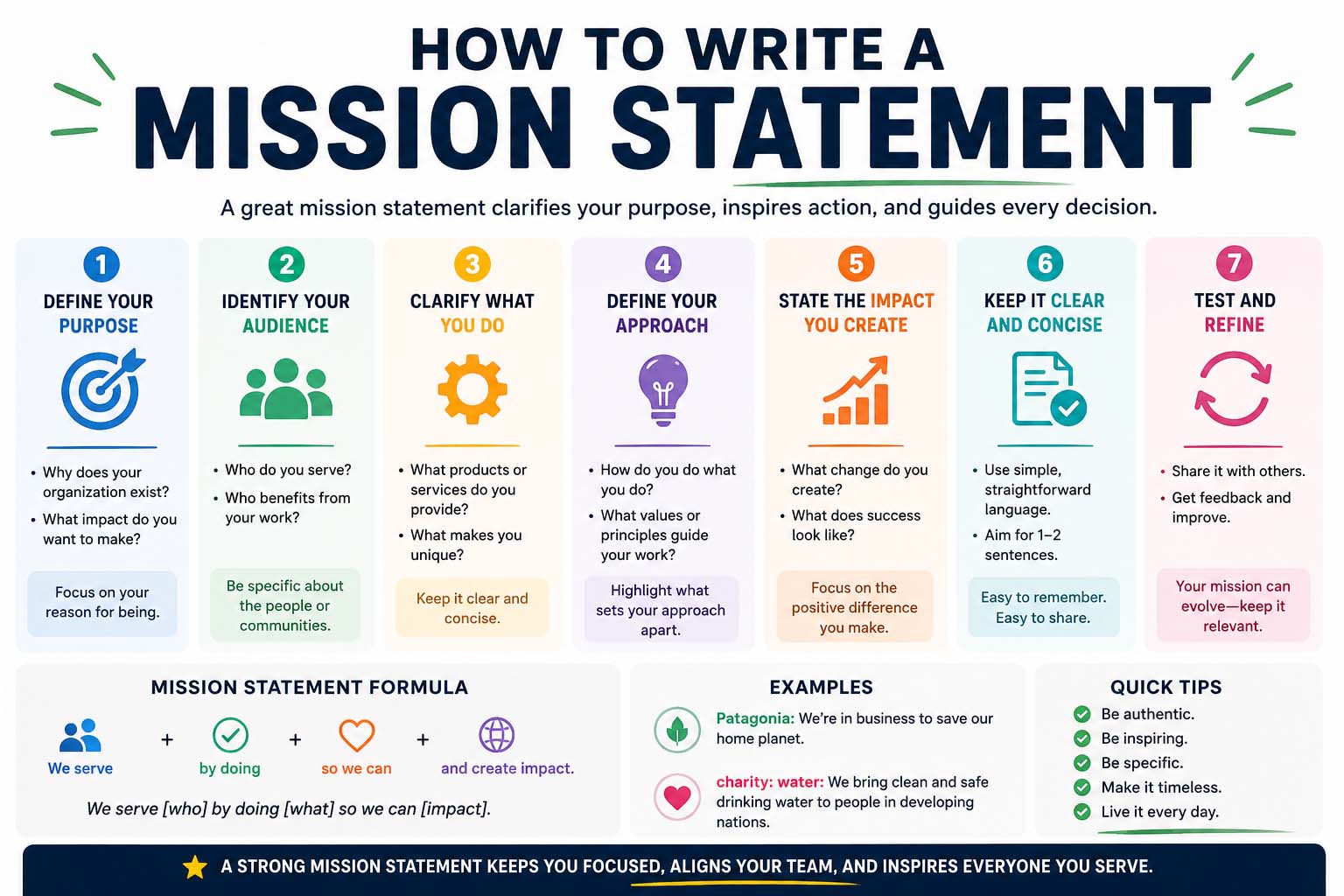
People searching for how to write a good mission statement often want to create something powerful, memorable, and inspiring. A good mission statement should clearly explain purpose while remaining concise and easy to understand.
One important element is authenticity. A mission statement should genuinely reflect values and goals instead of sounding overly generic. Readers should immediately understand what makes the person or organization unique.
Clarity is also essential. Long or confusing statements can weaken the message. Strong mission statements often use simple language that communicates purpose directly and effectively.
A good mission statement should also inspire action and commitment. Employees, students, customers, or community members should feel connected to the message. Emotional impact can make the statement more meaningful and memorable.
Another important factor is relevance. A mission statement should align with real actions and goals. If the statement promises excellence, innovation, or community support, the organization should actively demonstrate those values.
Conclusion
Learning how to write a mission statement can help individuals and organizations define their purpose and communicate their goals effectively. Whether exploring how to write a personal mission statement, how to write a vision and mission statement in academia, or how to write a good mission statement, the key is creating a message that is clear, authentic, and inspiring.