What Is Vertical Integration and Why Is It Important?
Businesses constantly search for ways to improve efficiency, reduce costs, and increase control over their operations. One strategy that has become highly important in modern business management is vertical integration. Many companies use this approach to strengthen their position in competitive markets and improve long-term profitability. Understanding what is vertical integration can help business owners, students, and professionals better understand how large companies operate and grow successfully.
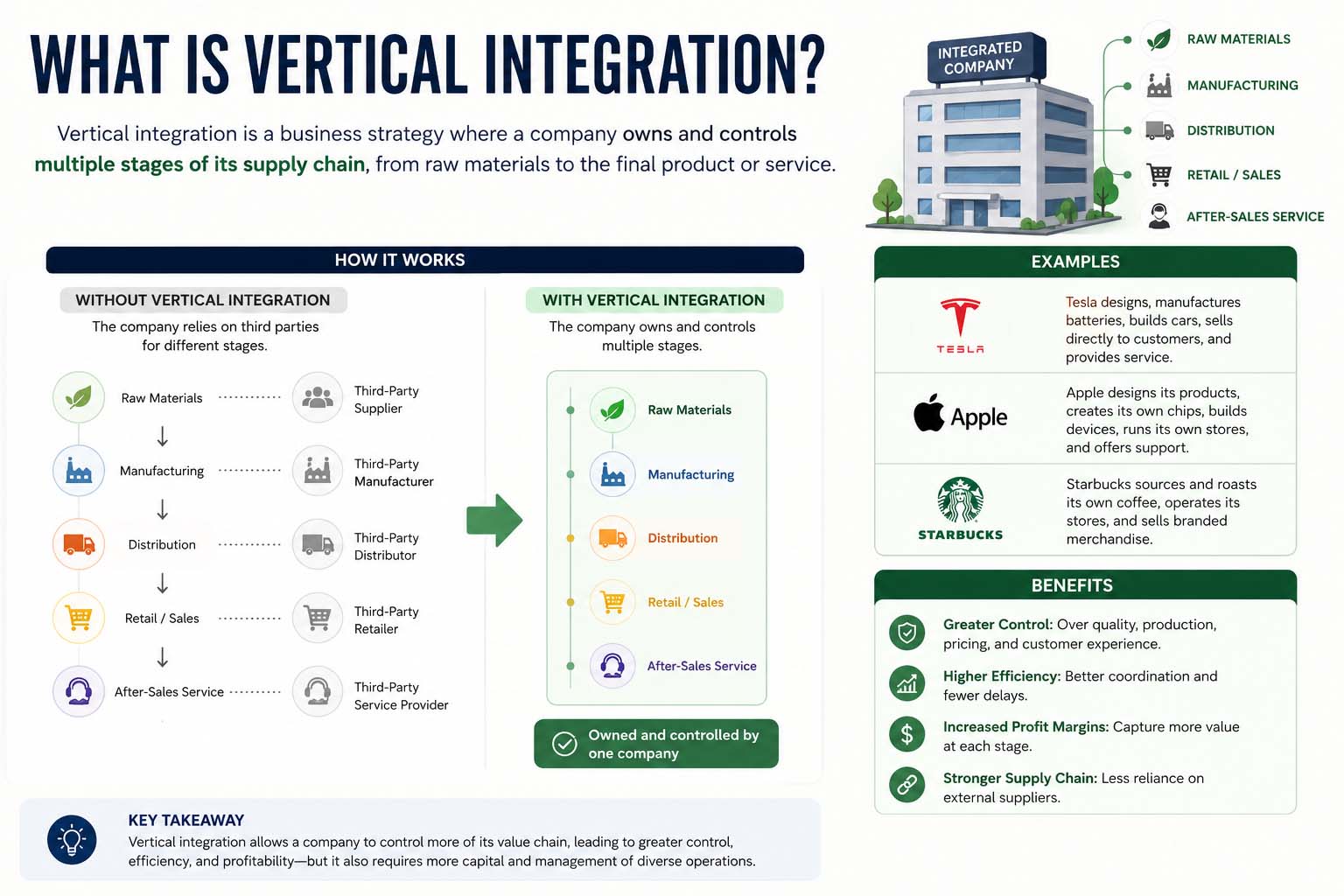
Vertical integration allows companies to control different stages of production, distribution, or supply within the same business structure. Instead of relying heavily on outside suppliers or distributors, companies manage more processes internally. This strategy can improve efficiency, reduce dependency, and create stronger control over products and services.
As global competition continues increasing, businesses use to remain competitive and maintain better control over quality, pricing, and customer experience.
What Is Vertical Integration?
Many people ask, what is vertical integratio? within the same industry. Instead of depending entirely on external companies, the business takes ownership or control of additional parts of the supply chain.
For example, a clothing company may decide to manufacture its own fabrics instead of buying materials from third-party suppliers. It might also open its own retail stores to sell products directly to customers. By controlling more stages of the process, the company becomes vertically integrated.
Vertical integration can happen in two main ways. Backward integration occurs when a company gains control over suppliers or raw material production. Forward integration happens when a company expands toward distribution or retail operations closer to customers.
Many successful companies use because it helps improve operational efficiency and reduce business risks. Companies can better manage quality standards, delivery times, and production costs when they control multiple stages of the supply chain.
Vertical integration also allows businesses to react more quickly to market changes. Since fewer external partners are involved, decision-making and adjustments can happen more efficiently.
Benefits of Vertical Integration
Understanding what is also means understanding its advantages. One major benefit is cost reduction. Businesses can reduce expenses associated with third-party suppliers, transportation, and distribution by handling these processes internally.
Another important advantage is improved quality control. When companies oversee production directly, they can maintain consistent standards and reduce the risk of defects or delays. This helps improve customer satisfaction and brand reputation.
Vertical integration also increases supply chain stability. Businesses become less vulnerable to supplier shortages, price increases, or distribution problems. This stability can be especially valuable during economic uncertainty or global supply disruptions.
Customer experience can also improve through . Companies that manage production and retail operations themselves often provide more consistent service and better communication with customers.
What Is the Difference Between Vertical and Horizontal Integration
A common business question is, what is the difference between and horizontal integration?
Vertical integration occurs when a company expands into different stages of production or distribution within the same industry. The goal is to control more parts of the supply chain. For example, a coffee company buying coffee farms and opening retail stores is practicing vertical integration.
Horizontal integration, on the other hand, happens when a company acquires or merges with other businesses operating at the same stage of production. The purpose is usually to increase market share, reduce competition, or expand customer reach.
For example, if one restaurant chain purchases another restaurant chain, this represents horizontal integration because both businesses operate at the same level of the market.
What Is Vertical and Horizontal Integration
Many business students and entrepreneurs ask, what is and horizontal ? These are two major corporate growth strategies used by companies worldwide.
Vertical integration involves controlling multiple stages of production, supply, or distribution. Companies use this strategy to reduce dependency on external partners and improve operational efficiency.
Horizontal integration involves combining with competitors or businesses operating in the same market segment. Companies use this strategy to increase market share, reduce competition, and strengthen their industry position.
Both vertical and horizontal integration can significantly impact company growth and profitability. Large corporations often use both strategies together to build strong business networks and improve market influence.
Challenges of Vertical Integration
Although vertical integration offers many benefits, it also comes with challenges. One major challenge is high investment cost. Expanding into manufacturing, supply, or distribution often requires significant financial resources.
Managing multiple stages of production can also increase operational complexity. Companies must develop expertise in areas they may not have previously managed. Poor management can reduce efficiency instead of improving it.
Another challenge involves reduced flexibility. Businesses heavily invested in their own supply chain may struggle to adapt quickly to market changes or new technologies. External suppliers sometimes provide faster innovation and specialized expertise.
What Is the Difference Between Horizontal and Vertical Integration
Another frequently asked question is, what is the difference between horizontal and vertical integration? The key difference lies in how businesses grow and what objectives they pursue.
Horizontal integration focuses on expanding within the same market level by acquiring competitors or similar companies. This strategy increases market power and customer reach.
Vertical integration focuses on controlling different stages of production or distribution within the supply chain. This strategy improves efficiency, cost management, and operational control.
Conclusion
Understanding what is is essential for anyone interested in business growth, corporate strategy, and market competition. allows companies to control multiple stages of production and distribution, helping improve efficiency, reduce costs, and strengthen operational stability.
Learning what is the difference between and horizontal also helps explain how companies expand and compete in modern markets. While vertical integration focuses on supply chain control, horizontal integration focuses on market expansion and competitor acquisition.