
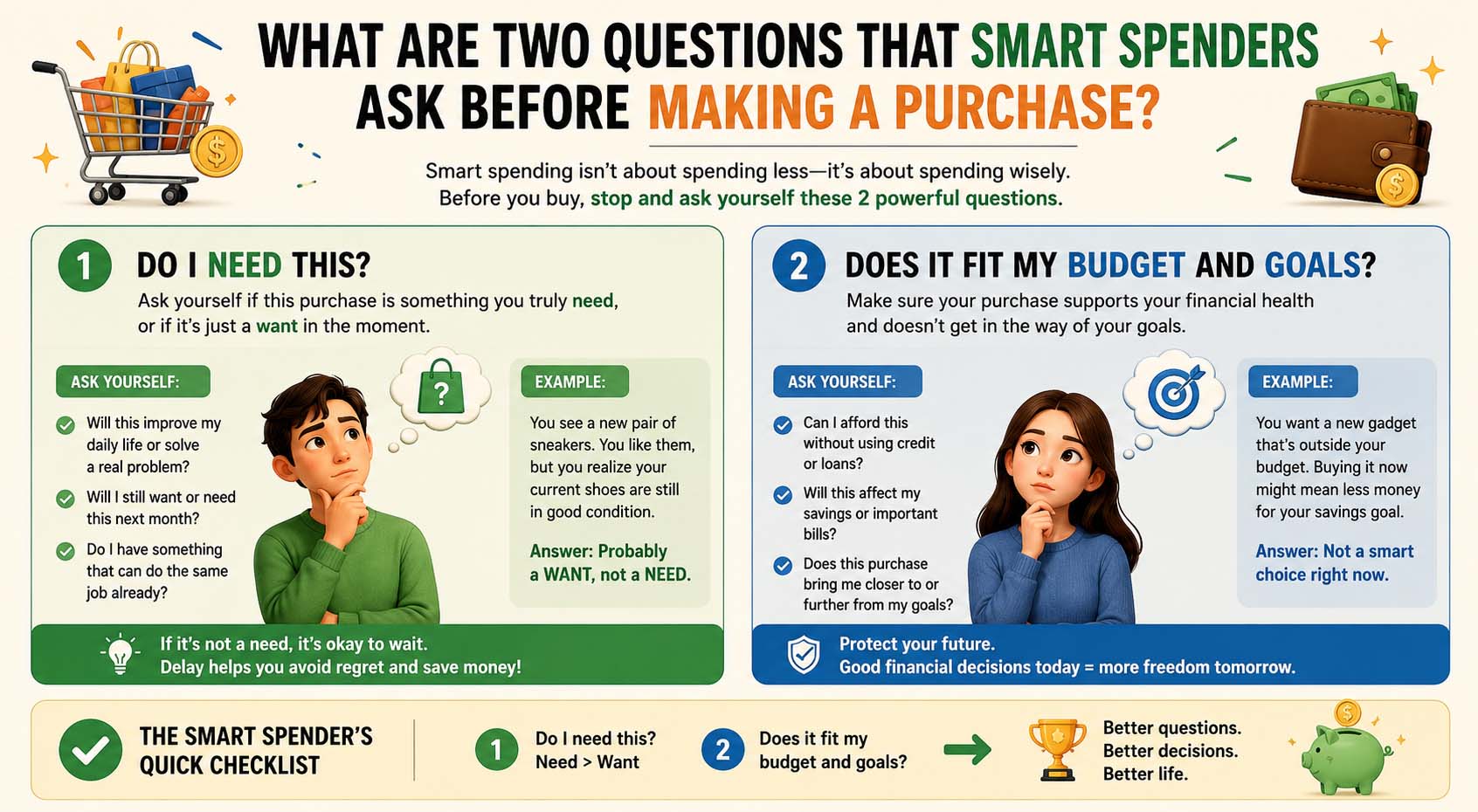
What Are Two Questions That Smart Spenders Ask Before Making a Purchase?
Smart spending is one of the most important habits for personal finance, entrepreneurship, and business success. In today’s fast-moving digital economy, consumers are constantly exposed to advertisements, online shopping deals, and impulse-buying opportunities. Because of this, learning how to make thoughtful purchasing decisions has become more important than ever.
Many financial experts teach that wise buyers consistently ask themselves two important questions before spending money. These questions help individuals avoid emotional purchases, improve budgeting skills, and make better long-term financial decisions.
Why Smart Spending Matters in Business and Personal Finance
Smart spending is not only about saving money. It is about using money efficiently to create long-term value. Entrepreneurs, managers, and financially responsible individuals understand that every purchase has an impact on future financial stability.
In business, poor spending decisions can reduce profits and limit growth opportunities. On a personal level, unnecessary purchases may increase debt and reduce savings potential.
Modern consumers also face psychological pressure from social media marketing, influencer promotions, and limited-time sales campaigns. Smart spenders recognize these tactics and pause before making decisions.
This is why asking the right questions before purchasing is such an effective financial strategy.
The First Question Smart Spenders Ask
The first important question is:
“Do I really need this purchase?”
This question helps buyers separate needs from wants. Many purchases are emotionally driven rather than practically necessary.
For example, someone may see a discounted smartphone online and feel tempted to buy it even though their current device works perfectly well. Smart spenders pause and evaluate whether the purchase provides genuine value.
Business owners use the same thinking process. Before purchasing expensive software or equipment, successful entrepreneurs analyze whether the investment supports business growth or simply creates unnecessary expenses.
Asking this question reduces impulse buying and encourages more intentional financial behavior.
The Second Question Smart Spenders Ask
The second key question is:
“Is this purchase worth the cost?”
This question focuses on value rather than price alone. Smart spenders understand that the cheapest option is not always the best option.
For example, a business owner may choose high-quality equipment with a higher upfront cost because it lasts longer and reduces maintenance expenses. In contrast, low-cost products may require frequent replacement.
Consumers also evaluate long-term value when purchasing services, education, technology, or subscriptions.
How These Questions Improve Financial Decision-Making
These two questions create a simple but powerful decision-making framework.
When buyers ask whether they truly need something and whether it provides enough value, they slow down impulsive behavior. This pause creates room for logical thinking.
Financial experts often recommend waiting before major purchases. Even a short delay can reduce emotional spending and improve judgment.
Businesses use similar evaluation systems through budgeting meetings, financial planning, and return-on-investment analysis.
This approach improves both short-term budgeting and long-term financial health.
Real-World Example of Smart Spending
Imagine a small business owner considering a new office printer that costs several thousand dollars.
Instead of purchasing immediately, they ask:
- Do we truly need a new printer right now?
- Is this model worth the price compared to alternatives?
After evaluating printing volume, maintenance costs, and future growth needs, the owner may decide either to invest confidently or delay the purchase.
Consumers can apply the same method in everyday life.
For example, before buying expensive clothing, electronics, or subscriptions, smart spenders evaluate actual usage and long-term value.
This habit reduces financial regret and increases overall satisfaction with purchases.
The Role of Marketing in Consumer Spending
Modern marketing strategies are designed to encourage fast purchasing decisions. Businesses use urgency, scarcity, and emotional messaging to influence consumers.
Examples include:
- Limited-time discounts
- Flash sales
- Countdown timers
- Exclusive member offers
- Influencer recommendations
Smart spenders recognize these strategies and avoid reacting emotionally.
Understanding consumer psychology is especially important for entrepreneurs and marketing professionals. Businesses benefit when customers trust their purchases rather than regret them later.
Long-term customer satisfaction often creates stronger brand loyalty than aggressive sales tactics.
Step-by-Step Smart Spending Strategy
Building smart spending habits takes practice and consistency. Beginners can follow a simple process before making purchases.
Step 1: Pause Before Buying
Avoid instant purchases whenever possible. Taking time to think improves decision-making quality.
Step 2: Evaluate the Need
Ask whether the item solves a real problem or simply fulfills a temporary desire.
Step 3: Compare Alternatives
Research competing products, reviews, and pricing options before committing.
Step 4: Consider Long-Term Value
Analyze durability, usefulness, and future benefits rather than focusing only on the current price.
Step 5: Check Your Budget
Ensure the purchase aligns with financial goals and spending limits.
This strategy works for both personal finance and business management.
Smart Spending and Entrepreneurship
Entrepreneurs often succeed because they understand resource management. Every business decision involves balancing cost, efficiency, and long-term growth.
Successful business owners avoid wasting money on unnecessary tools, office upgrades, or marketing campaigns without measurable returns.
Startups especially benefit from disciplined spending habits. Companies that manage expenses carefully often survive economic uncertainty more effectively.
Smart spending also helps entrepreneurs maintain cash flow, improve profitability, and build financial stability over time.
Common Mistakes Buyers Make
Many people make spending mistakes because they focus on short-term emotions rather than long-term consequences.
One common mistake is buying products for social status rather than practical value. Another issue is ignoring hidden costs such as subscriptions, maintenance fees, or financing interest.
Impulse buying is also a major problem in digital shopping environments. One-click purchasing systems make emotional spending easier than ever.
Smart spenders develop habits that protect them from these financial traps.
How Businesses Encourage Smarter Purchases
Interestingly, some businesses now promote smarter consumer behavior as part of their branding strategy.
Companies offering transparent pricing, educational content, and honest product comparisons often build stronger trust with customers.
Modern consumers increasingly value authenticity and financial responsibility. Businesses that help customers make informed decisions may gain long-term loyalty.
This shift is especially noticeable in technology, finance, and educational industries.
FAQ About Smart Spending
They ask:
- Do I really need this purchase?
- Is this purchase worth the cost?
Why are these questions important?
These questions help reduce impulse buying and encourage thoughtful financial decisions.
Can businesses use the same strategy?
Yes. Businesses regularly evaluate necessity and value before making investments or operational purchases.
How can I improve my spending habits?
Pause before buying, compare options, follow a budget, and focus on long-term value.
Is smart spending the same as being cheap?
No. Smart spending focuses on value and financial responsibility, not simply spending the least amount possible.
Conclusion
Understanding what are two questions that ask before making a purchase can transform the way people manage money. These simple questions encourage thoughtful decision-making, reduce impulsive spending, and improve long-term financial stability..