What Is PR? A Complete Business Guide to Public Relations
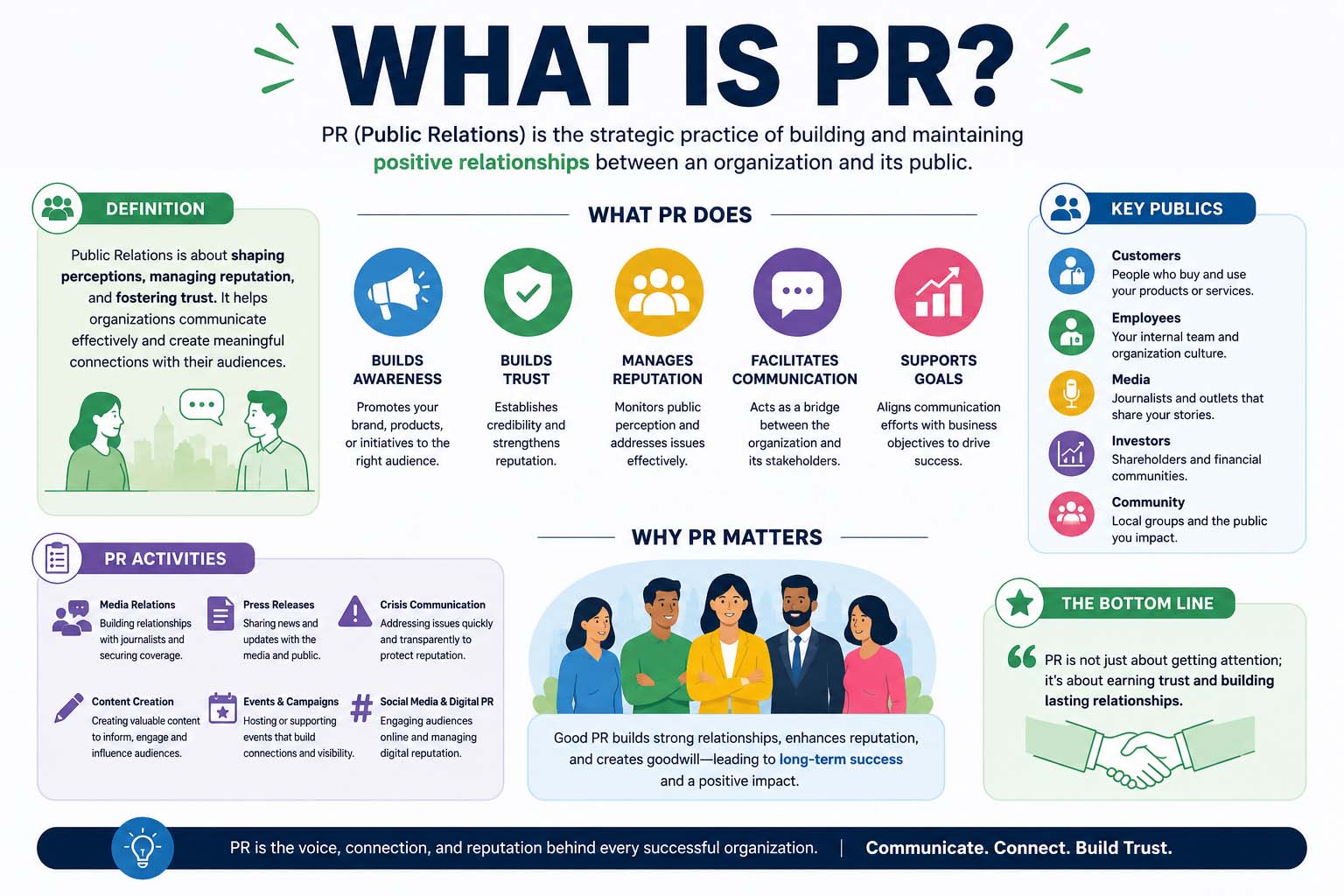
Public relations, commonly called , is one of the most important parts of modern business marketing and brand management. Many entrepreneurs and beginners ask, “what is PR?”
helps businesses build a positive reputation, improve public trust, and create stronger relationships with customers, investors, media outlets, and communities. Unlike direct advertising, focuses more on communication, credibility, and public image.
What Is a PR?
When people search for “what is a ,” they are usually referring to a public relations professional or public relations itself.
A professional manages communication between a business and the public. Their job includes:
- Building brand reputation
- Managing media communication
- Handling public announcements
- Responding to crises
- Creating positive publicity
- Supporting marketing campaigns
professionals help businesses appear trustworthy and professional in the eyes of customers and the media.
For example, when a company launches a new product, teams may contact journalists, influencers, bloggers, and news websites to generate media coverage.
Why Is PR Important in Business?
PR is important because reputation directly affects customer trust and business growth.
Build Brand Awareness
increases visibility through news articles, interviews, events, podcasts, and online discussions.
Improve Customer Trust
People often trust media coverage and recommendations more than traditional advertisements.
Manage Business Reputation
helps companies respond professionally during negative situations or controversies.
Support Marketing Campaigns
works alongside advertising and digital marketing to strengthen brand recognition.
Increase Long-Term Growth
Companies with strong public reputations often gain loyal customers and stronger partnerships.
Modern businesses cannot rely only on advertising. Public trust has become a critical factor in long-term success.
How Does PR Work?
Public relations works by shaping how people view a business or individual.
A basic process usually includes several steps.
Step 1: Research the Audience
Businesses identify their target customers, media outlets, and industry trends.
Step 2: Create a Communication Strategy
develop messaging that reflects the company’s goals and values.
Step 3: Share Information Publicly
This may include press releases, interviews, events, influencer collaborations, or social media campaigns.
Step 4: Monitor Public Response
Businesses track customer feedback, media mentions, and online discussions.
Step 5: Adjust the Strategy
Companies improve future communication based on public reactions and business performance.
This process helps brands maintain a positive image over time.
Real-World Examples of PR
exists in nearly every industry.
Technology Companies
Tech brands use when announcing new devices, software updates, or partnerships.
Restaurants and Food Brands
Restaurants often use campaigns to promote new menu items or seasonal events.
Celebrities and Influencers
Public figures rely heavily on to maintain a positive public image.
Small Businesses
Local businesses may use by sponsoring community events or appearing in local news.
These examples show how helps businesses connect with audiences beyond traditional advertising.
What Is a PR Package?
Another common question is: “what is a PR package?”
A PR package is a promotional package sent to influencers, journalists, creators, or media representatives to increase brand awareness.
packages often contain:
- Free products
- Branded merchandise
- Personalized notes
- Product information
- Promotional materials
Companies use packages as part of influencer marketing and social media promotion strategies.
For example, a beauty brand may send makeup products to creators on platforms like Instagram or TikTok. If influencers share the products online, the business gains exposure and credibility.
packages have become extremely popular in modern digital marketing.
What Is a PR Bond?
Some people searching for information also ask: “what is a PR bond?”
A PR bond usually refers to a personal recognizance bond in legal terminology. This is different from public relations.
A PR bond allows someone to be released from custody without paying full bail upfront. Instead, they promise to appear in court later.
Although the abbreviation “PR” appears in both topics, a PR bond is related to law rather than marketing or business communication.
This distinction is important because search users may confuse the two meanings.
What Is PR in Gym Culture?
Another related keyword is “what is PR in gym?”
In fitness culture, stands for “personal record.” This refers to an athlete’s best performance in an exercise or workout.
For example:
- Maximum bench press weight
- Fastest running time
- Highest deadlift
- Most pull-ups completed
Although this meaning differs from public relations, the abbreviation is widely recognized across multiple industries.
Understanding context helps users avoid confusion when searching online.
PR vs Advertising: What Is the Difference?
Many beginners confuse with advertising, but they are different strategies.
| PR | Advertising |
|---|---|
| Focuses on reputation | Focuses on direct sales |
| Earned media coverage | Paid promotions |
| Builds trust | Builds visibility |
| Long-term credibility | Short-term promotion |
| Often unpaid media exposure | Requires advertising budget |
Businesses often combine both and advertising for stronger results.
Advertising can generate immediate traffic, while builds long-term public trust.
Modern Digital PR Strategies
Today’s industry has changed dramatically because of digital media and social platforms.
Modern strategies include:
Influencer Partnerships
Brands collaborate with creators to reach larger audiences.
Online Reputation Management
Businesses monitor reviews and social conversations.
Content Marketing
Companies publish blogs, videos, and guides to improve credibility.
SEO and PR Integration
PR campaigns now support search engine visibility through backlinks and media mentions.
Crisis Communication
Businesses quickly respond to negative news or customer complaints online.
Digital PR has become an essential part of online business growth.
Common PR Challenges and Troubleshooting Tips
campaigns do not always work perfectly. Businesses may face communication problems or negative publicity.
Negative Online Reviews
Respond professionally and avoid emotional reactions.
Poor Media Coverage
Improve press releases and target more relevant publications.
Weak Brand Visibility
Use consistent messaging across all platforms.
Social Media Backlash
Address concerns honestly and communicate clearly with customers.
Inconsistent Brand Voice
Create communication guidelines for employees and marketing teams.
Strong management helps businesses recover from challenges more effectively.
How Small Businesses Can Start PR
Small businesses can begin without huge budgets.
Create a Professional Brand Story
Explain what makes the business unique.
Connect with Local Media
Reach out to local newspapers, podcasts, and blogs.
Use Social Media Consistently
Share updates, achievements, and customer success stories.
Offer Expert Opinions
Business owners can provide industry advice through interviews or articles.
Build Community Relationships
Sponsoring events or charities can improve public perception.
Even small efforts can create meaningful business growth over time.
FAQ About PR
What is PR?
stands for public relations. It involves managing communication and reputation between a business and the public.
What is a PR?
A may refer to a public relations professional or the field of public relations itself.
What is a PR package?
A package is a promotional package sent to influencers, journalists, or creators to increase brand exposure.
What is a PR bond?
A bond is a legal term meaning personal recognizance bond, which is unrelated to public relations.
What is PR in gym culture?
In fitness, stands for personal record, meaning an athlete’s best performance.
Why is PR important for businesses?
helps businesses improve trust, reputation, visibility, and customer relationships.
Conclusion
Understanding what is can help businesses build stronger brands, improve public trust, and create long-term success. Public relations is more than media exposure because it shapes how customers, investors, and communities view a company.