What Is Procurement? Complete Beginner Guide to Business Procurement
Procurement is one of the most important business processes in modern companies. Many entrepreneurs and business owners ask “what is ” because it directly affects costs, efficiency, supplier relationships, and overall company performance.
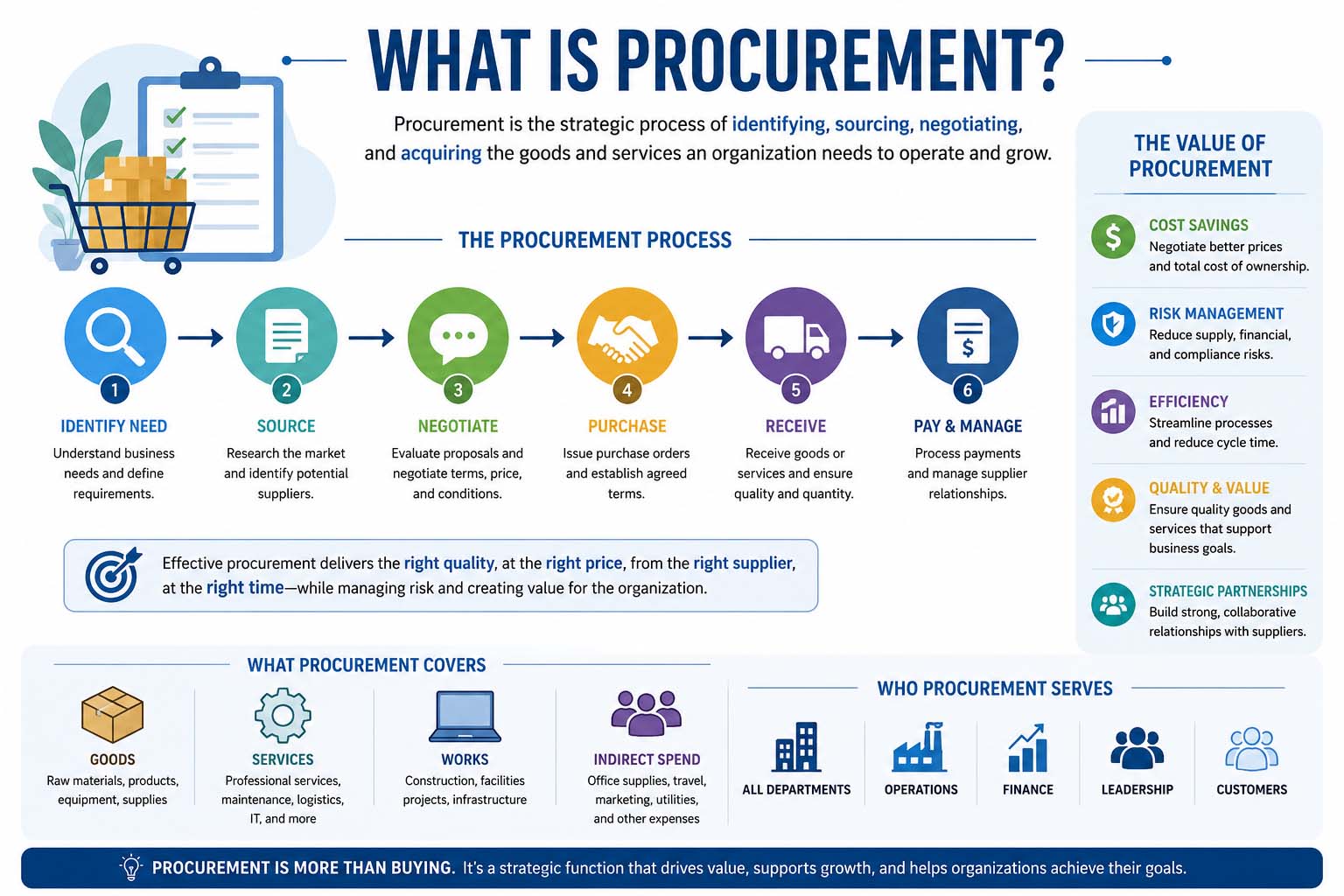
In simple terms, is the process of purchasing goods, services, or materials needed for business operations. This process involves more than simply buying products because also includes supplier management, negotiations, budgeting, quality control, and long-term planning.
Every business relies on in some form. Whether a company purchases office supplies, raw manufacturing materials, software subscriptions, or logistics services, helps ensure that operations continue smoothly and cost-effectively.
What Is Procurement in Business?
in business refers to the organized process companies use to acquire products and services required for daily operations.
The process usually includes:
- Identifying business needs
- Finding suppliers
- Negotiating pricing
- Creating purchase agreements
- Managing contracts
- Monitoring supplier performance
Effective helps businesses reduce costs while maintaining product quality and operational efficiency.
For example, a restaurant may procure:
- Food ingredients
- Kitchen equipment
- Cleaning supplies
- Delivery services
Meanwhile, a technology company may procure:
- Software licenses
- Cloud storage
- Computer hardware
- Cybersecurity services
exists in nearly every industry worldwide.
Why Procurement Is Important
plays a major role in business success.
Cost Management
Strong strategies help companies lower expenses through supplier negotiations and bulk purchasing.
Quality Control
Businesses can maintain consistent product quality by selecting reliable suppliers.
Supply Chain Stability
Procurement teams help prevent shortages or delivery delays.
Risk Reduction
Good supplier management reduces operational and financial risks.
Long-Term Growth
Efficient improves profitability and supports business expansion.
Modern businesses often view as a strategic department rather than just an administrative task.
How the Procurement Process Works
The process usually follows several important steps.
Step 1: Identify Business Needs
The company determines what products or services are required.
Step 2: Research Suppliers
Businesses compare vendors based on:
- Pricing
- Quality
- Delivery speed
- Reputation
Step 3: Request Quotes
Suppliers submit pricing proposals and service terms.
Step 4: Negotiate Contracts
Companies negotiate pricing, timelines, and service agreements.
Step 5: Purchase and Delivery
The business places the order and receives the goods or services.
Step 6: Performance Evaluation
Companies monitor supplier reliability and product quality.
This organized process helps businesses operate more efficiently.
Types of Procurement
There are several forms of depending on business needs.
Direct Procurement
Direct involves purchasing items directly related to production.
Examples include:
- Manufacturing materials
- Product components
- Raw resources
These purchases directly affect company products or services.
What Is Indirect Procurement?
Another common question is: “what is indirect ?”
Indirect involves purchasing goods and services that support operations but are not directly part of production.
Examples include:
- Office supplies
- Marketing software
- IT services
- Cleaning services
- Employee training
Although indirect may seem less important, poor management can still increase company expenses significantly.
Services Procurement
This type focuses on hiring professional services such as:
- Legal consulting
- Marketing agencies
- Security companies
- Freelancers
Service has become increasingly important in digital business environments.
What Is a Procurement Specialist?
Businesses also ask: “what is a specialist?”
A specialist is responsible for managing purchasing activities and supplier relationships.
Their duties often include:
- Supplier research
- Price negotiations
- Purchase order management
- Contract review
- Cost analysis
specialists help businesses secure the best value while maintaining product quality.
What Is a Procurement Manager?
Another important role is the manager.
A manager oversees teams and purchasing strategies.
Their responsibilities may include:
- Managing supplier contracts
- Approving major purchases
- Reducing operational costs
- Creating policies
- Monitoring supply chain performance
managers often play a strategic role in large organizations because purchasing decisions directly affect profitability.
Procurement vs Purchasing
People sometimes confuse with purchasing, but they are not identical.
| Procurement | Purchasing |
|---|---|
| Strategic process | Transaction-focused |
| Includes supplier management | Focuses mainly on buying |
| Long-term planning | Short-term transactions |
| Negotiation and contracts | Payment and ordering |
| Business-wide impact | Operational task |
Purchasing is actually one part of the broader process.
Real-World Procurement Examples
appears in almost every industry.
Retail Industry
Retail stores procure inventory from wholesalers and manufacturers.
Construction Companies
Construction firms purchase materials, machinery, and subcontractor services.
Healthcare Industry
Hospitals procure medical equipment, pharmaceuticals, and cleaning supplies.
Technology Businesses
Tech companies buy servers, software, cybersecurity tools, and cloud services.
These examples show how supports daily business operations.
Modern Procurement Technology
Technology has changed dramatically in recent years.
Modern systems now use:
- Artificial intelligence
- Automation software
- Data analytics
- Cloud platforms
- Digital supplier portals
These tools help companies improve efficiency and reduce manual work.
Digital systems also improve transparency and reporting accuracy.
Common Procurement Challenges
Businesses often face -related problems.
Supplier Delays
Late deliveries can disrupt operations.
Solution
Maintain backup suppliers and monitor inventory levels.
Rising Costs
Inflation and supply shortages may increase pricing.
Solution
Negotiate long-term supplier agreements.
Poor Supplier Communication
Miscommunication may cause order mistakes.
Solution
Use centralized systems.
Quality Problems
Low-quality products can damage business reputation.
Solution
Regular supplier evaluations help maintain standards.
Strong management helps businesses avoid these issues.
Procurement Strategy Tips for Businesses
Successful companies often treat strategically.
Build Strong Supplier Relationships
Long-term partnerships improve reliability and pricing.
Analyze Spending Data
Tracking expenses helps identify savings opportunities.
Diversify Suppliers
Relying on only one supplier increases risk.
Use Procurement Software
Automation improves efficiency and accuracy.
Review Contracts Regularly
Updated contracts help businesses stay competitive.
Skills Needed in Procurement Careers
professionals require several important skills.
Negotiation Skills
Strong negotiation reduces purchasing costs.
Communication Skills
Teams interact with suppliers, managers, and departments regularly.
Financial Understanding
involves budgeting and cost analysis.
Problem-Solving
Unexpected supply chain issues require quick decisions.
Technology Skills
Modern systems rely heavily on digital platforms.
These skills help professionals succeed in careers.
Future of Procurement
continues evolving because of technology and globalization.
Major future trends include:
- AI-driven procurement
- Sustainable sourcing
- Automation
- Supplier risk analytics
- Blockchain tracking
- Digital supply chain management
FAQ About Procurement
What is procurement?
is the process businesses use to purchase goods and services needed for operations.
What is procurement in business?
in business involves supplier selection, purchasing, contract management, and cost control.
What is a procurement specialist?
A procurement specialist manages purchasing activities, supplier communication, and negotiations.
What is a procurement manager?
A manager oversees strategies, supplier relationships, and purchasing teams.
What is indirect procurement?
Indirect involves purchasing goods and services that support business operations but are not directly tied to production.
Why is procurement important?
helps businesses reduce costs, maintain quality, and improve operational efficiency.
Conclusion
Understanding what is helps explain how businesses manage purchasing, supplier relationships, and operational efficiency. is far more than simply buying products because it affects company costs, supply chain reliability, and long-term growth.