Managed IT Support Services
Modern businesses depend heavily on technology to operate efficiently and remain competitive. From communication systems to cloud platforms and cybersecurity solutions, reliable technology has become essential for daily operations. This growing dependence on digital infrastructure has increased the demand for managed IT support services across businesses of all sizes. Companies now seek professional IT management solutions that help reduce downtime, improve security, and maintain smooth operations without the expense of building large internal IT departments.
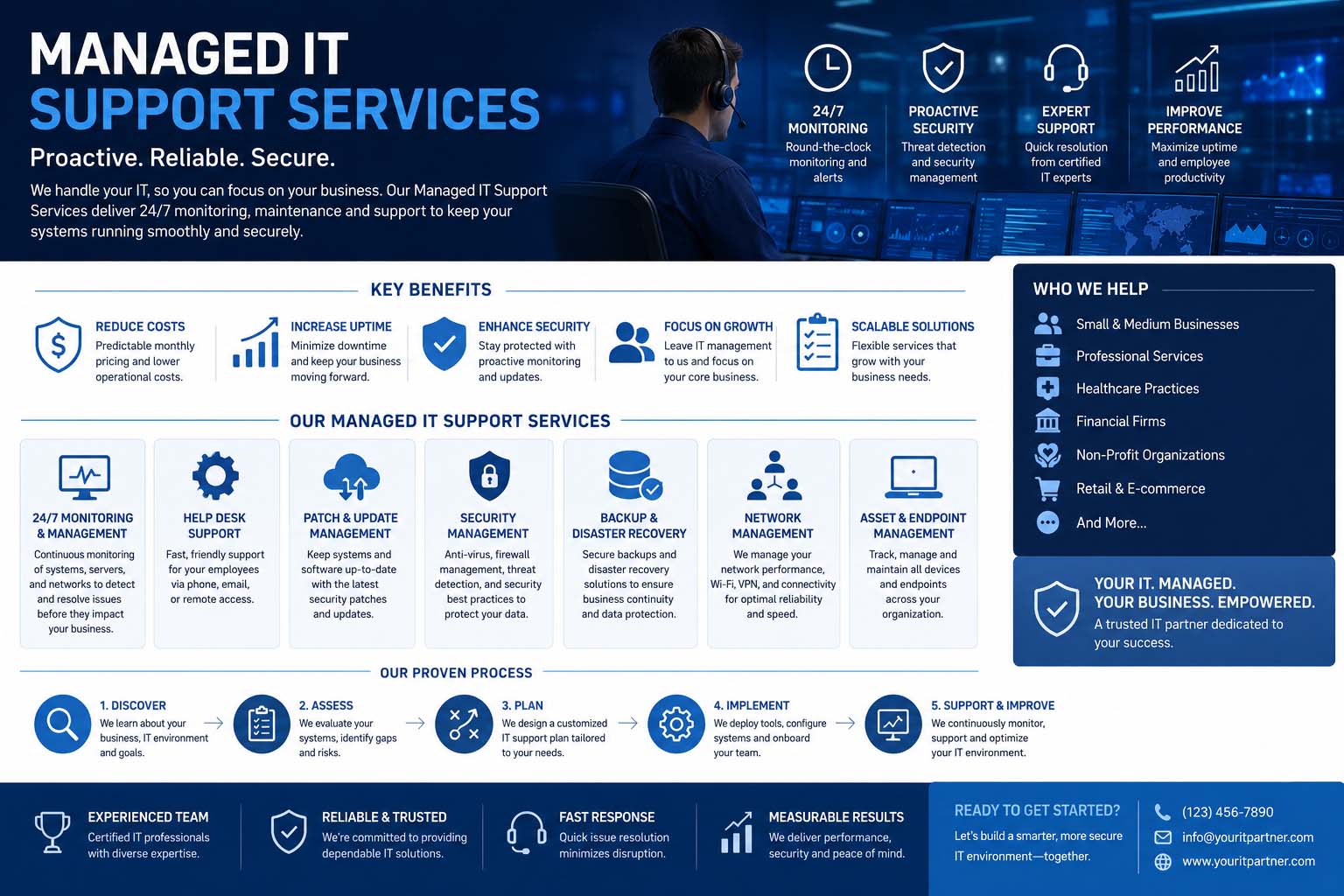
Managed IT support services provide businesses with ongoing technical assistance, system monitoring, and proactive maintenance. Instead of waiting for problems to occur, managed service providers work continuously to prevent issues before they affect productivity. This proactive approach allows organizations to focus on growth while experienced professionals handle complex technology management tasks.
IT Managed Support Services
The demand for IT managed support services has increased rapidly as businesses face more complicated technology challenges. Companies rely on computers, servers, cloud applications, and digital communication tools every day. Even small technical problems can interrupt operations and lead to financial losses. Managed IT providers help businesses avoid these disruptions through continuous monitoring and support.
One of the biggest advantages of managed support services is proactive maintenance. Traditional IT support often reacts to problems only after systems fail. Managed providers take a different approach by identifying vulnerabilities, software issues, and performance concerns before they become major problems. This reduces downtime and improves overall efficiency.
Cybersecurity is another important reason businesses invest in managed IT support. Cyber threats continue to evolve, and many organizations struggle to keep their networks protected. Managed IT companies provide firewall management, antivirus solutions, data backups, and threat monitoring to strengthen security. Businesses benefit from expert protection without needing specialized internal security teams.
Cloud technology has also transformed how businesses operate. Managed IT providers help businesses migrate to cloud systems safely while ensuring reliable access and performance. This allows employees to work more flexibly while maintaining secure access to important business data.
Managed IT Services and Support
Businesses that use managed IT services and support often experience improved productivity and reduced operational stress. Technology issues can slow down employees and create frustration throughout an organization. Managed support teams ensure systems remain stable, updated, and optimized for performance.
Cost management is one of the major benefits of managed services. Hiring a full in-house IT department can be extremely expensive, especially for smaller companies. Managed IT providers offer access to experienced professionals at a predictable monthly cost. This helps businesses control expenses while still receiving high-quality technical support.
Another advantage is access to specialized expertise. Technology changes rapidly, and it can be difficult for businesses to keep up with the latest trends and security requirements. Managed IT providers stay updated on industry developments and implement modern solutions that improve performance and security.
Remote support has become increasingly important in recent years. Many businesses now operate with hybrid or remote work environments. Managed service providers help employees connect securely from different locations while maintaining productivity. Remote troubleshooting and monitoring also allow technical issues to be resolved quickly without waiting for on-site visits.
Data backup and disaster recovery planning are essential components of managed IT services and support. Unexpected events such as cyberattacks, hardware failures, or natural disasters can result in major data loss. Managed providers create backup systems and recovery strategies that help businesses restore operations quickly if problems occur.
IT Support Managed Services
The role of IT support managed services extends beyond fixing computers and software problems. Modern providers deliver comprehensive technology management designed to improve business performance and reduce risk. Their services often include network management, software updates, server monitoring, cybersecurity, and technical consulting.
Scalability is one reason businesses choose managed IT solutions. As companies grow, their technology needs become more complex. Managed providers can adjust services to support expansion without requiring businesses to completely rebuild their infrastructure.
Employee support is another valuable feature of managed services. Workers often encounter technical issues involving passwords, email systems, printers, or software applications. Managed IT help desks provide fast assistance that minimizes downtime and keeps employees productive.
IT Support and Managed Services
Businesses that invest in IT support and managed services often gain a competitive advantage because their systems remain more stable and secure. Reliable technology allows employees to focus on serving customers and achieving business goals rather than dealing with constant technical disruptions.
Network reliability is a major priority for managed service providers. Internet outages, server failures, and slow network performance can negatively affect operations. Managed support teams continuously monitor systems to detect unusual activity and resolve issues quickly. This proactive approach improves uptime and business continuity.
Managed IT support also improves communication systems. Many companies rely on video conferencing, VoIP phone systems, and collaboration software to communicate internally and externally. Providers ensure these systems function smoothly, which supports teamwork and customer service.
Cybersecurity threats continue to increase worldwide, making professional protection more important than ever. Managed IT providers use advanced monitoring tools to identify suspicious activity and block attacks before they cause serious damage. Businesses benefit from enterprise-level security solutions without managing everything themselves.
Why Managed IT Services Continue to Grow
The popularity of managed IT support services continues to grow because businesses recognize the importance of reliable technology management. Digital transformation has changed nearly every industry, and organizations now depend on secure networks, cloud systems, and online communication tools more than ever before.
Artificial intelligence, automation, and cloud computing are creating new opportunities for businesses, but these technologies also require specialized expertise. Managed service providers help organizations adapt to these changes while maintaining security and efficiency.
Conclusion
Managed IT support services have become essential for businesses seeking reliable, secure, and cost-effective technology management. From proactive maintenance and cybersecurity to cloud solutions and remote support, managed service providers help organizations operate more efficiently in an increasingly digital world.