What Is the Difference Between a Hot Call and a Cold Call?
Sales and marketing professionals often use different communication strategies to connect with potential customers. One common question in the sales industry is, Understanding these two approaches is important because they play a major role in lead generation, customer relationships, and sales success.
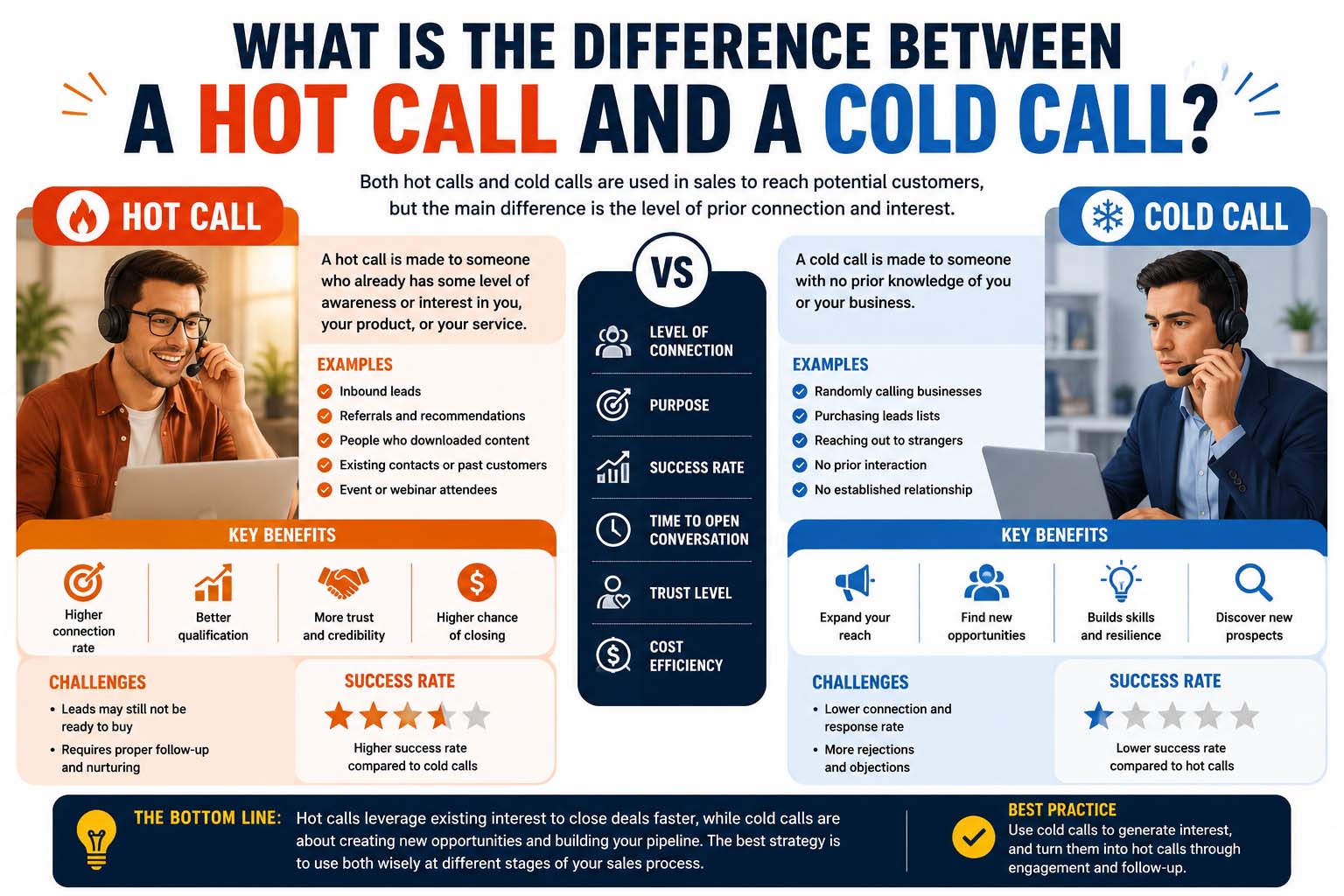
A cold call is made to someone who has had no previous contact with the salesperson or company. In contrast, a hot call is made to a person who already knows about the business, product, or service. Both methods are widely used in sales, but they involve different strategies, success rates, and customer responses.
Understanding Cold Calls
A cold call is a sales call made to a potential customer who has not expressed prior interest in the company. The person receiving the call may have never heard of the business before the conversation begins.
Cold calling is often used to introduce products or services to new audiences. Sales representatives usually contact people through phone calls, emails, or direct messages without any earlier interaction.
Businesses use cold calling to reach large numbers of potential customers quickly. This method is common in industries such as insurance, real estate, finance, telecommunications, and business services.
However, cold calling can be challenging because customers may not expect the call or may not be interested in the offer.
What Is a Hot Call?
A hot call involves contacting a potential customer who already has some level of awareness or interest in the company. The customer may have visited the business website, filled out a contact form, attended an event, or interacted with previous marketing campaigns.
Because the customer is already somewhat familiar with the business, hot calls are usually more effective than cold calls. Sales representatives can focus more on discussing solutions and answering questions instead of introducing the company from the beginning.
Hot calls often result from lead generation strategies such as email marketing, social media campaigns, referrals, or online advertisements.
The Main Difference Between Hot Calls and Cold Calls
The primary answer to what is the difference between a hot call and a cold call lies in customer familiarity and interest.
In a cold call, the salesperson contacts someone with no existing relationship or previous communication. The customer is “cold” because they may not expect the interaction or know anything about the business.
In a hot call, the customer is already aware of the company or has shown interest in its products or services. The lead is considered “hot” because the chances of a positive response are much higher.
This difference significantly affects how sales conversations are handled and how successful they become.
Customer Response in Cold Calling
Cold calls often receive mixed reactions because people may view unexpected sales calls as interruptions. Some customers may end the conversation quickly or refuse to listen.
Sales representatives must work harder during cold calls to build trust and capture attention immediately. Strong communication skills are essential because the first few seconds often determine whether the conversation continues.
Despite the challenges, cold calling can still generate valuable leads when done professionally. Businesses that target the right audience and provide useful solutions may successfully convert cold leads into paying customers.
Customer Response in Hot Calling
Customers may already understand the product, recognize the company name, or be actively searching for solutions.
Sales representatives can spend more time discussing benefits, pricing, and customer needs rather than explaining basic information. This often leads to smoother conversations and higher conversion rates.
Because customers are already engaged, hot calls are generally less stressful for both the salesperson and the customer.
Advantages of Cold Calling
Cold calling offers several benefits for businesses trying to expand their customer base. One major advantage is the ability to reach new audiences quickly. Companies can introduce products and services to people who may not have discovered the business otherwise.
Cold calling can also help businesses gather market information and identify potential customer needs. It remains a low-cost marketing strategy compared to some forms of advertising.
Advantages of Hot Calling
Hot calling is often more efficient because the leads are already interested in the product or service. Sales representatives usually experience higher success rates and shorter sales cycles with hot leads.
Another major advantage is stronger customer engagement. Interested customers are more likely to ask questions, schedule meetings, or request additional information.
Challenges of Cold and Hot Calling
Both cold calling and hot calling have challenges. Cold calling requires patience, confidence, and persistence because rejection rates can be high. Sales teams may need to make many calls before finding interested prospects.
Hot calling, while more effective, depends heavily on lead generation efforts. Businesses must invest in marketing campaigns, online advertising, or networking to create qualified leads.
Which Strategy Is Better?
When considering what is the difference between a hot call and a cold call, many people also wonder which method is better. The answer depends on business goals, industry type, and target audience.
Cold calling is useful for expanding reach and discovering new opportunities. It works well for businesses entering new markets or promoting new products.
Hot calling is generally more effective for closing sales because the customer already has interest in the business. Many companies use both strategies together to maximize sales opportunities.
Conclusion
Understanding what is the difference between a hot call and a cold call is important for businesses and sales professionals. A cold call involves contacting someone with no previous relationship, while a hot call targets a person who already knows about the business or has shown interest.
Cold calling helps businesses reach new audiences and generate leads, but it can be challenging due to lower customer interest. Hot calling usually leads to better customer engagement and higher conversion rates because the prospect is already familiar with the company.