How Is an Excise Tax Different From a Sales Tax?
Taxes are part of everyday life, even when people do not notice them directly. Two common forms of taxation are excise taxes and sales taxes. Although they may seem similar because both increase the price consumers pay, they are very different in how they are applied and collected. Understanding how an excise tax is different from a sales tax can help consumers and businesses better understand pricing, government revenue, and financial decisions.
Understanding the Basics of Excise Tax
An excise tax is a tax placed on specific goods, products, or activities. Governments usually apply excise taxes to items considered harmful, luxury-based, or heavily regulated. Common examples include gasoline, cigarettes, alcohol, tobacco, airline tickets, and gambling services.
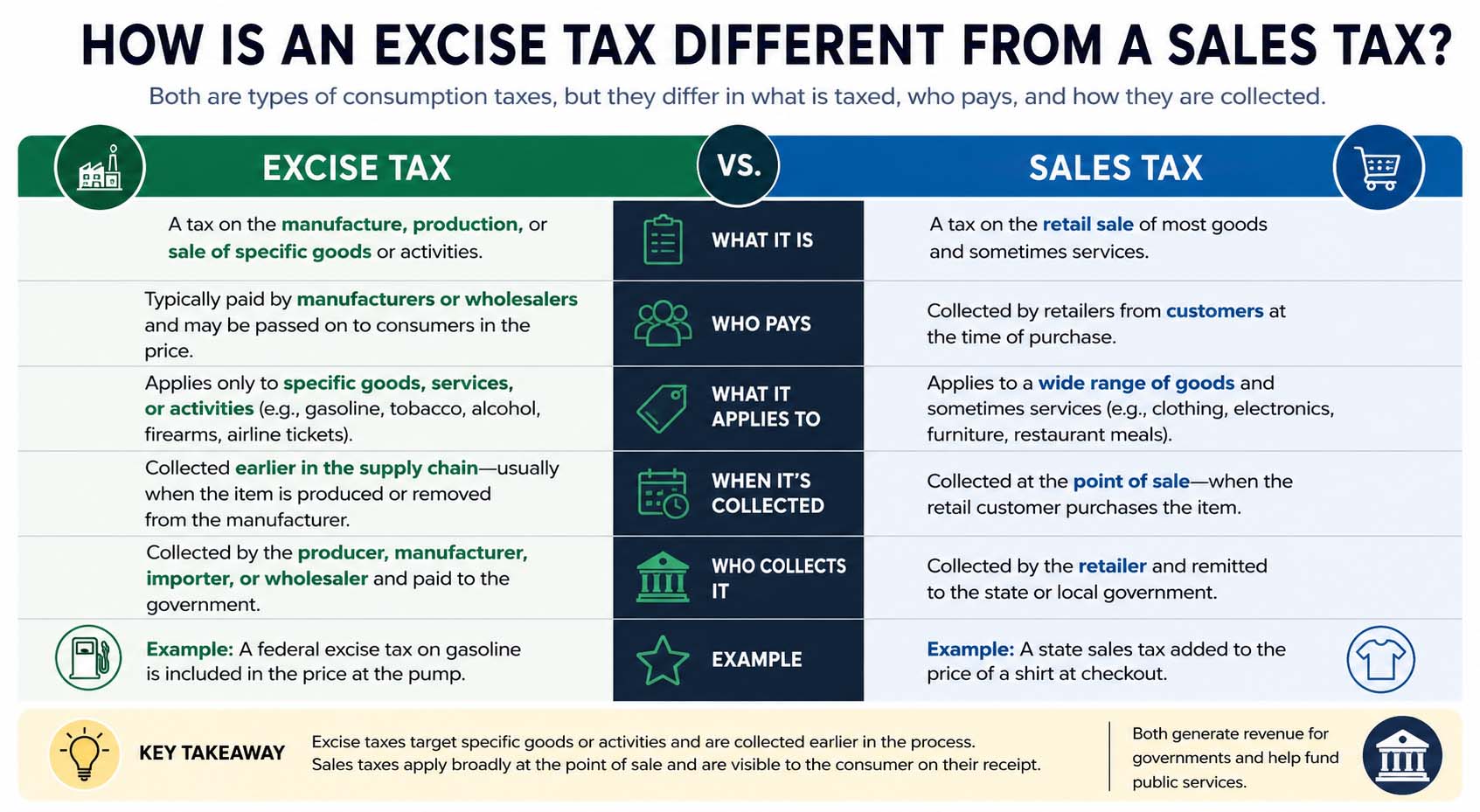
Excise taxes are often included in the product’s price, so consumers may not notice them separately on a receipt. For example, when someone buys gasoline, part of the price already includes federal and state excise taxes. These taxes are usually paid by manufacturers, wholesalers, or retailers before the product reaches the customer.
Governments use excise taxes for two major purposes. The first is generating revenue for public services and infrastructure. The second is discouraging the use of certain products that may negatively affect public health or the environment. Tobacco and alcohol taxes are strong examples because higher prices may reduce consumption.
What Is a Sales Tax?
A sales tax is a general tax charged on the sale of most goods and services. Unlike excise taxes, sales taxes apply broadly to everyday purchases. When customers buy clothing, electronics, furniture, or restaurant meals, they usually pay sales tax at checkout.
Sales tax is typically calculated as a percentage of the product’s selling price. The tax amount appears separately on receipts, making it more visible to consumers. Businesses collect the tax from customers and then send it to the government.
Sales taxes vary depending on the country, state, or region. Some locations have higher rates than others, while certain products such as groceries or medical supplies may be exempt. Because of this flexibility, sales tax systems can differ greatly across regions.
The Main Difference Between Excise Tax and Sales Tax
The biggest answer to the question lies in the scope and purpose of the taxes.
Excise tax applies only to specific products or activities, while sales tax applies to a broad range of consumer purchases. Excise taxes are often designed to influence consumer behavior, whereas sales taxes mainly exist to generate government revenue from general spending.
Another important difference is visibility. Sales tax usually appears separately on a customer receipt. Excise tax, however, is often hidden within the final product price. Consumers may not realize they are paying excise tax because it is already included before purchase.
Products Commonly Subject to Excise Tax
Certain goods are frequently associated with excise taxation because governments want to regulate or discourage excessive use. Fuel products are among the most common examples. Gasoline excise taxes often fund road maintenance and transportation projects.
Alcohol and tobacco products are also heavily taxed. Governments argue that these products create healthcare costs and social concerns, so excise taxes help offset those expenses. Luxury items such as expensive cars, jewelry, or airline tickets may also carry excise taxes in some regions.
In contrast, sales taxes apply to ordinary purchases like household goods, electronics, and clothing. The broad application makes sales tax one of the most common forms of consumer taxation worldwide.
How Businesses Handle These Taxes
Businesses must manage excise taxes and sales taxes differently. With sales tax, retailers collect the tax directly from customers during checkout. They then report and transfer the collected amounts to tax authorities.
Excise taxes are often paid earlier in the supply chain. Manufacturers or distributors usually handle the tax before products reach store shelves. This process means the consumer sees only the final price rather than a separate tax line.
For businesses dealing with products such as fuel, tobacco, or alcohol, excise tax compliance can be more complex due to additional regulations and reporting requirements. Governments closely monitor these industries because excise tax revenue can be significant.
Why Governments Use Excise Taxes
Excise taxes serve purposes beyond raising money. Governments often use them to shape public behavior. High taxes on cigarettes, for example, are intended to reduce smoking rates. Similarly, fuel taxes may encourage energy conservation or support environmental goals.
Some economists believe excise taxes are effective because they target specific industries connected to social or environmental concerns. Critics, however, argue that these taxes can disproportionately affect lower-income consumers who spend a larger percentage of their income on taxed goods.
Despite the debate, excise taxes remain an important source of government funding in many countries.
The Economic Impact of Sales Taxes
Sales taxes influence consumer spending patterns because they increase the total cost of purchases. Higher sales tax rates may lead consumers to reduce spending or shop in regions with lower taxes.
Businesses also pay attention to sales tax rates because they can affect competitiveness. Online shopping has made sales tax collection even more important as governments adapt laws for digital commerce.
Examples That Show the Difference
Imagine a person buying a pack of cigarettes and a television. The cigarettes may include both excise tax and sales tax. The excise tax is already built into the product’s price, while the sales tax is added at checkout.
The television, however, generally only includes sales tax because it is not a specially regulated product. This example clearly demonstrates how excise taxes target specific goods while sales taxes apply more broadly.
Conclusion
Understanding how an excise tax is different from a sales tax is important for consumers, businesses, and policymakers. Excise taxes apply to specific products such as fuel, alcohol, and tobacco, often to discourage consumption or fund targeted programs. Sales taxes, on the other hand, apply broadly to everyday purchases and mainly generate public revenue.