How to Start a Nonprofit Successfully
Starting a nonprofit can be one of the most rewarding ways to create positive change in your community. Whether your mission focuses on education, healthcare, animal welfare, poverty reduction, or environmental protection, understanding how to start a nonprofit properly is essential for long-term success. A nonprofit organization is designed to serve the public good rather than generate profits for owners or shareholders. With the right planning, legal structure, and dedication, anyone with a meaningful mission can build an organization that makes a lasting impact.
The process of creating a nonprofit involves more than simply choosing a name and collecting donations. It requires a clear mission statement, legal registration, financial planning, and ongoing compliance with government regulations. Many people are inspired to launch charitable organizations after identifying a problem in society that they want to solve. However, success depends on careful preparation and a strong foundation.
Planning and Registering the Organization
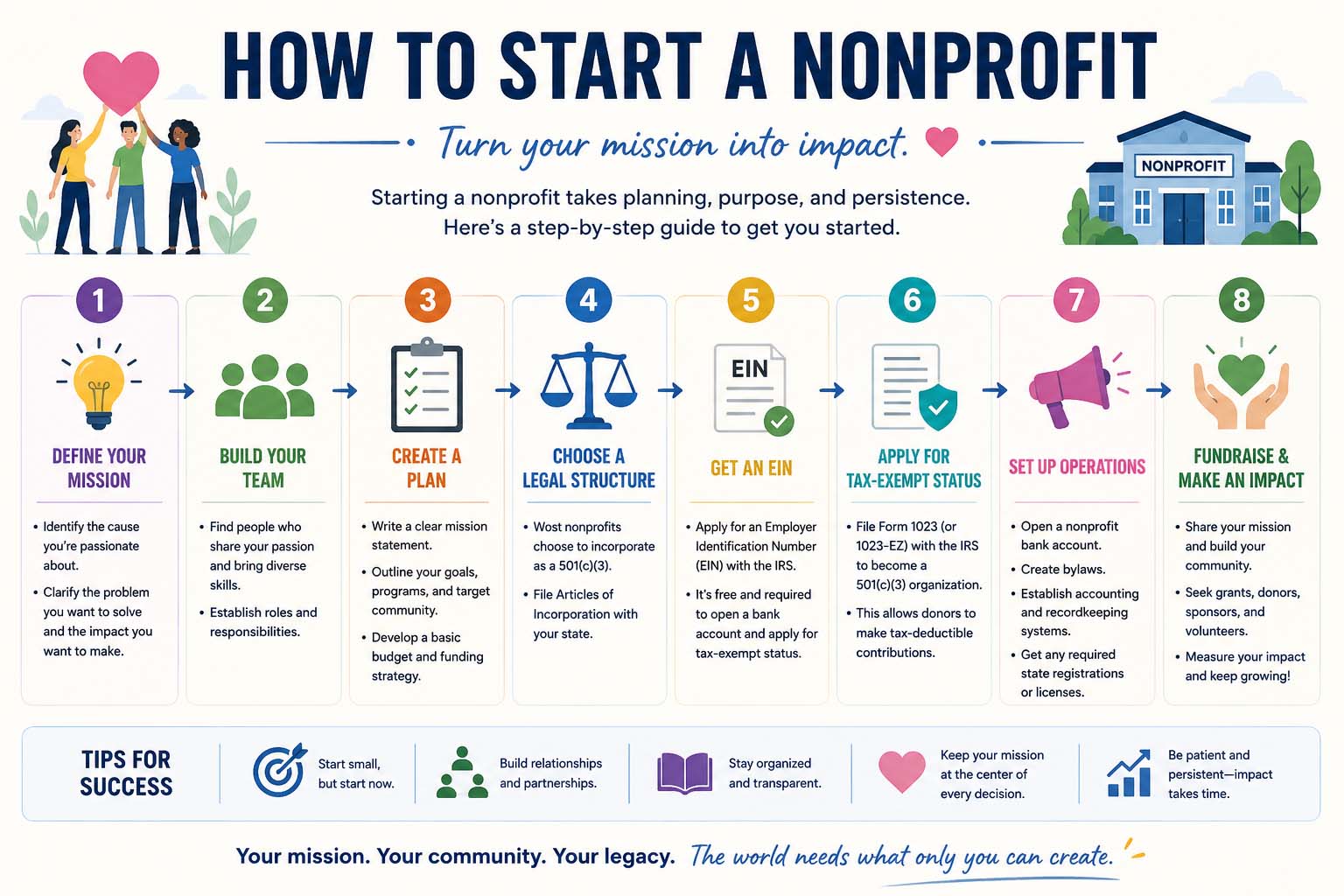
Learning how to start a nonprofit organization begins with identifying a clear purpose. Every successful nonprofit starts with a mission that explains why the organization exists and who it serves. This mission should be specific, realistic, and inspiring. A strong mission statement helps attract donors, volunteers, and supporters who believe in the same cause. Learning How to Write a Mission Statement can help nonprofit leaders communicate that purpose clearly.
After defining your mission, the next step is choosing a name for your organization. The name should be unique, memorable, and aligned with your nonprofit’s goals. It is important to check state databases and domain availability before making a final decision. Once the name is selected, you can officially register the organization in your state.
Creating a board of directors is another important part of the process. Most states require nonprofits to have a board that oversees operations and ensures the organization follows its mission. Board members should include individuals with different skills and experiences, such as finance, law, marketing, and community leadership.
Once the board is established, you will need to file articles of incorporation with the state. After incorporation, organizations in the United States often apply for federal tax-exempt status under section 501(c)(3) of the Internal Revenue Code. This designation allows donors to make tax-deductible contributions and helps nonprofits qualify for grants and funding opportunities.
Developing bylaws is also critical. Bylaws explain how the organization operates, how meetings are conducted, and how decisions are made. Therefore, these internal rules help maintain accountability and transparency within the organization.
Fundraising is another key aspect of building a nonprofit. Organizations often rely on donations, grants, sponsorships, and fundraising events to support their programs. Creating a detailed budget and financial plan helps ensure sustainability and responsible management of funds. A well-planned Business Level Strategy can also help nonprofit leaders allocate resources more effectively as the organization grows.
How to Start a Nonprofit Organization With No Money
Many people wonder how to start a nonprofit organization with no money. While funding certainly helps, it is possible to begin with limited resources by using creativity, volunteer support, and community partnerships. The first step is focusing on low-cost strategies that reduce expenses during the early stages.
One effective approach is recruiting passionate volunteers who believe in the mission. Volunteers can help with marketing, event planning, website creation, social media management, and fundraising efforts. As a result, building a strong volunteer network allows nonprofits to grow without paying large salaries at the beginning.
Free online tools can also help reduce startup costs. Many platforms offer free website builders, email marketing tools, accounting software, and graphic design resources for nonprofits. Taking advantage of these tools can help organizations maintain professionalism while keeping expenses low.
Another way to save money is by partnering with local businesses and community organizations. Businesses may donate office supplies, meeting space, printing services, or sponsorships in exchange for recognition and community goodwill. Collaboration can significantly reduce operational costs while expanding your nonprofit’s reach. Organizations seeking to reach new communities may also benefit from a Market Development Strategy.
Leaders considering a structure focused on funding charitable projects may also review How to Start a Foundation before selecting the most suitable organizational model.
California Registration Requirements
Understanding involves following both federal and state-specific requirements. California is home to thousands of charitable organizations, making it one of the most active nonprofit environments in the United States. However, the state also has strict regulations that organizations must follow.
The process begins with selecting a unique business name and filing articles of incorporation with the California Secretary of State. The articles should clearly state the nonprofit’s charitable purpose and include language required for tax-exempt status. Filing fees apply, so organizations should prepare for these costs during the registration process.
After incorporation, nonprofits in California must obtain an Employer Identification Number from the Internal Revenue Service. This number functions like a tax ID and is necessary for opening bank accounts, hiring employees, and filing taxes.
How to Start a Nonprofit in Texas
For individuals researching , the process is generally straightforward but still requires careful attention to legal and organizational details. Texas offers a business-friendly environment and a growing nonprofit community focused on education, healthcare, disaster relief, and social services.
The first step is choosing an available name through the Texas Secretary of State. Once the name is confirmed, organizations file a Certificate of Formation to legally establish the nonprofit corporation. This document outlines the organization’s mission, purpose, and management structure.
After incorporation, nonprofits in Texas must obtain an Employer Identification Number from the IRS. This number is necessary for financial and tax-related activities. Organizations then apply for federal tax-exempt status under section 501(c)(3), which provides significant financial advantages and credibility.
Texas nonprofits are encouraged to create detailed bylaws and establish a strong board of directors. The board should include individuals who understand the organization’s mission and can provide guidance on financial management, fundraising, and community engagement.
Building a Strong Future
Understanding how to start a nonprofit is only the beginning of the journey. Long-term success depends on strong leadership, financial responsibility, community engagement, and dedication to the organization’s mission. Nonprofits that remain transparent and focused on their goals are more likely to attract donors, volunteers, and strategic partnerships.