
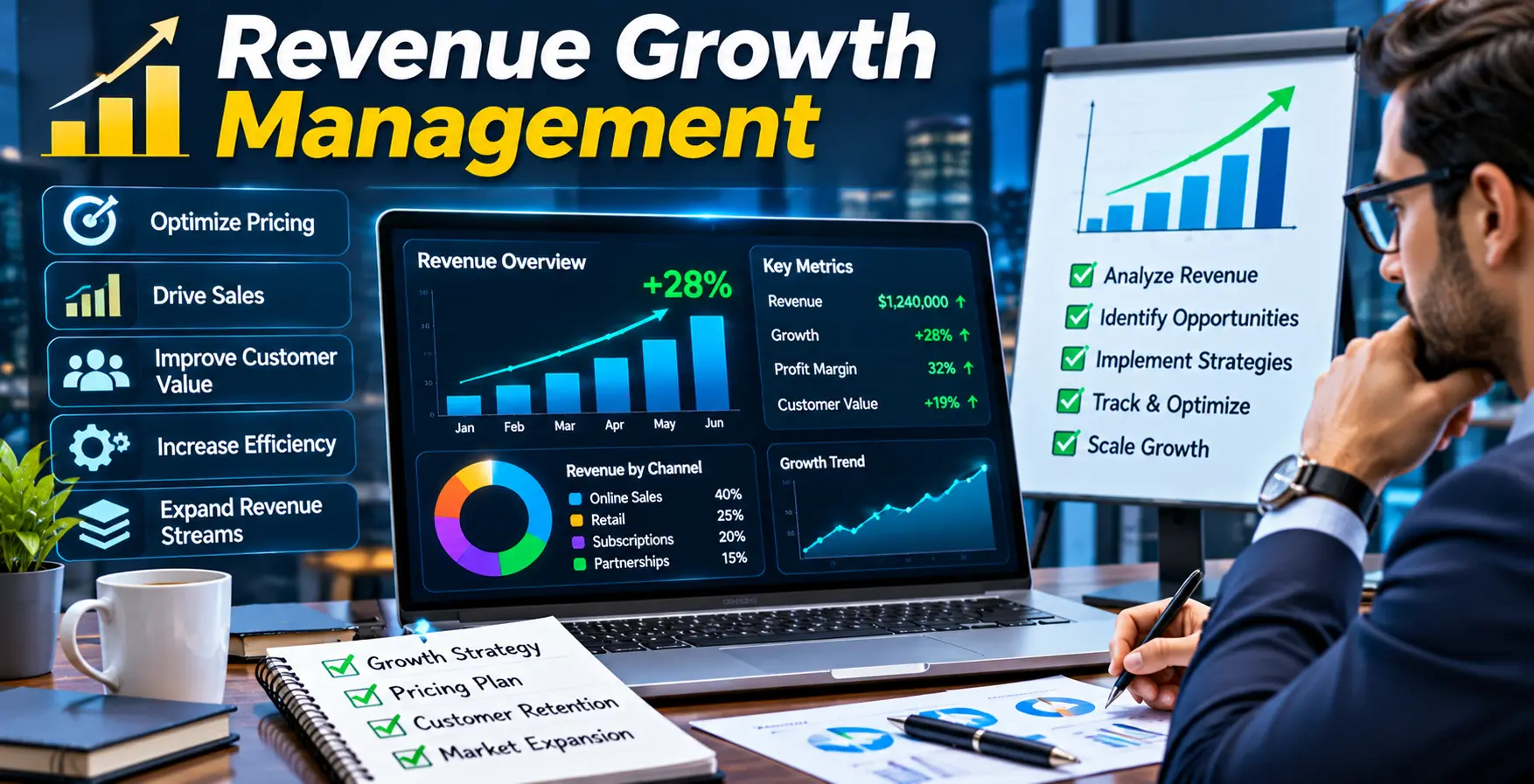
Revenue Growth Management: What It Is, How It Works and How to Get Started
A brand manager runs another round of discounts, and sales jump for two weeks. However, when the quarter closes, margins are thinner than before. Sound familiar? That is exactly the problem revenue growth management tries to solve. Instead of chasing volume at any cost, it helps businesses grow sales in a way that also grows profit.
In this guide, you will learn what RGM means, the five main levers, a simple framework you can follow and how software fits in. Plus, you will see a practical example and the mistakes that trip up many teams.
What Is Revenue Growth Management?
Revenue growth management (RGM) is the practice of using data to coordinate pricing, promotions, pack sizes, product mix and retailer deals so a company grows revenue profitably. In other words, it treats these decisions as one connected system instead of separate choices made by different teams.
RGM started in consumer packaged goods (CPG), such as food, drinks and household products. Today, however, retailers, restaurants, distributors and even B2B companies use the same ideas.
Here is the key idea in one line: sell the right products, in the right sizes, at the right prices, with the right promotions, through the right channels.
Why It Matters More Than Ever
Costs keep shifting, shoppers compare prices instantly and retailers push hard for better deals. Meanwhile, trade investment is one of the largest costs on a consumer goods company’s P&L, as Kantar points out in its guide to trade promotion effectiveness.
Also, industry studies have repeatedly found that many promotions do not pay back what they cost. So, companies need a smarter way to decide where every pricing and promo dollar goes.
RGM also forces teams to understand who they are selling to. After all, you cannot price or promote well without knowing your buyers. If that part feels fuzzy, start with our guide on What Is a Target Market.
The Five Levers of Revenue Growth Management
Most RGM programs work with five connected levers. Usually, the biggest gains come from pulling them together rather than one at a time.
1. Pricing Strategy
Pricing sets the base list and shelf prices for each product. For example, a company may raise prices on premium items where shoppers are less price-sensitive, while holding prices steady on entry-level products.
Good pricing starts with knowing your costs and what each price point earns. To get those basics right, our explainer on margin vs markup shows how the two numbers differ and why mixing them up leads to mistakes.
2. Promotions and Trade Spend
Promotions include discounts, multi-buy deals, coupons and in-store displays. Trade spend covers the money paid to retailers for placement and features.
RGM asks a simple question: did this promotion bring in new profit, or did it just give away margin on sales that would have happened anyway? Then, teams cut the weakest promotions and invest more in the ones that work.
3. Pack Price Architecture
This lever looks at sizes and formats. For instance, a snack brand might sell single packs for convenience stores, family packs for supermarkets and bulk cases for club stores. Each size targets a different shopper and price point.
As a result, smart pack architecture can lift revenue per unit without simply raising prices.
4. Assortment and Mix
Assortment decides which products go into which stores and channels. Usually, removing slow sellers frees shelf space for better performers.
However, products affect each other. If you raise the price of one item, shoppers may switch to another in your own lineup or a competitor’s. To understand this effect, read our guide on Cross Price Elasticity.
5. Trade Terms
Finally, trade terms are the agreements with retailers, such as payment terms, volume rebates and performance bonuses. When designed well, these terms reward retailers for actions that help both sides grow.
A Simple Revenue Growth Management Framework
You do not need a giant team to start. Instead, this step-by-step revenue growth management framework works for many companies:
- Gather clean data: First, collect sales, pricing, promotion, cost and retailer data in one place.
- Segment shoppers and channels: Next, group customers by needs, price sensitivity and where they shop.
- Diagnose performance: Then, find which products, packs and promotions make or lose money.
- Set clear goals: After that, decide what you want, such as higher margin, more volume or new channels.
- Plan across all five levers: Build pricing, promo, pack, assortment and trade plans together.
- Test and learn: Run small pilots before rolling changes out widely.
- Track and adjust: Finally, review results monthly and refine your plans.
Also, RGM pairs well with expansion plans. For example, if you are entering new regions or customer groups, our guide to Market Development Strategy explains how to plan that growth.
A Practical Example
Imagine a mid-sized juice brand facing rising fruit costs. At first, it considers a simple 10% price increase across all products. However, the RGM team looks deeper.
- First, they keep prices steady on small bottles, since convenience shoppers are very price-sensitive.
- Next, they add a new mid-size bottle at a slightly higher price per ounce.
- Then, they cut two promotions that mostly attracted existing buyers.
- After that, they shift spending to in-store displays that brought in new shoppers.
- Finally, they drop three slow-selling flavors to make room for top sellers.
As a result, volume stays roughly the same, but revenue and margin both improve. In short, that is RGM working the way it should.
Profitable Revenue Growth Management: Volume vs Value
Growth alone is not the goal. Instead, profitable revenue growth management balances two things: selling more units and earning more from each unit.
For example, a deep discount may boost volume but hurt margins. On the other hand, a price increase may lift margins but lose shoppers. Therefore, RGM teams track both the top line and margins together.
To measure this well, look beyond gross margin. Also, consider overhead, marketing and trade costs. Our guide on gross margin vs net margin explains which number tells the fuller story.
Revenue Growth Management Software: What to Look For
Spreadsheets work for small businesses. However, as product lines and retailers grow, many companies turn to revenue growth management software.
When comparing tools, look for these features:
- Data integration: Pulls sales, cost, retailer and market data into one view.
- Price elasticity modeling: Estimates how demand changes when prices move.
- Promotion analysis: Shows which deals add profit and which do not.
- Scenario planning: Lets you test “what if” plans before you launch them.
- Assortment tools: Helps decide which products belong in which stores.
- Easy reporting: Gives clear dashboards for sales, finance and leadership.
Also, ask vendors about setup time, training and pricing. After all, the best tool is the one your team will actually use.
Benefits and Challenges
Benefits
- Better margins through smarter pricing and promotions.
- Less wasted trade spend.
- Clearer decisions backed by data.
- Stronger partnerships with retailers.
Challenges
- Messy or missing data can slow progress.
- Teams may resist sharing control across departments.
- Good software and analysts cost money.
- Also, results take time and steady testing.
Common Mistakes to Avoid
- Pulling one lever at a time: Pricing, promotions and assortment affect each other.
- Chasing volume only: More sales mean little if margins shrink.
- Ignoring shopper differences: One price rarely fits every channel.
- Skipping tests: Big changes without pilots can backfire.
- Treating RGM as a one-time project: Instead, make it an ongoing habit.
Frequently Asked Questions
Is revenue growth management only for CPG companies?
No. Although it started in consumer goods, retailers, restaurants, hotels, distributors and B2B companies now use the same principles.
How is RGM different from revenue management?
Revenue management usually focuses on pricing perishable inventory, like hotel rooms or airline seats. In contrast, RGM covers pricing, promotions, pack sizes, assortment and trade deals together.
How long does it take to see results?
Quick wins, like cutting unprofitable promotions, can show results within a few months. However, building full RGM capability often takes a year or more.
Next Steps for Revenue Growth Management
To sum up, RGM helps you grow sales and profit together by coordinating price, promotions, packs, assortment and retailer deals. Start small: gather your data, review your last ten promotions and find one product line to test.
Then, build a cross-team routine to review results every month. Over time, those steady improvements can turn into stronger margins, better retailer partnerships and healthier long-term growth.