
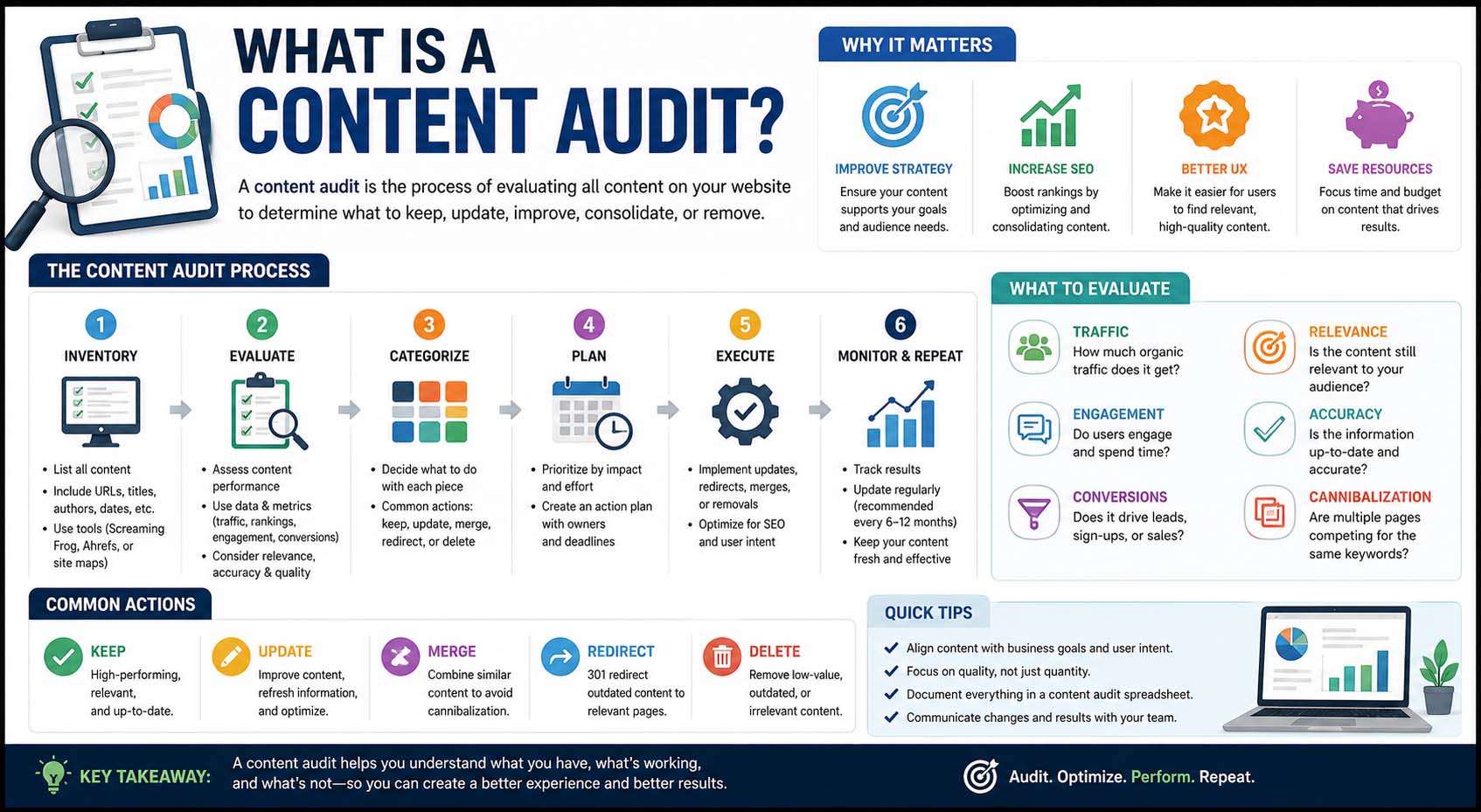
What Is a Content Audit? A Complete Guide for Better Website Performance
A content audit is one of the most effective ways to improve the quality, visibility, and performance of a website. Businesses, bloggers, and online publishers use content audits to evaluate existing pages and understand which content performs well and which pages need improvement. In today’s competitive digital environment, publishing articles alone is not enough. Website owners must regularly analyze their content to maintain strong search engine rankings and provide value to readers.
Understanding what is a audit can help website owners identify outdated information, improve SEO, increase user engagement, and create a better overall strategy. A proper allows businesses to organize their content, remove low-quality pages, and optimize articles that still have ranking potential. Whether you run a personal blog, an eCommerce website, or a large business platform, content audits are essential for long-term online success.
What Is a Website Content Audit
Many website owners ask, what is a website and why is it important for SEO? A website content is the process of reviewing and analyzing all the published on a website. This includes blog posts, landing pages, product descriptions, category pages, images, videos, and other digital assets. The goal is to evaluate how each piece of content performs and determine whether it should be updated, improved, merged, or removed.
A website content audit helps identify pages that receive traffic and pages that are not contributing to the site’s goals. During the audit process, website owners typically review metrics such as organic traffic, bounce rate, keyword rankings, backlinks, page authority, and user engagement. This information provides a clear picture of which content delivers value and which content may be hurting the website’s SEO performance.
One of the biggest advantages of conducting a website is improving search engine visibility. Search engines prefer websites with high-quality, updated, and relevant information. If a website contains outdated or duplicate content, rankings may decline over time. A content audit these issues by allowing site owners to refresh articles with new information and better optimization.
A website content audit ensures that every page remains helpful, informative, and aligned with user expectations.
What Is Included in a Website Content Audit
When people ask what is included in a website the answer involves several important elements that help evaluate the quality and effectiveness of a website’s . A complete content audit examines technical SEO factors, content quality, user engagement, and overall website structure.
The first step usually involves creating a content inventory. This means listing all the pages and articles available on the website. Website owners often use SEO tools to collect URLs, metadata, traffic statistics, and keyword rankings. This inventory provides a complete overview of the site’s content performance.
Another important part of the audit is analyzing SEO performance. This includes checking keyword optimization, title tags, meta descriptions, heading structure, internal linking, and image alt text. These factors influence how search engines understand and rank website content. Poor optimization can reduce visibility in search results, while properly optimized pages can attract consistent organic traffic.
Content quality evaluation is also included in a website content audit. During this stage, website owners review whether articles are accurate, relevant, readable, and engaging. Thin content, duplicate content, or articles with outdated information may need improvement or removal. High-quality content should answer user questions clearly and provide valuable information.
User engagement metrics are another major component of a content audit. Metrics such as average time on page, bounce rate, click-through rate, and social shares help determine whether visitors find the content useful. Pages with low engagement may require better formatting, updated information, or stronger calls to action.
What Is the Purpose of a Content Audit
Understanding what is the purpose of a content audit can help businesses recognize why regular audits are necessary for digital growth. The primary purpose of a content audit is to improve website performance by identifying strengths and weaknesses within existing content.
One major goal of a content audit is improving SEO rankings. Search engines constantly update their algorithms, and content that performed well in the past may no longer rank effectively. By updating articles with fresh information, improved keywords, and better optimization, website owners can regain lost rankings and increase organic traffic.
Another important purpose is enhancing content quality. Over time, some articles become outdated or less useful to readers. A content audit helps identify pages that need updates, rewrites, or additional information. This ensures visitors always receive accurate and valuable content.
A content audit also helps improve user experience. Well-structured and informative content keeps visitors engaged longer and encourages them to explore more pages. When users find useful information quickly, they are more likely to trust the website and return in the future.
Content audits are also valuable for increasing conversions. Businesses can identify which pages generate leads, sales, or user actions and optimize them further. Pages with high traffic but low conversion rates may require stronger calls to action or better design elements.
What Is a Content Audit?
Many people still wonder, what is a content audit? In simple terms, a content audit is a detailed review of all digital content on a website to measure performance, quality, and effectiveness. It is a strategic process that helps businesses optimize their websites for both search engines and users.
A content audit is not just about finding errors. It is also about discovering opportunities for improvement. For example, an old blog post with declining traffic may still have strong ranking potential if updated with fresh information and better SEO practices. Similarly, high-performing pages can be optimized further to generate even more traffic and conversions.
Content audits are commonly used by SEO professionals, digital marketers, bloggers, and businesses of all sizes. The process may seem time-consuming, but the long-term benefits make it highly valuable. Websites that regularly perform content audits often achieve better rankings, higher traffic, and improved user engagement compared to websites that ignore outdated content.
Conclusion
Learning what is a content audit is essential for anyone who wants to improve website performance and strengthen SEO results. A content audit helps website owners evaluate existing pages, identify weak areas, and optimize valuable content for better rankings and user engagement. From understanding what is a website content audit to exploring what is included in a website content audit, the process provides valuable insights that support long-term digital success.