
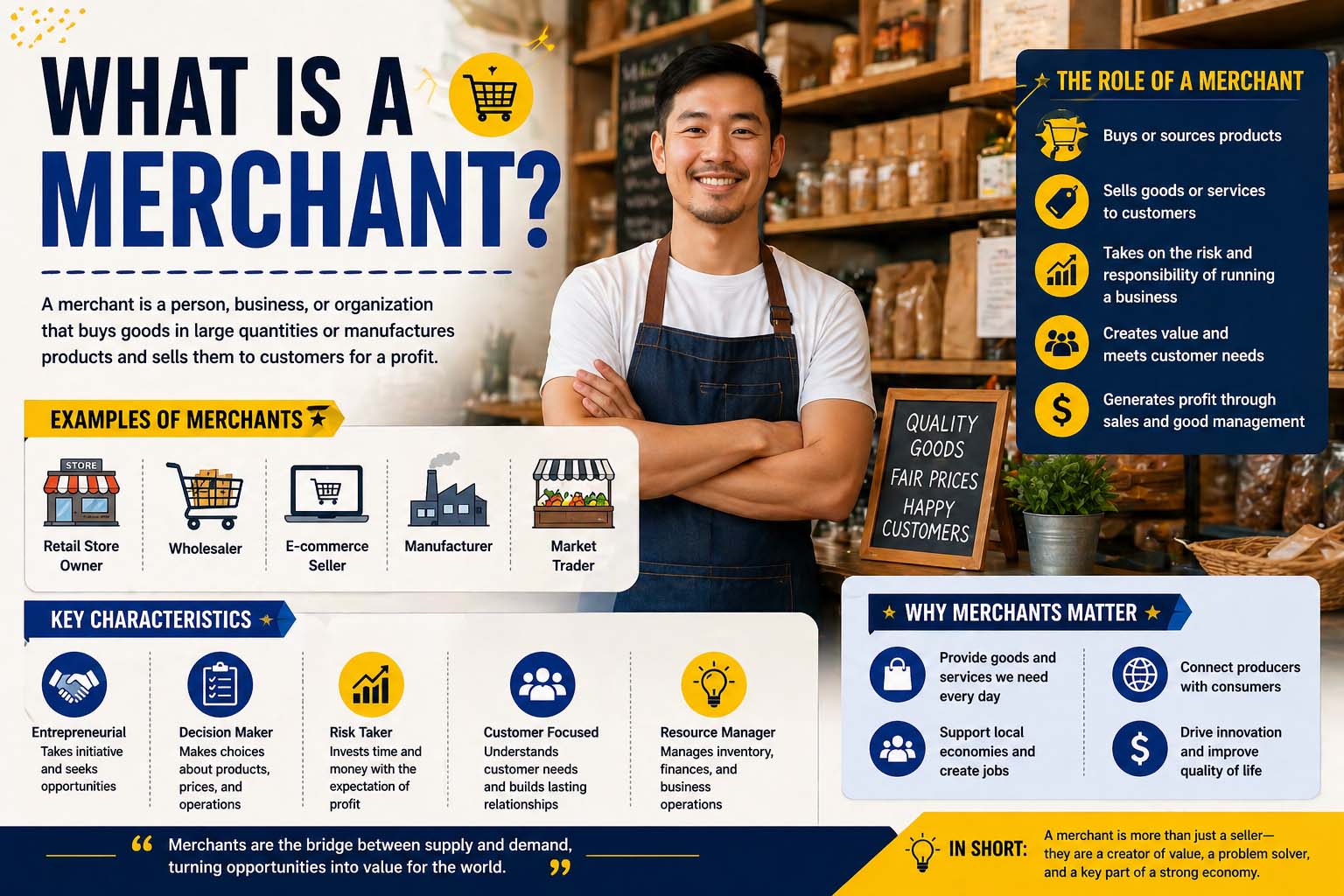
What Is a Merchant: A Complete Guide to Understanding the Role and Meaning
Understanding what is a merchant is essential in today’s world of commerce, trade, and global business. A merchant plays a key role in buying and selling goods or services, acting as a bridge between producers and consumers. Whether they run a small local shop or a large online store, merchants sit at the heart of economic activity. In this article, we explore the meaning of the term, the different types of sellers, and how the idea applies across industries, including maritime jobs and payment systems.
What Is a Merchant Marine
When exploring this topic, it helps to see how the term extends into specialized areas such as the merchant marine. The merchant marine is a fleet of commercial ships that carry cargo and passengers across international waters. Unlike naval forces, which focus on defense, this fleet focuses on trade and logistics.
People working in this fleet make sure goods move efficiently between countries. For example, they transport raw materials, manufactured products, and fuel. Therefore, commercial shipping plays a huge role in supporting global trade and economic growth.
In the United States, the U.S. Maritime Administration (MARAD) supports the country’s commercial fleet and the workers who keep it running.
The link between commercial shipping and everyday trade lies in commerce. Both involve the exchange of goods, but shipping works on a global scale and makes international business possible. Without it, the global supply chain would face major disruptions.
Payment Accounts for Businesses
Another key part of this topic involves payment systems, especially merchant accounts. A merchant account is a type of bank account that lets businesses accept payments, especially credit and debit cards. This matters in today’s digital economy, where people use cash less often.
The account acts as a middle step between the customer’s bank and the business’s bank. When a customer pays by card, the payment passes through this account before it reaches the business’s main account. As a result, the system keeps transactions secure and efficient.
For businesses, this type of account is essential for growth. It lets them reach more customers by offering convenient ways to pay. Whether it is an online store or a physical shop, these accounts keep money flowing smoothly. In other words, the modern role has grown beyond simple buying and selling to include managing digital payments.
Careers on Commercial Ships
To understand the term further, it helps to look at the role of a merchant seaman. A seaman is a professional who works on commercial ships. For instance, their duties can include navigation, engineering, maintenance, and cargo handling.
Seamen play a vital role in global trade because they move goods safely across oceans. However, their work often involves long journeys and requires special training and skills. Even so, it can be a rewarding career for people who enjoy travel and maritime work.
The term seaman shows the link between commerce and life at sea. Just as traditional traders support trade on land, seamen support trade at sea. Therefore, the idea extends into many jobs that help move and exchange goods.
What Is a Merchant Mariner
Another related term is merchant mariner. Although people often use it in place of seaman, a mariner usually means a certified professional working on commercial vessels. In fact, mariners hold licenses and training for specific duties that keep ships running safely.
Mariners may work as deck officers, engineers, or support staff. Above all, their skills keep shipping operations reliable. Additionally, they must follow strict rules and safety standards, since their work directly affects global trade.
Learning about mariners adds depth to the bigger picture. In short, traders are not only business owners but also people who help distribute goods around the world. As a result, this wider view highlights the many roles involved in commerce.
The Core Meaning of a Merchant
At its core, the answer to what is a merchant is simple: a person or business engaged in trade. Merchants buy goods from producers and sell them to consumers. Along the way, they often add value through packaging, marketing, or distribution. Today, they sell in physical stores, on online platforms, and through marketplaces.
Generally, there are three main types: wholesalers, retailers, and e-commerce sellers. Wholesalers sell goods in large quantities to other businesses. By contrast, retailers sell directly to consumers. Meanwhile, online sellers use digital platforms to reach a global audience.
The role has changed over time. In the past, traders traveled long distances to trade spices, textiles, and precious metals. Today, technology lets sellers run their business from anywhere in the world. For growth, businesses expanding into new markets often rely on a strong Market Development Strategy. Similarly, larger organizations may align growth with a Business Level Strategy.
Role in the Economy
Traders are essential for economic growth and development. For one, they create jobs, support industries, and keep goods and services flowing. By connecting producers and consumers, they make sure products reach the people who need them.
In addition, sellers play a key role in innovation. They respond to customer demands, introduce new products, and adapt to market trends. Consequently, this drives competition and pushes businesses to improve their offerings. Moreover, many growing companies invest in IT Strategy Consulting to modernize digital operations and support long-term success.
Conclusion
In conclusion, learning what is a merchant gives valuable insight into the world of trade and commerce. A merchant is more than just a seller. Instead, they are a vital part of the economy because they make the exchange of goods and services possible. From traditional shopkeepers to modern online entrepreneurs, these traders continue to shape how business works.