
What Is Payroll? How It Works, Taxes, and Payroll Processing
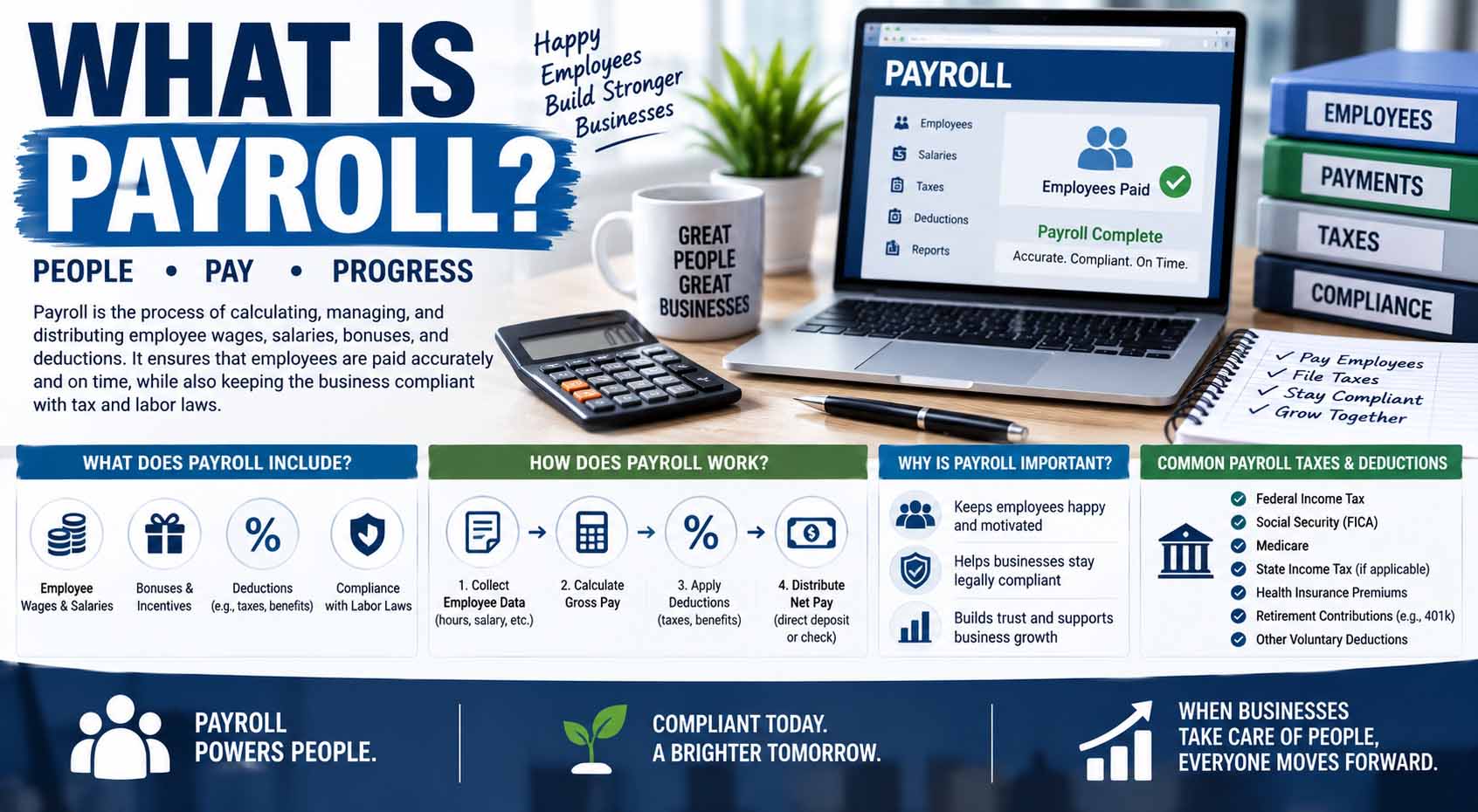
Every business with employees needs a reliable way to calculate wages, handle deductions, and make sure workers receive the correct pay on time. So, what is payroll? Payroll is the process a business uses to calculate employee compensation, subtract required taxes and other deductions, distribute payments, and maintain records of those transactions. The term can also refer to the list of employees a company pays or the total amount it spends on employee wages during a particular period.
Although may sound like a simple payment task, several steps happen behind each paycheck. Businesses need accurate employee information, working hours, salary details, tax data, benefits, paid leave, and other records before they can calculate final pay correctly.
What Is Payroll and Why Does It Matter?
Payroll is a core business function because employees expect accurate and timely compensation for their work.
For example, suppose a company employs 20 people. Some workers receive annual salaries, while others earn hourly wages. A few employees work overtime, while others use paid leave during the same pay period.
Before payday, the company must calculate each person’s gross earnings. Next, it applies taxes, benefit contributions, and other authorized deductions. Finally, the company calculates net pay and sends the correct amount to each worker.
Accurate supports more than employee payments. It also helps businesses maintain financial records, meet tax responsibilities, monitor labor costs, and prepare reports.
Meanwhile, requirements can vary based on different types of employees, such as full-time, part-time, temporary, or other worker classifications recognized under applicable laws and company arrangements.
For that reason, businesses need a process that matches the structure of their workforce.
How Does Payroll Work?
Although systems vary between businesses, most processes follow a similar sequence.
1. Collect Employee Information
First, the employer needs accurate information for every worker.
This usually includes the employee’s name, address, tax information, compensation rate, payment method, and relevant benefit elections.
Employers must also classify workers correctly because treatment can depend on employment status and applicable rules.
2. Track Time and Compensation
Next, the business determines how much each employee earned during the pay period.
For hourly employees, this often requires approved timesheets or digital time records. Meanwhile, salaried employees usually receive a predetermined amount for each pay cycle, subject to applicable adjustments.
Bonuses, commissions, overtime, paid leave, and other compensation may also affect gross pay.
3. Calculate Gross Pay
Gross pay is an employee’s compensation before deductions.
For example, an hourly employee who works 40 hours at $20 per hour would have $800 in basic gross wages before considering overtime, bonuses, taxes, or other adjustments.
However, actual calculations can become more complicated when employees have different rates, commissions, incentives, or other earnings.
4. Apply Taxes and Other Deductions
Once gross pay is calculated, the system applies required and authorized deductions.
These may include taxes, employee benefit contributions, retirement contributions, insurance premiums, or other deductions that apply to the worker.
The exact deductions depend on local laws, employee elections, and company benefit programs.
5. Calculate and Distribute Net Pay
Net pay is the amount remaining after applicable deductions.
Businesses can distribute wages through direct deposit, checks, cards where permitted, or other approved payment methods.
Afterward, the employer records the transaction and maintains documentation according to applicable recordkeeping requirements.
What Is Payroll Tax?
People learning about payroll often ask, what is payroll tax?
Payroll taxes are taxes connected with employee compensation and employment. Depending on the jurisdiction, employers may need to withhold certain taxes from employee wages while also paying employer-side taxes or contributions.
In the United States, for example, responsibilities can include federal income tax withholding and Social Security and Medicare taxes, while federal and state unemployment taxes may also apply under relevant rules.
However, requirements vary by country, state, locality, employee status, and other factors.
Therefore, business owners should not treat tax as a single universal percentage.
When someone asks what is a payroll tax, the practical answer is that it is a tax associated with wages or employment that employers may need to calculate, withhold, report, or pay according to applicable law.
Because errors can result in penalties or corrections, businesses should keep tax information current and use reliable payroll procedures.
Payroll vs. Accounting: What Is the Difference?
Payroll focuses specifically on employee compensation. Accounting covers a much wider range of financial activity, including revenue, expenses, assets, liabilities, cash flow, and financial reporting.
Understanding the difference between finance and accounting also helps business owners see where information fits within broader financial management.
For example, the team may calculate that a company owes $60,000 in wages for a pay period. The accounting system then records payroll expenses and related liabilities in the company’s financial records.
As a result, accurate data supports accurate accounting.
How Paid Time Off Affects Payroll
Employee leave can directly affect calculations.
Paid vacation, sick time, personal leave, and other forms of paid absence may need to be tracked so employees receive the correct compensation.
For instance, an hourly employee may work 32 hours and use eight hours of approved paid leave during a 40-hour week. Depending on company policy and applicable rules, may need to include both categories correctly.
Employers and workers who want to understand these arrangements more clearly should know how does PTO work, since paid time off policies can affect wage calculations, leave balances, and records.
A reliable system should therefore connect timekeeping and leave information whenever practical.
What Is ADP Payroll?
Another common question is what is ADP payroll?
ADP is a company that provides payroll and workforce-related services and software to businesses. Its products can help employers calculate wages, manage certain tax processes, maintain employee information, and handle payment-related tasks, depending on the service selected.
However, ADP is one provider rather than another name for payroll itself.
Businesses can manage payroll in several ways. A small company might process using dedicated software, while a larger organization may use an integrated human resources and payroll platform.
Other businesses outsource part or all of the process.
When comparing Human Resources Outsourcing Services, companies may find providers that combine administration with benefits support, HR administration, compliance-related services, and other workforce functions.
The right approach depends on workforce size, budget, complexity, and internal expertise.
What Is Certified Payroll?
The phrase what is certified payroll usually comes up in connection with certain government-funded or public works projects in the United States.
Certified payroll generally involves detailed wage reporting that contractors or subcontractors may need to provide when covered labor requirements apply.
Reports can include information such as worker classifications, hours worked, wage rates, deductions, and other required details.
However, certified rules are more specialized than ordinary processing. Therefore, businesses working on covered contracts should verify current requirements for the specific project and jurisdiction rather than relying on a normal payroll report.
A standard private business may never need certified , while a construction contractor working on certain public projects may encounter it regularly.
In-House Payroll vs. Outsourced Payroll
Businesses generally choose between handling payroll internally and using an outside provider, although some use a combination.
| Payroll Approach | Potential Advantage | Potential Challenge |
|---|---|---|
| In-house payroll | Greater direct control | Requires staff time and expertise |
| Payroll software | Automates repetitive calculations | Still requires accurate setup and oversight |
| Outsourced payroll | Reduces internal administrative work | Adds service costs and provider dependence |
| Integrated HR/payroll platform | Keeps workforce data connected | Can require setup and training |
Small companies with straightforward may prefer software that automates calculations and payments.
However, businesses with employees in multiple jurisdictions or more complicated compensation structures may benefit from specialist support.
The benefits of hr outsourcing can extend beyond because external providers may also support areas such as benefits administration, HR processes, and workforce documentation, depending on the arrangement.
Still, outsourcing does not remove management responsibility. Business owners should review reports, maintain accurate information, and understand what the provider handles.
Common Payroll Mistakes Businesses Should Avoid
Payroll errors can affect both employees and the company.
One common mistake is entering inaccurate employee information. Even a small error in compensation rates, tax details, or bank information can create payment problems.
Another issue is poor time tracking.
If employee hours are incomplete or inaccurate, calculations may also be wrong. Therefore, managers should establish a clear process for reviewing and approving hours before closes.
Worker classification also deserves attention. Businesses should classify workers based on applicable legal standards rather than choosing whichever category seems administratively easier.
Missed payroll deadlines can create another problem.
Employees plan their personal finances around expected paydays, so repeated late payments can damage trust and morale.
Finally, businesses should avoid assuming that software eliminates every risk. Automation can reduce repetitive work, but incorrect information entered into a system can still produce incorrect results.
How Payroll Supports Better Business Management
Payroll data can provide useful management insights when businesses review it carefully.
Labor is a major expense for many organizations. Therefore, reports can help managers understand staffing costs, overtime patterns, department expenses, and changes in compensation.
For example, unusually high overtime in one department might indicate understaffing, poor scheduling, or temporary increases in demand.
Managers can then investigate the cause rather than simply accepting the higher expense.
Payroll also affects employee experience.
Workers expect to receive the amount they earned at the promised time. Consequently, consistent accuracy can strengthen trust between employees and management.
As businesses grow, administrative complexity usually increases too. At that point, automation, stronger HR systems, or specialist support can help maintain accuracy without overwhelming internal staff.
Payroll Best Practices for Small Businesses
A good payroll process starts with consistency.
First, create a clear payroll calendar that identifies pay periods, approval deadlines, and payment dates.
Next, keep employee information current. Changes to compensation, bank details, benefits, tax information, or employment status should reach the payroll system promptly.
Then, establish an approval process.
For instance, managers can review employee hours before processing begins. Likewise, another authorized person can review payroll totals before payments are released when the business structure allows it.
Regular reconciliation is also useful.
Compare payroll reports with accounting records and bank transactions so discrepancies can be identified early.
Finally, protect information carefully. records contain sensitive employee and financial data, so access should be limited to authorized people and supported by appropriate security controls.
Frequently Asked Questions
What is payroll in simple terms?
Payroll is the process a business uses to calculate employee wages, apply taxes and other deductions, pay employees, and maintain related records. The word can also refer to a company’s list of paid employees or its total wage expense.
How often do businesses run payroll?
Payroll schedules vary. Businesses may pay employees weekly, every two weeks, twice a month, monthly, or according to another legally permitted schedule.
Is payroll part of HR or accounting?
It can involve both. HR often manages employee information, compensation changes, benefits, and leave data, while accounting records payroll expenses and liabilities. Some businesses maintain a dedicated function.
Can a small business do its own payroll?
Yes, depending on its complexity and local requirements. However, business owners need accurate records, appropriate tax knowledge, reliable calculations, and a process for meeting filing and payment deadlines.
What information is needed for payroll?
Businesses generally need employee identification and tax information, compensation rates, hours worked where applicable, benefit details, deductions, payment information, and other data required by law or company policy.
Is payroll the same as salary?
No. Salary is one form of employee compensation, while payroll is the broader process used to calculate and distribute employee pay and handle related deductions and records.
Build a Payroll Process That Can Grow With Your Business
Understanding what is payroll gives business owners a clearer picture of one of their most regular financial responsibilities. Payroll involves much more than transferring money to employees because businesses also need to calculate compensation, handle deductions, maintain records, manage tax obligations, and coordinate workforce information.
Start with accurate employee records and a consistent pay schedule. Then, create reliable processes for time tracking, approvals, deductions, payments, and recordkeeping.
As the company grows, review whether the existing process still works. A business that once handled five employees manually may need software or professional support after expanding to 50 workers.
Above all, treat accuracy as an ongoing business priority. When employees are paid correctly and on schedule, the company can spend less time fixing administrative problems and more time running the business.