What Is the Voluntary Exchange of Goods and Services?
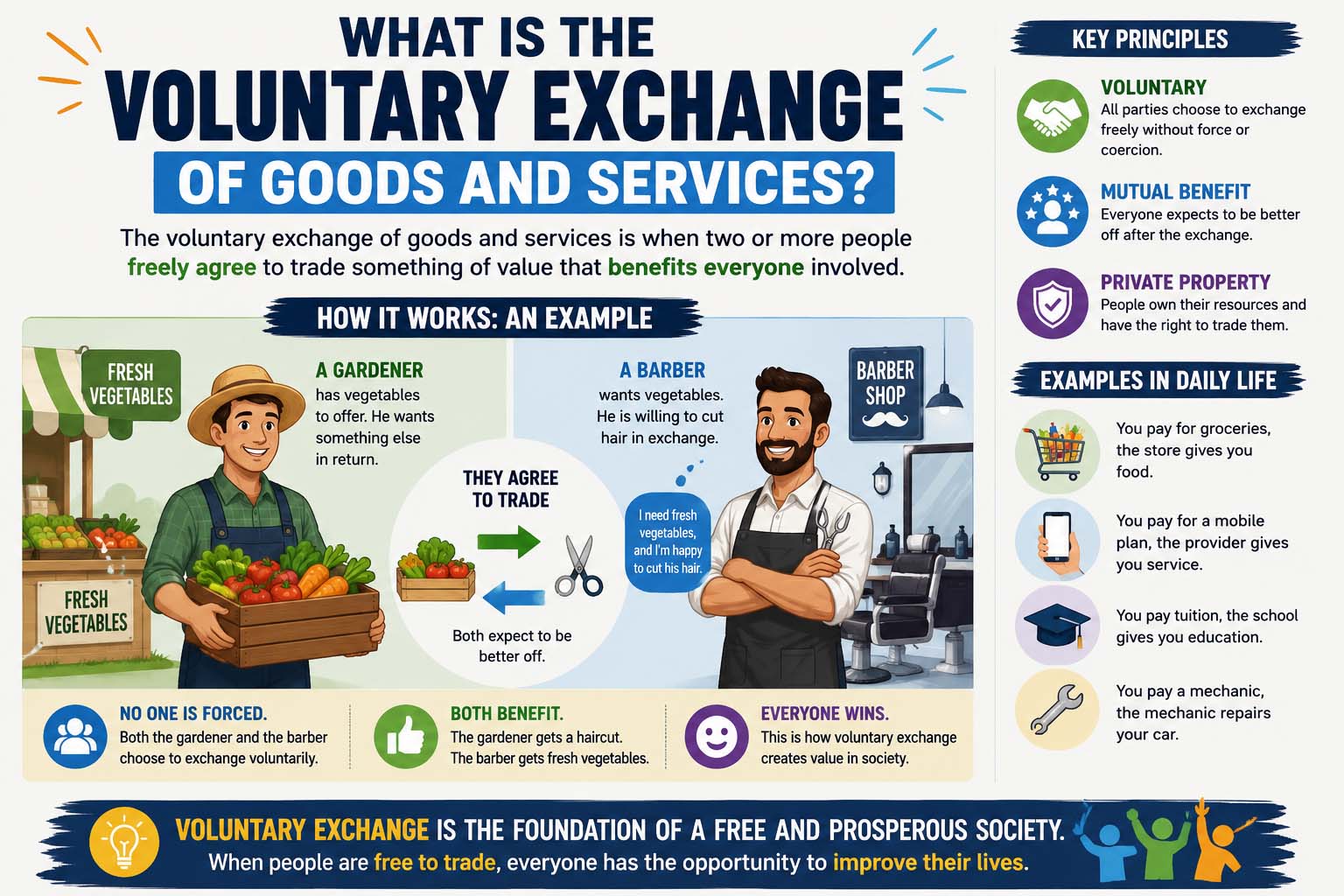
The voluntary exchange of goods and services is one of the most important concepts in economics and everyday business. It happens when two or more people willingly trade products, money, or services because everyone involved believes they will benefit from the exchange. In simple terms, voluntary exchange occurs when buyers and sellers agree to trade without force, pressure, or coercion.
This economic principle forms the foundation of modern markets and global trade. Every time someone buys food from a grocery store, hires a mechanic, or pays for online streaming services, they participate in the voluntary exchange of goods and services. Understanding this concept helps explain how economies grow, how businesses operate, and why trade is valuable in society.
The voluntary exchange of goods and services works because both parties expect to gain something valuable. A customer may value a product more than the money they spend, while the seller values the money more than the product being sold. Since both sides benefit, the exchange takes place willingly.
For example, imagine a person purchasing a laptop from a store. The customer believes the laptop is worth the price because it can help with work, education, or entertainment. At the same time, the store owner gains profit from selling the laptop. Both parties improve their situation through the trade.
This concept applies not only to physical products but also to services. A teacher provides education, a doctor offers healthcare, and a web designer creates websites. In return, they receive payment for their skills and expertise.
Why Voluntary Exchange Is Important
The voluntary exchange of goods and services is important because it encourages cooperation and economic efficiency. People specialize in producing what they do best and then trade for other things they need. This specialization increases productivity and allows societies to create more wealth.
Without voluntary exchange, people would have to produce everything on their own. A person would need to grow food, build shelter, make clothing, and create tools independently. Modern economies function more efficiently because individuals and businesses focus on specific tasks and exchange their products or services with others.
Voluntary exchange also promotes innovation and competition. Businesses try to improve products, lower prices, and provide better customer service to attract buyers. Consumers benefit from more choices and better quality products in the market.
Examples of Voluntary Exchange in Everyday Life
The voluntary exchange of goods and services happens constantly in daily life. Shopping at a supermarket is one of the most common examples. Customers exchange money for groceries, while the store earns revenue from sales.
Online marketplaces also rely heavily on voluntary exchange. Websites such as e-commerce platforms allow buyers and sellers from different countries to trade products easily. A customer may purchase clothing, electronics, or digital products online because they believe the items are worth the cost.
Another example is employment. Workers voluntarily exchange their time, labor, and skills for wages or salaries. Employers benefit from the employee’s work, while employees earn income to support their lives.
Even entertainment services operate through voluntary exchange. People pay for streaming subscriptions, movie tickets, or gaming services because they value the enjoyment and convenience these services provide.
The Role of Supply and Demand
Supply and demand play a major role in the voluntary exchange of goods and services. Sellers supply products or services, while buyers create demand for them. Prices often change depending on how much consumers want an item and how available it is in the market.
When demand for a product is high and supply is limited, prices usually increase. On the other hand, when supply exceeds demand, prices may decrease. These market changes help balance trade and influence consumer decisions.
For example, smartphones with advanced features may initially cost more because many people want them. Over time, as production increases and competition grows, prices often become more affordable.
Benefits of Voluntary Exchange
One major benefit of the voluntary exchange of goods and services is mutual satisfaction. Both buyers and sellers feel they receive value from the transaction. This creates positive economic relationships and encourages continued trade.
Another advantage is economic growth. Businesses earn profits, workers receive wages, and consumers gain access to products that improve their quality of life. As trade increases, economies expand and create more job opportunities.
Voluntary exchange also encourages freedom of choice. Consumers can decide what to buy, while businesses can choose what to produce and sell. This flexibility supports creativity, entrepreneurship, and innovation in the marketplace.
Voluntary Exchange and Free Markets
The concept of voluntary exchange is closely linked to free market economies. In a free market system, individuals and businesses make economic decisions with limited government control. Prices, production, and trade are mainly determined by supply and demand.
Free markets encourage competition among businesses, which can lead to lower prices and better products for consumers. Companies that provide high-quality goods and services often succeed because customers voluntarily choose them over competitors.
Challenges and Limitations
Although the voluntary exchange of goods and services offers many advantages, it can also face challenges. Sometimes one party may have more information or power than the other, leading to unfair transactions. For example, misleading advertising or poor product quality can reduce consumer trust.
Economic inequality can also affect voluntary exchange. People with limited income may not have equal access to certain goods or services. In addition, monopolies can reduce competition and limit consumer choices in the market.
To address these issues, many governments create laws related to consumer protection, labor rights, and fair trade practices. These regulations help maintain trust and fairness in economic exchanges.
How Technology Has Changed Voluntary Exchange
Technology has transformed the voluntary exchange of goods and services in significant ways. Digital payment systems, online shopping platforms, and mobile apps make transactions faster and more convenient than ever before.
Businesses can now reach customers around the world through the internet. Freelancers provide services remotely, while digital products such as software, online courses, and streaming subscriptions are traded instantly online.
Conclusion
The voluntary exchange of goods and services is a fundamental concept that drives economic activity and modern society. It occurs when people willingly trade products, money, or services because both sides expect to benefit. This simple idea supports businesses, encourages innovation, and helps economies grow.