
Cost to Make a Quarter
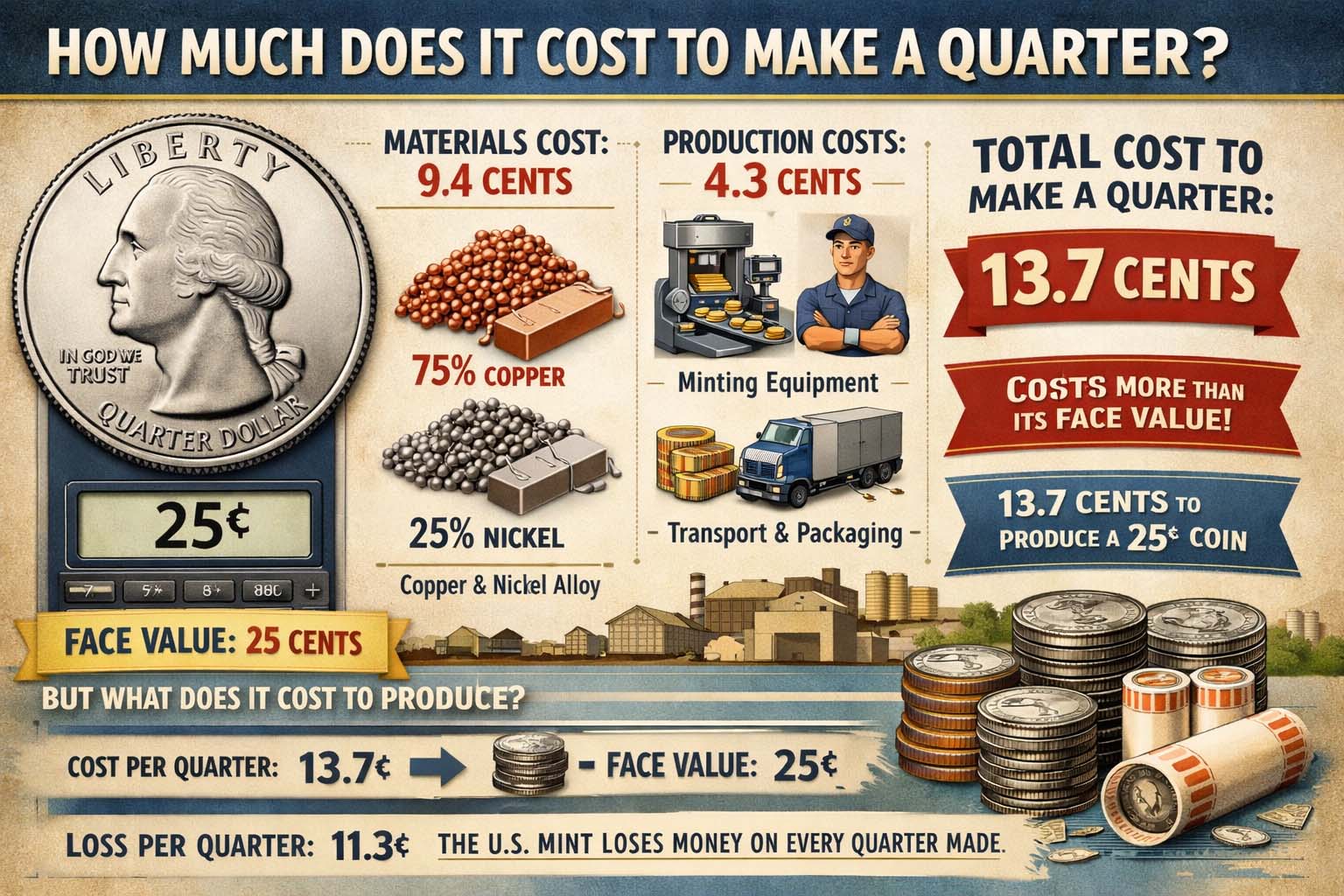
Many people use coins every day without thinking about how much they cost to produce. One of the most common coins in the United States is the quarter. It has a face value of 25 cents, but many people wonder, how much does it cost to make a quarter today. The Cost to Make a Quarter includes metal prices, labor, transportation, minting equipment, and government operations.
The United States Mint is responsible for producing circulating coins such as pennies, nickels, dimes, and quarters. Every year, production costs can rise or fall depending on raw material prices and manufacturing expenses. Therefore, understanding these costs helps explain why some coins become expensive to produce and why governments review coin production regularly.
In this article, we will answer how much does it cost to make a quarter, explain the factors involved, and explore why production costs matter.
What Is a Quarter Made Of?
what a quarter is made from. A modern U.S. quarter is primarily made of a copper core covered by outer layers of nickel. This combination gives the coin durability, a silver-like appearance, and resistance to corrosion.
The typical quarter weighs 5.67 grams and has been produced in this copper-nickel format for decades. Because the coin contains metal, changes in global copper and nickel prices can directly impact production costs. Understanding What Is a Vendor can also help explain the role of suppliers that provide raw materials and other production resources.
That is why many people ask, how much when commodity markets rise.
Average Cost to Produce a Quarter
According to recent U.S. Mint reports, the cost of producing a quarter has generally remained below its 25-cent face value. In recent years, the average cost has often ranged between 10 and 15 cents per coin, though this can change annually.
This means the government still earns a positive margin when producing quarters. Unlike pennies and nickels, which sometimes cost more than their face value, quarters are usually more economical.
When people search how much money does it cost to make a quarter, the answer depends on the year and market conditions, but it is commonly far less than 25 cents.
How Much Does It Cost to Make a Quarter in 2026?
Many people specifically ask how much does it cost to make a quarter in 2026 because they want updated information. While final official annual reports may vary, experts expect quarter production costs in 2026 to remain influenced by copper prices, nickel costs, labor wages, transportation, and Mint operations.
If metal prices stay stable, the quarter will likely continue to cost well below its face value. However, if commodity prices surge, production expenses may increase. Historically, quarters remain one of the more efficient coins to produce compared with smaller denominations.
So when asking how much does it cost to make a quarter in 2026, the estimated range may still fall around previous production levels unless market conditions change sharply.
Why Does It Cost Money to Make Coins?
Coins may look simple, but manufacturing them requires a complex process.
Raw Materials
Nickel and copper must be sourced and refined before coin blanks are made. Facilities managing these materials may use inventory methods explained in What Is FIFO to track older and newer stock.
Minting Equipment
Large industrial presses strike designs onto each coin. These machines require maintenance and energy.
Labor Costs
Workers operate equipment, monitor quality, package coins, and handle logistics.
Transportation
Finished coins are shipped to Federal Reserve locations and distributed nationwide. Businesses involved in logistics may also compare costs using guides like Cheapest Way to Ship a Package.
Security and Administration
The Mint must maintain secure facilities and manage nationwide operations.
All of these factors help answer how much does it cost to make a quarter? because the expense goes beyond metal alone.
Why Quarters Are More Cost-Effective
Among circulating U.S. coins, quarters are often considered efficient because they carry a relatively high face value. Even if production costs rise to 12 cents, the government still issues a coin worth 25 cents.
This difference creates what economists call seigniorage, which is the profit earned from producing currency below face value.
That is why quarters remain practical, while pennies and nickels have faced criticism due to higher production costs.
Changes in Materials Over Time
Quarter costs have changed over time. Decades ago, silver was once used in U.S. quarters, making them more valuable as metal. Since 1965, the quarter shifted to copper-nickel clad composition, helping reduce costs and preserve silver supplies.
As inflation increased over the years, labor and energy expenses also rose. However, because quarters represent a higher denomination, they have remained relatively efficient.
People researching how much does it cost to make a quarter often discover that modern metal changes were designed to keep production affordable.
Could the Quarter Change in the Future?
Governments sometimes review coin composition to reduce costs. If copper or nickel prices rise sharply, the U.S. Mint could recommend alternative metals or new manufacturing methods.
Possible future changes may include:
- Different metal blends
- Lighter coins
- Improved automated production
- More reliance on digital payments reducing demand
Still, the quarter remains highly popular in vending machines, laundromats, parking meters, and everyday transactions. Understanding What Is a Merchant can also help explain how businesses accept coins and other payment methods from customers.
Public Interest and Economic Questions
The question how much does it cost to make a quarter is popular because it reveals how money works behind the scenes. Many assume coins are cheap to make, but production costs can be surprisingly high depending on the denomination.
It also raises interesting debates:
- Should low-value coins be removed?
- Should metal composition change?
- Are digital payments replacing coins?
- Is coin production still profitable?
These questions make coin economics fascinating for both students and adults.
Final Answer
So, how much does it cost to make a quarter?
In most recent estimates, it costs significantly less than 25 cents, often around 10 to 15 cents depending on materials and operating expenses. This makes quarters more economical than pennies or nickels.
Conclusion
Understanding how much does it cost to make a quarter gives insight into economics, inflation, and currency production. While costs vary each year, quarters usually remain one of the smartest coins for the U.S. Mint to manufacture.