Understanding What Are Utilities
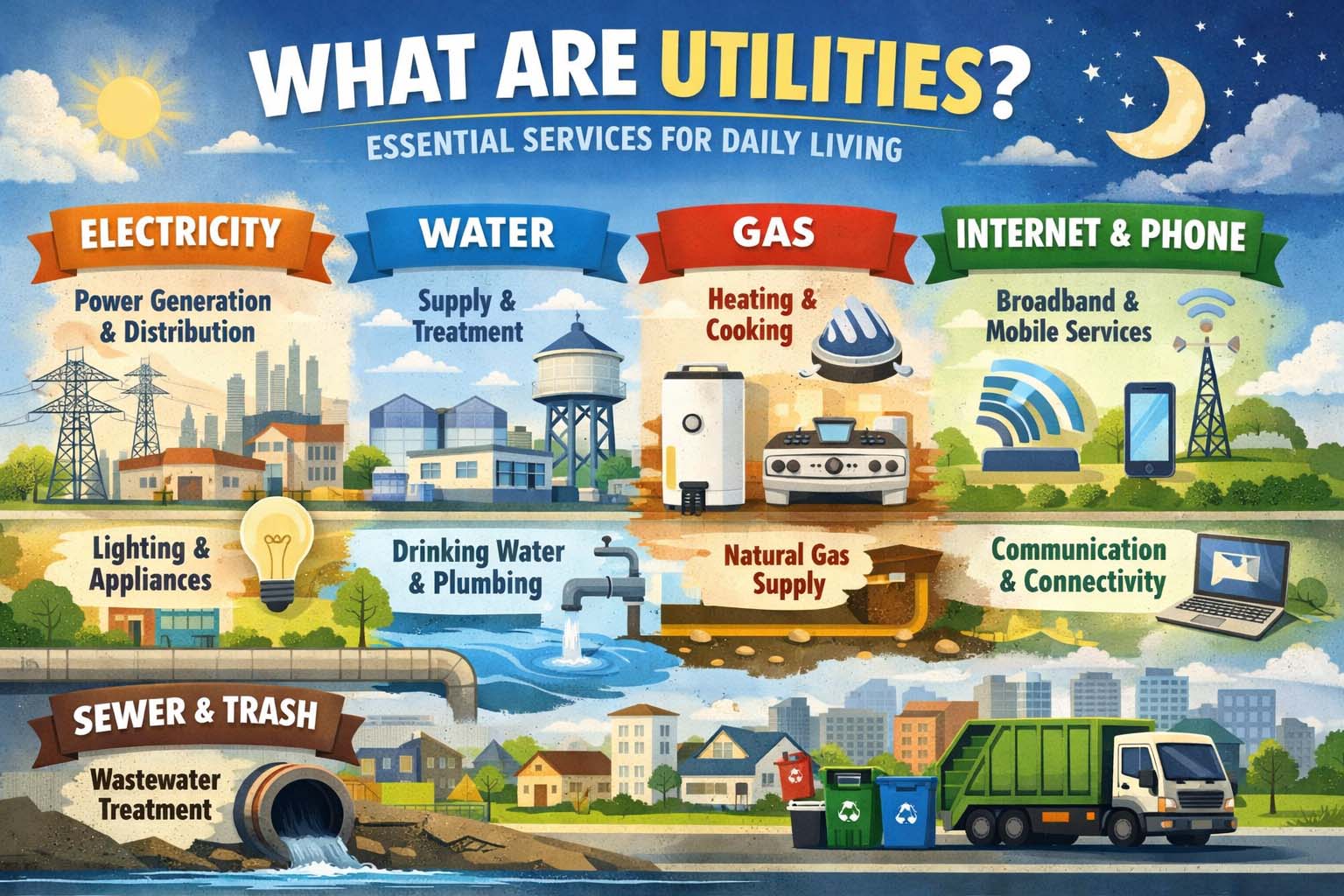
When people ask What Are Utilities, they are usually referring to the essential services that keep homes, businesses, and communities running smoothly. Utilities include services such as electricity, water, gas, sewage, internet, and waste collection. These services are considered necessary for modern living because they support daily activities like cooking, cleaning, heating, cooling, and communication.
Utilities are important because they provide comfort, convenience, and safety. Without electricity, homes would be dark and appliances would not function. Without water, cooking, bathing, and sanitation would become difficult.making them one of the most essential parts of any property.
The Main Types of Utilities
Utilities are generally divided into several major categories. and powers lighting, electronics, and appliances. Water is another vital utility used for drinking, cleaning, and hygiene. homes and cooking meals.
Other include sewer services, which remove wastewater safely, and trash collection, which helps maintain cleanliness. In today’s digital world, many people also consider internet and cable services to be because they are necessary for work, school, and entertainment.
When someone asks what are considered , the answer depends on the location and property type. Traditionally, electricity, water, gas, and sewer services are the core , while internet and phone services are often added in modern living situations.
Household Services and Monthly Bills
Homeowners often wonder what are utilities in a house because managing monthly bills is an important part of owning property. In a house, typically include electricity, water, gas, sewer, and garbage collection. Depending on the region, homeowners may also pay for heating oil, propane, or renewable energy systems.
Some houses have separate bills for each utility provider, while others may combine certain charges. For example, water and sewer services may come from the same local provider. Electricity is usually billed monthly based on usage, while gas bills may increase during colder seasons. Understanding What Is a Vendor can also help explain the role of companies that supply these services to customers.
Understanding household helps owners budget effectively. Energy-efficient appliances, better insulation, and smart thermostats can reduce utility costs significantly. Many families also use solar panels or water-saving fixtures to lower expenses over time. Commercial property tenants may also review What Is a Triple Net Lease to understand how leases can assign responsibility for expenses such as taxes, insurance, maintenance, and utilities.
What Are Utilities in an Apartment?
Renters commonly ask what are in an apartment because utility arrangements vary between rental properties. In many apartments, can include electricity, water, gas, trash removal, and internet. However, some landlords include certain in the monthly rent, while others require tenants to set up their own accounts.
For example, an apartment lease may include water and trash services but require the renter to pay electricity separately. In luxury buildings, internet or cable may also be included. B read the lease carefully before signing.
Apartment are often less expensive than utilities in a house because apartments are usually smaller and share walls, reducing heating and cooling costs. Still, usage habits such as air conditioning, long showers, or frequent laundry can affect monthly expenses.
Budget Planning and Costs
utilities is to manage personal finances. Utility bills are recurring monthly costs that should be included in every household budget. as property size, climate, number of occupants, and personal habits.
Electricity costs rise when air conditioning or heating systems are heavily used. Water bills can increase with landscaping, pools, or inefficient plumbing. Gas bills often go up in winter when heating demand is highest.
A smart way to control utility spending is to track usage monthly. Comparing bills over time helps identify trends and potential waste. As a result, small changes like turning off lights, fixing leaks, and using energy-efficient appliances can create noticeable savings.
Many people researching careers or investments ask what companies are in the public utilities field. Public utilities companies are businesses that provide and renewable energy to communities. These companies are often regulated because they deliver services critical to daily life. Organizations modernizing these operations often invest in IT Strategy Consulting to improve efficiency and infrastructure.
Examples include electric power providers, water treatment companies, natural gas distributors, and waste management firms. In the United States, well-known public utilities companies include Duke Energy, NextEra Energy, Dominion Energy, Southern Company, and American Water Works. Similar companies exist in nearly every country.
Public utility companies are often considered stable because demand for their services remains constant. People need electricity and water regardless of economic conditions. This is why utilities are a popular sector for long-term investors and job seekers.
Why Utilities Are Essential in Modern Life
Utilities affect nearly every part of modern life. Schools need electricity and water to operate. Hospitals depend on reliable power and sanitation. Businesses require internet, lighting, and heating systems to serve customers efficiently.
Even transportation systems rely on utilities. Electric trains, traffic signals, and fuel infrastructure all depend on utility networks. As cities grow, demand for reliable utility services continues to increase.
Utilities also play a major role in public health. and dependable energy systems improve quality of life and reduce health risks. Reviewing Positive Externality Examples can help explain how infrastructure and public services may create benefits that extend beyond their direct users.
Future of Essential Services
The utility sector is changing rapidly with new technology. Renewable energy sources such as solar and wind power are becoming more common. Smart meters help customers monitor electricity usage in real time. Water-saving systems and recycling programs are also improving sustainability.
In the future, utilities may become more efficient, environmentally friendly, and customer-focused. are already reshaping how people use energy.
Consumers who understand utilities today will be better prepared for tomorrow’s changes.
Conclusion
If you have ever wondered What Are Utilities, the answer includes the essential services that power homes, apartments, businesses, and cities. Electricity, water, gas, sewer, waste collection, and internet are among the most common utilities used every day.