What Is a Triple Net Lease?
If you’re looking at commercial property for your business, you’ve probably seen the term NNN lease or triple net lease. If you’re asking what is a triple net lease, the monthly rent might seem affordable at first glance, but there’s more to the total cost than the base rent.
A triple net lease shifts several property expenses from the landlord to the tenant. In fact, this type of lease is common in retail stores, restaurants, medical offices, warehouses, and standalone commercial buildings.
Therefore, understanding how it works can help business owners avoid unexpected costs and negotiate a lease with confidence.
This guide explains what a triple net lease is, what expenses it includes, its advantages and disadvantages, and whether it’s the right choice for your business.
What Is a Triple Net Lease? Quick Answer
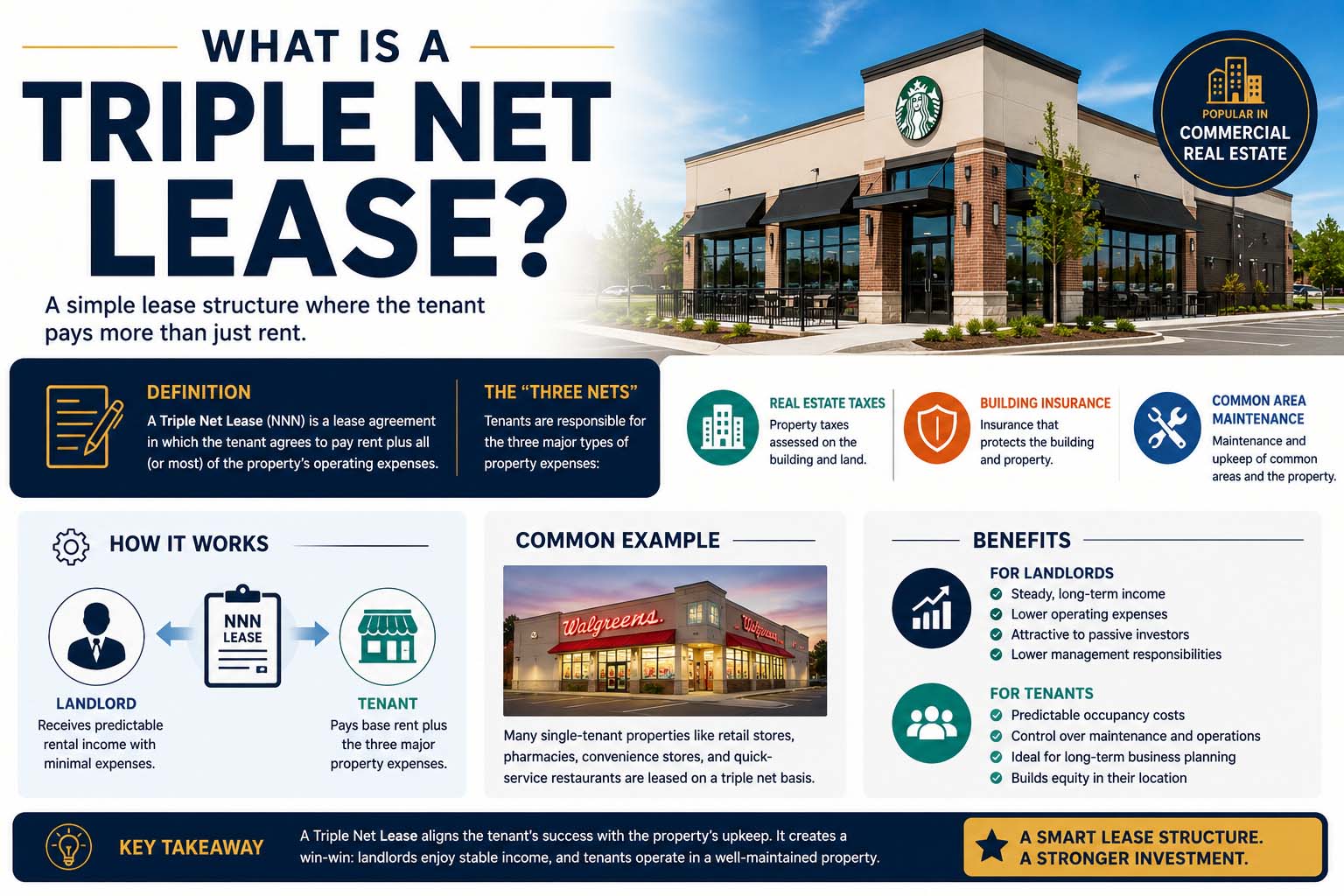
A triple net lease (NNN lease) is a commercial where the tenant pays:
- Base rent
- Property taxes
- Building insurance
- Property maintenance and common area expenses
The landlord still owns the property, but many operating costs become the tenant’s responsibility.
What Is a Triple Net Lease?
Many people ask about this type of commercial lease.
A triple net lease is a commercial rental agreement that requires the tenant to pay three major operating expenses in addition to monthly rent.
The “three nets” refer to:
- Property taxes
- Property insurance
- Property maintenance
Instead of the landlord covering these expenses, they are passed on to the tenant according to the lease agreement.
This arrangement is especially common in commercial real estate because it provides more predictable income for property owners while giving tenants greater control over property-related expenses.
Understanding the Three “Nets” in a Triple Net Lease
Knowing what each “net” includes makes the lease easier to understand.
Property Taxes
Commercial property taxes are usually assessed by local governments.
Under a net lease, tenants contribute toward these taxes based on the terms of the lease.
Building Insurance
The property owner maintains insurance for the building itself.
However, the tenant pays their share of that insurance cost.
This does not replace the tenant’s own business insurance, which is often required separately.
Property Maintenance
For example, maintenance costs may include:
- Parking lot repairs
- Landscaping
- Roof maintenance
- Exterior lighting
- Sidewalk upkeep
- Snow removal where applicable
- Shared common areas
Generally, these expenses are divided among tenants in multi-tenant properties.
What Is a Triple Net Lease for Commercial Property?
The question what is a triple net lease for commercial property usually refers to leasing business property instead of residential housing.
For example, common properties using NNN leases include:
- Retail stores
- Shopping centers
- Restaurants
- Pharmacies
- Banks
- Office buildings
- Medical clinics
- Industrial warehouses
In particular, understanding What Is Retail provides useful context for one of the business sectors where these leases are common. However, residential rentals rarely use net lease structures.
How Does a Triple Net Lease Work?
The process is fairly straightforward.
Step 1: Agree on Base Rent
The landlord and tenant negotiate monthly rent.
This amount is usually lower than under a gross lease because additional expenses are paid separately.
Step 2: Estimate Operating Costs
The landlord estimates yearly costs for:
- Taxes
- Insurance
- Maintenance
Afterward, those costs are divided into monthly payments.
Step 3: Make Monthly Payments
The tenant pays:
- Base rent
- NNN expenses
- Utilities when applicable
Additionally, What Are Utilities explains the services that may create separate operating expenses for a commercial tenant. Generally, many businesses receive a monthly invoice showing each charge separately.
Step 4: Complete Annual Reconciliation
If actual expenses differ from estimates, adjustments may be made according to the lease terms.
As a result, the tenant may owe additional money or receive a credit.
What Is a Triple Net Lease Agreement?
Many business owners ask, what is a triple net lease agreement before signing commercial property contracts.
A triple net agreement is the legal document that outlines:
- Base rent
- Lease term
- Property tax responsibilities
- Insurance payments
- Maintenance obligations
- Repair responsibilities
- Rent increases
- Renewal options
- Default conditions
Therefore, reading every section carefully helps prevent misunderstandings later.
What Does a Triple Net Lease Mean?
If you’ve searched what is a net lease mean, the simple explanation is this:
It means the tenant pays more than just rent.
Instead of one all-inclusive monthly payment, the tenant contributes toward three major property expenses.
While this increases monthly responsibilities, the base rent is often lower than with other commercial lease types.
Triple Net Lease vs. Gross Lease
Understanding the difference helps when comparing commercial properties.
| Feature | Triple Net Lease | Gross Lease |
|---|---|---|
| Base Rent | Usually lower | Usually higher |
| Property Taxes | Tenant pays | Landlord pays |
| Insurance | Tenant pays | Landlord pays |
| Maintenance | Tenant pays | Landlord pays |
| Monthly Costs | Can vary | More predictable |
| Budget Planning | Requires careful tracking | Simpler |
Ultimately, both lease types can work well depending on the business.
Advantages of a Triple Net Lease
Many businesses choose NNN leases for several reasons.
Lower Base Rent
Because tenants cover operating expenses, landlords often charge lower monthly rent.
As a result, this may improve cash flow for growing businesses.
More Transparency
Expenses are separated rather than hidden inside rent.
Better Property Care
Tenants often take better care of properties when they’re responsible for maintenance costs.
Long-Term Stability
Triple net leases frequently include longer terms, creating stability for both landlords and tenants.
Disadvantages of a Triple Net Lease
These leases aren’t perfect for every business.
Variable Expenses
Taxes and insurance can increase over time.
Therefore, monthly costs aren’t always fixed.
Maintenance Responsibilities
Unexpected repairs may increase operating expenses.
As a result, businesses should budget for these costs.
More Financial Planning
Business owners need to monitor operating expenses carefully throughout the year.
Example of a Triple Net Lease
Imagine a retail clothing store leases a commercial building.
Monthly base rent:
$3,000
Monthly NNN expenses:
| Expense | Monthly Cost |
|---|---|
| Property tax | $350 |
| Insurance | $180 |
| Maintenance | $270 |
Total monthly payment:
$3,800
Although the advertised rent was $3,000, the actual monthly cost is higher because of the additional operating expenses.
Businesses That Use Triple Net Leases
Many industries operate under NNN leases.
For example:
- Coffee shops
- Fast-food restaurants
- Convenience stores
- Grocery stores
- Fitness centers
- Auto service shops
- Medical practices
- Dental clinics
- Banks
- National retail chains
In fact, large franchise businesses frequently sign long-term triple net leases.
Questions to Ask Before Signing a Triple Net Lease
Before agreeing to any commercial lease, ask these questions:
- Who handles roof repairs?
- Are maintenance costs capped?
- How are common area expenses calculated?
- How often can rent increase?
- Are property tax increases passed directly to tenants?
- Can expenses be audited?
- What happens if major repairs are needed?
Additionally, understanding What Is a Vendor can help businesses evaluate companies responsible for maintenance and other property services. Ultimately, knowing the answers helps prevent future surprises.
Triple Net Lease Checklist
Use this checklist before signing:
- ✓ Review the entire lease agreement.
- ✓ Understand every fee.
- ✓ Ask for previous years’ operating expenses.
- ✓ Confirm maintenance responsibilities.
- ✓ Review renewal options.
- ✓ Understand rent increase schedules.
- ✓ Budget for future tax increases.
- ✓ Have a commercial real estate attorney review the contract if needed.
Common Triple Net Lease Mistakes
Many first-time commercial tenants overlook important details.
Avoid these mistakes.
Looking Only at Base Rent
Lower rent doesn’t always mean lower monthly costs.
Therefore, always calculate total occupancy expenses.
Ignoring Maintenance Clauses
Some leases require tenants to pay for major building repairs.
For this reason, read these sections carefully.
Not Reviewing Expense History
Ask for previous operating costs.
After all, past expenses often provide a realistic estimate of future payments.
Forgetting Budget Changes
Insurance premiums and taxes can increase over time.
Therefore, leave room in your business budget for these adjustments.
Tips for Negotiating a Better Triple Net Lease
Everything in a commercial lease is potentially negotiable.
For example, you may be able to negotiate:
- Lower base rent
- Caps on maintenance increases
- Longer rent-free periods
- Tenant improvement allowances
- Renewal options
- Repair responsibilities
- Annual rent increases
In many cases, everything in a commercial lease is potentially negotiable. Understanding What Is a Broker can also help business owners recognize the role professionals play in commercial lease discussions.
Is a Triple Net Lease Right for Your Business?
It may be a good fit if your business:
- Plans to stay long term
- Wants lower base rent
- Can budget for changing expenses
- Prefers greater control over property operations
On the other hand, a gross lease may be a better choice if predictable monthly expenses are your top priority. Reviewing your Business Level Strategy can also help determine whether a specific lease structure supports your company’s long-term goals.
Frequently Asked Questions About Triple Net Leases
What Is Included in a Triple Net Lease?
A generally includes base rent plus property taxes, building insurance, and maintenance expenses.
Are Triple Net Leases Good for Tenants?
They can be. For example, lower base rent may offset operating expenses, especially for long-term businesses that budget carefully.
Why Would Landlords Prefer Triple Net Leases?
They reduce the landlord’s responsibility for operating costs and create more predictable income.
Is a Triple Net Lease Only for Commercial Property?
Yes. Triple net leases are primarily used in commercial real estate rather than residential rentals.
Can Triple Net Expenses Change?
Yes. Property taxes, insurance premiums, and maintenance costs may increase or decrease over time.
Are Utilities Included in a Triple Net Lease?
Usually not. Most tenants pay utilities separately, though lease terms vary by property.
Final Thoughts on What Is a Triple Net Lease
A triple net can be an excellent option for businesses looking for commercial space, but it’s essential to understand the full cost before signing. While the lower base rent may seem attractive, property taxes, insurance, and maintenance expenses can significantly affect your monthly budget.
Therefore, take time to review the lease agreement, estimate long-term operating costs, and compare different lease structures. Finally, take time to review the lease agreement, estimate long-term operating costs, and compare different lease structures.