How to Start a Vending Machine Business: A Beginner’s Step-by-Step Guide
Many people wonder how to start a vending machine business because they like the idea of earning income without needing a storefront or full-time staff. That’s one reason vending machines remain a popular small business option. Once your machines are in good locations and stocked with products people want, they can generate steady revenue with regular maintenance.
The process is easier than many first-time entrepreneurs expect. In fact, success depends less on owning dozens of machines and more on choosing profitable locations, managing inventory, and keeping your machines running smoothly.
This guide explains every major step, from planning your budget to finding locations and growing your business over time.
What Is a Vending Machine Business?
A vending machine business involves placing automated machines in locations where customers can buy products without assistance.
For example, common products include:
- Snacks
- Soft drinks
- Water
- Coffee
- Healthy foods
- Candy
- Energy drinks
- Personal care items
- Electronics accessories
Business owners earn money from each sale while covering product costs, location fees, maintenance, and operating expenses.
Why Entrepreneurs Choose a Vending Machine Business
Vending machines offer several advantages over traditional retail businesses.
For example, benefits include:
- Low staffing needs
- Flexible working hours
- Scalable business model
- Multiple income sources
- Relatively low startup costs
- Easy inventory management
Generally, many owners begin with one or two machines before expanding.
How to Start a Vending Machine Business Step by Step
Following a clear process helps reduce mistakes during the early stages.
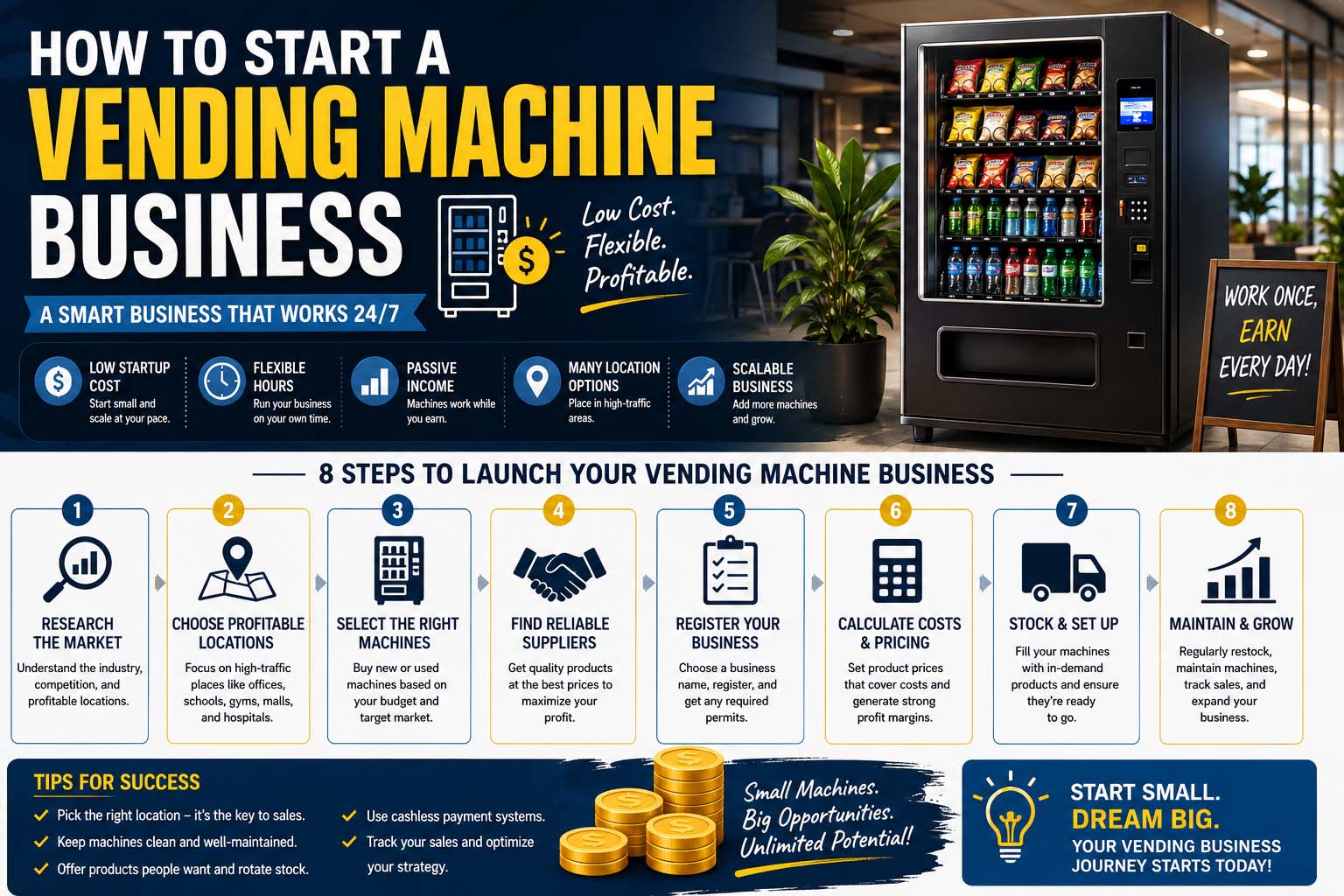
Step 1: Research Your Vending Machine Market
Before buying equipment, study your local area.
For example, look for places with:
- High daily foot traffic
- Office buildings
- Apartment complexes
- Schools
- Hospitals
- Hotels
- Manufacturing facilities
- Gyms
After all, even an excellent machine may struggle in a poor location.
Step 2: Create a Vending Machine Business Plan
A simple business plan helps organize your goals.
Include:
- Startup budget
- Product selection
- Target customers
- Pricing strategy
- Revenue estimates
- Operating costs
- Growth plan
Your plan doesn’t need to be complicated, but it should guide your decisions.
Step 3: Register Your Vending Machine Business
Requirements vary depending on your country, state, or local government.
For example, you may need:
- Business registration
- Tax identification number
- Sales tax registration
- Local permits
- Business insurance
Therefore, check all applicable requirements before placing your first machine.
Step 4: Purchase Your Vending Machines
You can choose between:
- New machines
- Refurbished machines
- Used machines
Each option offers different advantages.
| Type | Pros | Cons |
|---|---|---|
| New | Reliable, warranty | Higher cost |
| Refurbished | Lower price, tested | Limited warranty |
| Used | Lowest startup cost | Higher repair risk |
Generally, many beginners start with refurbished equipment to reduce upfront costs.
Step 5: Choose the Right Vending Products
Successful machines match local demand.
For example, popular categories include:
- Chips
- Chocolate
- Bottled water
- Soft drinks
- Healthy snacks
- Protein bars
- Gum
- Coffee
- Energy drinks
Watch which items sell quickly and adjust your inventory over time. In addition, understanding What Is Procurement can improve purchasing decisions when sourcing products from suppliers.
Step 6: Secure Great Vending Machine Locations
Location is the biggest factor affecting profitability.
For example, ideal locations often include:
- Office buildings
- Colleges
- Warehouses
- Medical centers
- Shopping centers
- Apartment buildings
- Car dealerships
- Laundromats
Generally, many property owners request either monthly rent or a percentage of sales.
How Much Does It Cost to Start a Vending Machine Business?
Startup costs vary depending on the number of machines and their condition.
| Expense | Estimated Cost |
|---|---|
| Used Machine | $1,000–$3,000 |
| New Machine | $3,000–$8,000 |
| Initial Inventory | $300–$800 |
| Business Registration | Varies |
| Insurance | Varies |
| Transportation | Depends on location |
Overall, many small businesses begin with an investment of around $3,000 to $10,000.
Choosing the Best Vending Machine Products
Don’t stock products based only on personal preferences.
Instead:
- Study customer demand.
- Track sales.
- Remove slow-moving items.
- Test new products regularly.
Additionally, understanding What Is a Vendor can help you evaluate businesses that supply products for your machines. Moreover, offering healthier snack options can increase sales in offices, schools, and fitness centers.
Managing Vending Machine Inventory Efficiently
Inventory management affects profits.
For example, good habits include:
- Restocking on a schedule
- Monitoring expiration dates
- Keeping popular products available
- Tracking seasonal demand
- Using inventory software if operating multiple machines
In particular, What Is FIFO explains an inventory approach that can help organize products according to when they were purchased. Ultimately, efficient inventory reduces waste and improves customer satisfaction.
Can You Start a Vending Machine Business for Free?
Many people search for how to start a vending machine business for free, but starting completely free is uncommon.
However, there are still creative ways to lower your upfront costs.
For example, some options include:
- Leasing vending machines
- Partnering with investors
- Purchasing used equipment
- Financing equipment
- Reinvesting profits from one machine before buying another
While you may reduce initial spending, some investment is usually required.
Marketing Your Vending Machine Business
Marketing isn’t only for online businesses.
For example, simple strategies include:
- Keeping machines clean
- Offering popular products
- Responding quickly to maintenance issues
- Using modern cashless payment systems
- Building relationships with property managers
As a result, satisfied location owners often recommend your services to others.
Growing Your Vending Machine Business
Expansion becomes easier once your first machines perform consistently.
For example, growth strategies include:
- Adding more locations
- Offering specialty vending
- Installing beverage machines
- Expanding into nearby cities
- Upgrading older equipment
- Using remote inventory monitoring
In addition, a Market Development Strategy can help identify new customer locations as your business expands.
Ultimately, steady growth often works better than purchasing many machines at once.
Common Vending Machine Business Challenges
Every business faces obstacles.
For example, some common vending machine challenges include:
- Equipment repairs
- Product theft
- Slow-selling inventory
- Poor locations
- Seasonal demand
- Supply cost increases
Therefore, planning ahead helps reduce these problems.
Common Vending Machine Business Mistakes
New owners sometimes rush into the business.
Avoid these mistakes:
- Buying too many machines too early
- Ignoring location quality
- Overstocking slow products
- Skipping maintenance
- Forgetting insurance
- Not tracking expenses
- Choosing products without customer research
Ultimately, starting small gives you time to learn.
How to Start a Vending Machine Business in California
California offers one of the largest consumer markets in the United States, making it an attractive place to launch a vending machine business.
For example, California offers many potential locations, including office buildings, schools, hospitals, and apartment communities. Before operating, check state and local requirements for business registration, permits, taxes, and health regulations if your machines sell food or beverages.
How to Start a Vending Machine Business in NYC
If you’re researching how to start a vending machine business in NYC, location selection becomes even more important.
High-traffic office buildings, transit hubs, residential complexes, and commercial properties can provide strong customer demand. Since New York City has its own regulations and property requirements, review local licensing rules and negotiate placement agreements carefully. Additionally, What Is a Broker can help business owners understand the role professionals may play in commercial property opportunities.
How to Start a Vending Machine Business in Florida
Many entrepreneurs also ask how to start a vending machine business in Florida because it offers an affordable entry point into entrepreneurship with the potential for recurring income.
Florida’s year-round tourism, office parks, hotels, healthcare facilities, and residential communities create opportunities for vending businesses. As with any state, check local licensing, tax, and food service requirements before launching your operation.
Daily Vending Machine Management Checklist
Once your machines are running, use this checklist.
Most owners…
For example, beginners…
Some people…
In many cases, businesses…
Entrepreneurs often…
Successful operators…
- ✔ Schedule maintenance
- ✔ Inspect security
Ultimately, consistent maintenance helps keep customers coming back.
Tips for Long-Term Vending Machine Success
Experienced operators often focus on small improvements.
For example, helpful habits include:
- Visit machines regularly.
- Build relationships with property managers.
- Watch sales trends.
- Replace slow-selling products.
- Upgrade machines when needed.
- Accept mobile and contactless payments.
- Keep emergency repair contacts available.
As a result, small improvements can increase profits over time.
Frequently Asked Questions About Vending Machine Businesses
How Much Money Can a Vending Machine Business Make?
Income depends on machine location, product selection, pricing, operating costs, and the number of machines you manage. Generally, high-traffic locations generate stronger sales.
Is a Vending Machine Business Profitable?
It can be profitable when machines are placed in busy locations, stocked with popular products, and maintained consistently.
How Many Machines Should Beginners Start With?
Many entrepreneurs begin with one or two machines before expanding as they gain experience and cash flow.
Do Vending Machines Require Daily Maintenance?
Not usually. Most machines only need regular restocking, cleaning, and occasional repairs depending on sales volume.
Can You Run a Vending Machine Business Part-Time?
Yes. Many owners operate vending machines alongside full-time jobs because servicing machines often requires only scheduled visits.
Do I Need Permission to Place a Vending Machine?
Yes. Generally, you’ll need an agreement with the property owner or manager before installing a machine on private property.
Your First Vending Machine Is Just the Beginning
Learning how to start a vending machine business doesn’t require years of experience or a massive budget. Many successful operators begin with a single machine, focus on finding a strong location, and build their business one step at a time.
Ultimately, choose quality equipment, stock products people actually want, maintain your machines regularly, and keep an eye on your numbers. Those simple habits can help turn a small side business into a reliable long-term source of income.