What Is a Vendor? Complete Business Guide for 2026
Understanding what is a vendor is important whether you run a small online store, a large company, or a digital marketplace. After all, vendors help supply products and services that keep businesses functioning.
Many people search online for terms like what is a, what is a in business, and what is a 1099 because relationships are essential in retail, e-commerce, technology, and entrepreneurship.
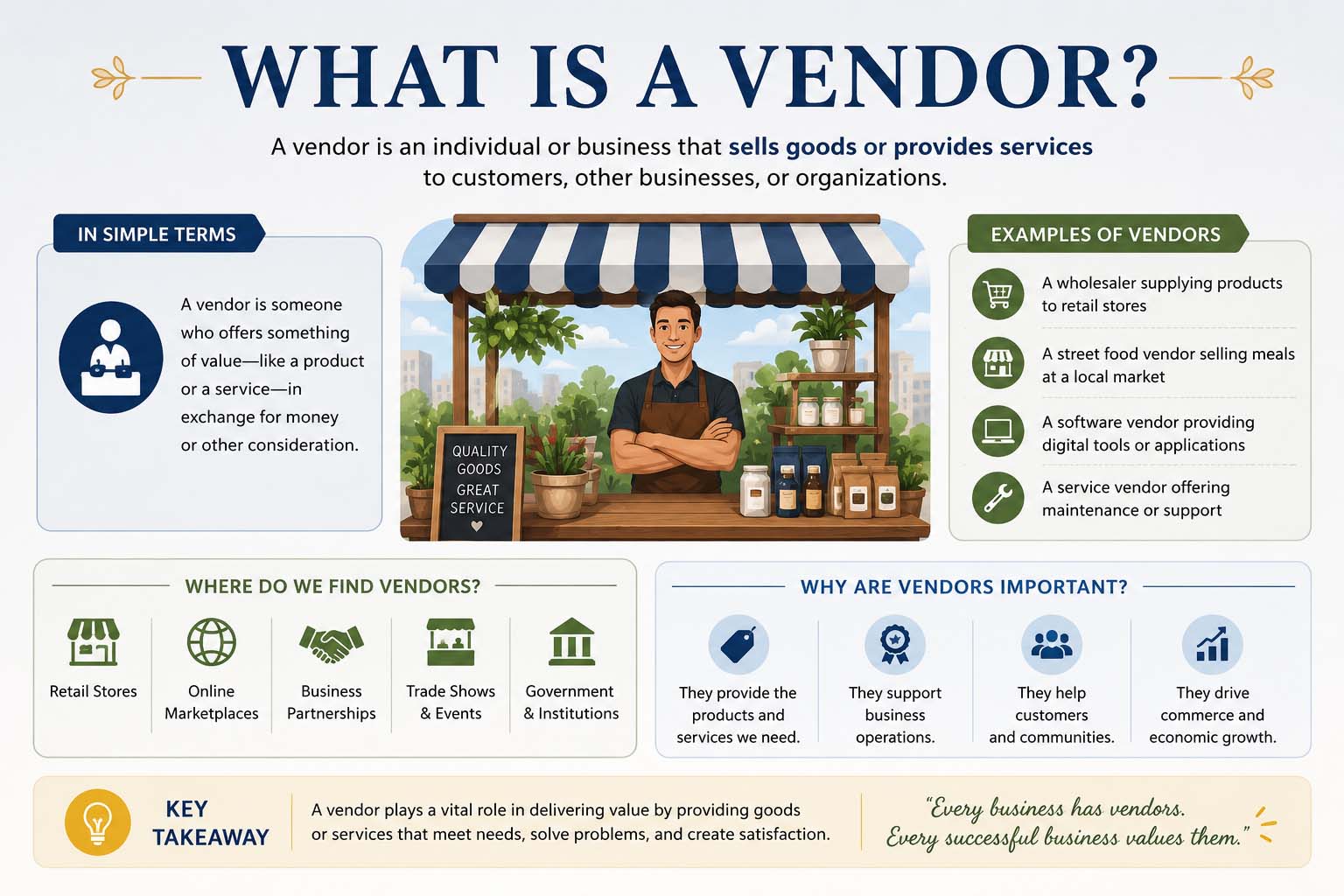
In simple terms, a is a person or business that sells goods or services to another company or customer.
This guide explains how vendors work, different types of vendors, business strategies, and why management is so important in 2026.
What Is a Vendor?
A is an individual or company that provides products or services for sale.
For example, vendors may sell directly to:
- Consumers
- Retail stores
- Wholesalers
- Online marketplaces
- Businesses
Examples of vendors include:
- Food suppliers
- Software companies
- Freelancers
- Manufacturers
- Local market sellers
- Online store owners
Overall, vendors exist in almost every industry worldwide.
What Is a Vendor in Business?
In business, vendors are companies or individuals that supply resources needed for operations.
For example, businesses often depend on vendors for:
- Inventory
- Technology services
- Office equipment
- Raw materials
- Marketing solutions
- Shipping support
Ultimately, strong vendor relationships help companies improve efficiency and maintain product quality.
For example, a clothing brand may rely on fabric vendors, packaging vendors, and logistics vendors to operate smoothly.
Types of Vendors
Product Vendors
These vendors sell physical products such as electronics, furniture, or food items.
Service Vendors
Service vendors provide expertise or labor instead of physical goods.
For example:
- Marketing agencies
- IT support companies
- Freelance designers
In addition, Managed IT Support Services can help businesses maintain their technology systems. Similarly, Human Resources Outsourcing Services may provide external administrative and workforce support.
Retail Vendors
Retail vendors sell products directly to customers and are an important part of What Is Retail for businesses serving end consumers.
Wholesale Vendors
Wholesale vendors sell products in large quantities to retailers or distributors.
What Is a Multi-Vendor Marketplace?
A multi-marketplace is an online platform where multiple vendors sell products or services through one website.
For example, popular platforms include:
- Amazon
- eBay
- Etsy
In a multi-marketplace:
- Different sellers manage their own products.
- Customers can shop from multiple vendors at once.
- The platform owner earns commissions or service fees.
Overall, this business model has become extremely popular in e-commerce because it allows rapid product expansion without owning inventory directly.
Benefits of Multi-Vendor Marketplaces
Multi-systems offer several advantages.
Larger Product Selection
Lower Inventory Risk
Marketplace owners often avoid managing physical inventory.
Faster Business Growth
Adding more vendors increases product variety quickly.
Increased Customer Traffic
More product categories attract wider audiences.
Because of these advantages, multi-platforms continue growing globally in 2026.
What Is a 1099 Vendor?
A 1099 is typically an independent contractor or non-employee service provider in the United States.
The term comes from IRS Form 1099, which businesses use to report payments made to contractors.
For example:
- Freelancers
- Consultants
- Independent marketers
- Web developers
- Delivery contractors
Unlike regular employees, 1099 vendors usually:
- Handle their own taxes
- Manage independent schedules
- Work on contract-based agreements
As a result, many modern businesses use 1099 vendors for flexible project-based work.
Vendor vs. Supplier
People often confuse vendors and suppliers.
Supplier
Provides raw materials or bulk products.
Vendor
Sells products or services to customers or businesses.
A supplier may become a depending on the relationship structure. Additionally, understanding What Is Procurement helps businesses distinguish supplier and vendor responsibilities during purchasing.
Real-World Vendor Examples
Vendor relationships appear everywhere in daily business operations.
Restaurants
Restaurants buy ingredients from food vendors.
E-Commerce Stores
Online sellers use packaging and shipping vendors.
Technology Companies
Tech firms hire cloud service vendors and cybersecurity vendors.
Retail Stores
Retailers purchase inventory from wholesale vendors.
Ultimately, every successful business depends on reliable partnerships.
How Businesses Choose Vendors
Businesses often evaluate:
- Pricing
- Quality
- Delivery speed
- Customer service
- Reliability
- Contract flexibility
After all, a poor relationship can cause delays, financial losses, or customer complaints.
Step-by-Step Vendor Selection Process
Step 1: Define Business Needs
Identify what products or services are required.
Step 2: Research Vendors
Compare pricing, reviews, and capabilities.
Step 3: Request Quotes
Businesses often request proposals from multiple vendors.
Step 4: Evaluate Performance
Check reliability, communication, and product quality.
Step 5: Build Long-Term Partnerships
Strong relationships improve long-term business stability. Moreover, many organizations work with a Business Strategy Consultant to strengthen purchasing decisions and vendor partnerships.
Vendor Management Strategies
Vendor management involves monitoring and improving relationships.
Good management helps businesses:
- Reduce costs
- Improve efficiency
- Maintain product quality
- Avoid supply chain problems
Additionally, many companies now use management software to track contracts, invoices, and performance.
Why Vendor Relationships Matter in 2026
Modern businesses rely heavily on global supply chains and digital services.
As a result, relationships have become more important than ever.
Companies need vendors for:
- Cloud technology
- Remote work tools
- AI software
- Shipping services
- Marketing automation
- Cybersecurity
Ultimately, reliable vendors help businesses stay competitive in rapidly changing markets.
Common Vendor Challenges
Businesses sometimes face problems with vendors.
Delayed Deliveries
Communication Issues
Poor communication can create misunderstandings.
Quality Problems
Inconsistent product quality damages customer trust.
Pricing Changes
Unexpected cost increases affect profitability.
Therefore, strong contracts and regular communication help reduce these risks.
Technology and Vendor Management
Modern software tools help businesses manage vendors more efficiently.
For example, popular management features include:
- Invoice tracking
- Contract storage
- Performance monitoring
- Communication systems
- Automated payments
Overall, digital systems improve organization and reduce manual work.
Vendor Tips for Small Businesses
Small businesses should focus on:
- Building long-term relationships
- Comparing multiple vendors before signing agreements
- Maintaining clear communication
- Reviewing contracts carefully
- Tracking vendor performance regularly
Ultimately, good vendor partnerships often help small businesses scale faster.
Frequently Asked Questions About What Is a Vendor
What Is a Vendor?
A vendor is a person or company that sells goods or services to customers or businesses.
What Is a Vendor in Business?
In business, vendors supply products, services, or resources needed for operations.
What Is a Multi-Vendor Marketplace?
It is an online platform where multiple vendors sell products through one website.
What Is a 1099 Vendor?
A 1099 vendor is an independent contractor or service provider paid through contract work.
Why Are Vendors Important?
Conclusion
Understanding what is a vendor is essential for entrepreneurs, business owners, and anyone involved in modern commerce. Vendors support businesses by providing products, services, technology, and operational resources that keep companies running effectively.