Benefits of Managed IT Services: A Complete Guide for Modern Businesses
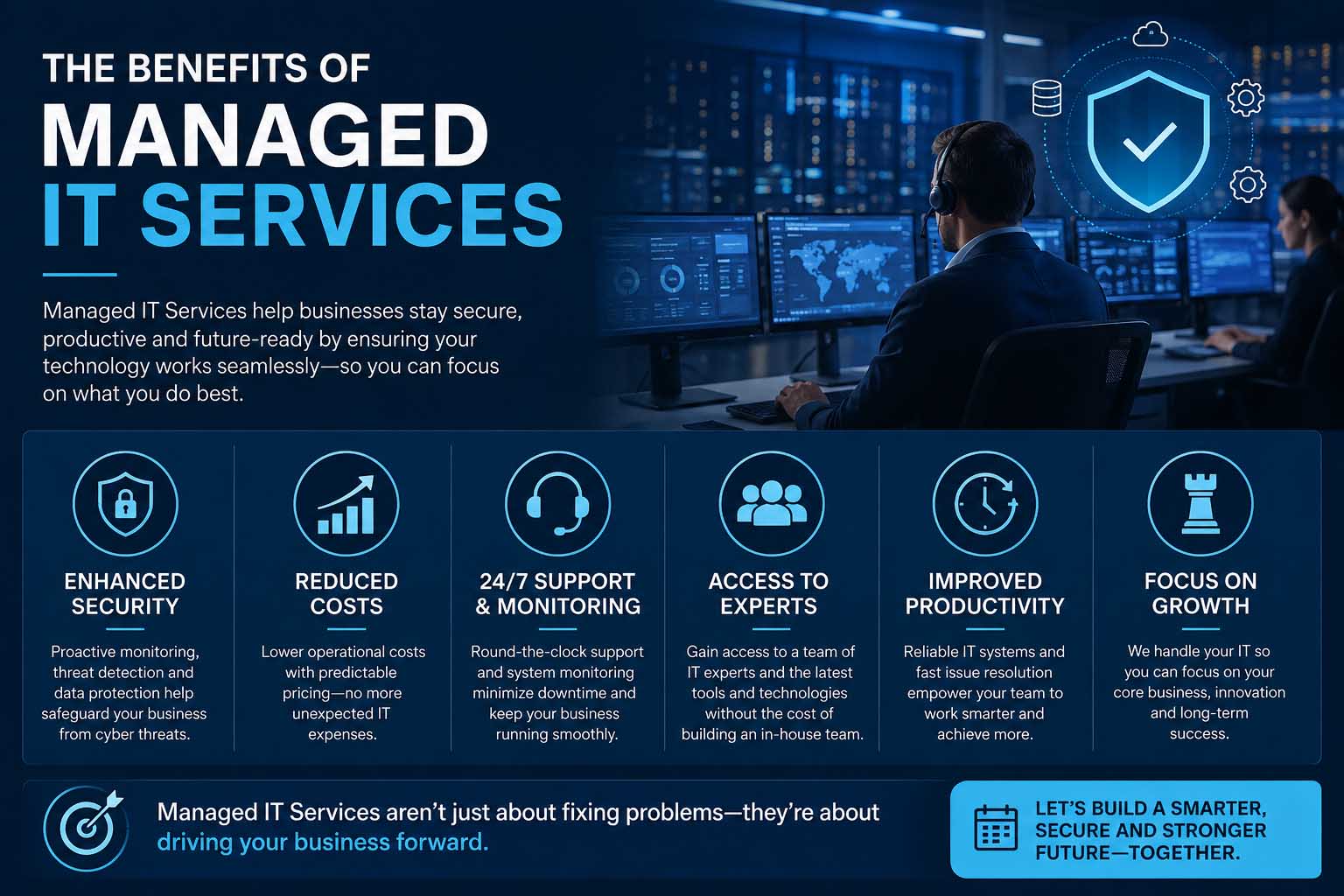
Technology keeps businesses running, but managing IT systems can quickly become overwhelming. Whether you’re a startup, a growing company, or an established organization, understanding the benefits of managed IT services can help you reduce costs, improve security, and keep your operations running smoothly.
Instead of building a large in-house IT department, many businesses partner with managed service providers to monitor systems, resolve technical issues, and maintain critical infrastructure around the clock.This approach allows business owners to focus on growth while experienced professionals handle the technology behind the scenes.
In this guide, you’ll learn how managed IT services work, why companies invest in them, and how they can support long-term business success.
What Are Managed IT Services?
Managed IT services are ongoing technology support solutions provided by a third-party company, commonly called a Managed Service Provider (MSP).
Rather than waiting until something breaks, the provider continuously monitors your systems, performs maintenance, updates software, strengthens cybersecurity, and resolves problems before they become serious.
Services often include:
- Network monitoring
- Cloud management
- Cybersecurity protection
- Data backup and disaster recovery
- Help desk support
- Software updates
- Device management
- IT consulting
Many organizations use Managed IT Support Services to maintain reliable technology without the expense of building a large internal IT team.
Why Businesses Are Choosing Managed IT Services
Technology has become more complex over the last decade. Companies now rely on cloud applications, remote employees, digital collaboration tools, and increasing amounts of sensitive customer data.
At the same time, cybersecurity threats continue to evolve.
Instead of reacting to problems after they occur, managed IT providers focus on prevention. They identify risks early, install security updates promptly, and monitor systems continuously.
This proactive approach reduces downtime while helping businesses operate more efficiently.
Benefits of Managed IT Services for Growing Companies
Beyond technical support, managed IT services help businesses improve efficiency, security, and long-term planning… They also improve business performance, operational efficiency, and long-term planning.
Reduced IT Costs
Hiring, training, and retaining an internal IT department can be expensive.
Businesses often need to budget for:
- Salaries
- Employee benefits
- Ongoing certifications
- Specialized software
- Hardware
- Emergency repairs
Managed IT services usually provide predictable monthly pricing, making budgeting much easier.
Improved Cybersecurity
Cyberattacks continue to affect businesses of every size.
Managed service providers help reduce security risks by offering:
- Firewall management
- Endpoint protection
- Email security
- Multi-factor authentication
- Threat detection
- Security monitoring
- Employee awareness recommendations
Because cyber threats constantly change, having professionals monitor your systems around the clock offers valuable protection.
Less Downtime
Every minute of downtime costs money.
Employees cannot work efficiently when systems fail, internet connections drop, or software stops functioning.
Managed IT providers continuously monitor servers and networks, allowing them to identify many issues before they interrupt daily operations.
Preventing downtime is often far less expensive than recovering from it.
Access to Experienced Specialists
Technology changes rapidly.
Instead of relying on one or two internal employees with limited expertise, businesses gain access to teams with experience across multiple technologies.
These specialists often support:
- Cloud platforms
- Network infrastructure
- Cybersecurity
- Compliance
- Microsoft environments
- Backup solutions
- Business software
This broader knowledge helps organizations solve problems faster.
Benefits of Managed IT Services for Small Businesses
The benefits of managed IT services for small businesses are especially valuable because smaller organizations often have limited budgets and fewer technical resources.
A small business may not need a full-time network engineer, cybersecurity analyst, cloud architect, and help desk technician.
Instead, one managed service provider can deliver all of these capabilities through a single partnership.
This allows small businesses to compete with larger organizations without matching their IT payroll.
Better Planning Through Strategic IT Guidance
Technology decisions affect every department, from finance and operations to sales and customer service.
Rather than making isolated purchasing decisions, businesses benefit from creating long-term technology plans.
Working alongside professionals who provide IT Strategy Consulting can help organizations align technology investments with business objectives. Instead of buying software simply because it’s popular, companies can evaluate whether each investment supports productivity, scalability, and future growth.
Planning ahead also reduces unnecessary spending on systems that no longer fit business needs.
Predictable Monthly Expenses
Unexpected technology failures often lead to unexpected expenses.
Servers fail.
Hard drives stop working.
Cybersecurity incidents require emergency support.
Managed IT services replace many unpredictable costs with consistent monthly fees.
This predictable pricing helps businesses:
- Forecast expenses
- Improve cash flow
- Reduce emergency spending
- Allocate budgets more effectively
Financial stability is especially valuable for growing businesses with limited resources.
Increased Employee Productivity
Employees perform better when technology works consistently.
Slow computers, unreliable Wi-Fi, outdated software, and recurring technical problems reduce productivity across the organization.
Many providers also offer responsive help desk support, allowing staff to receive assistance without waiting days for solutions.
Stronger Support for Remote and Hybrid Work
Flexible work arrangements have become common across many industries.
Employees now access company systems from offices, homes, and while traveling.
Managed IT providers help businesses securely support remote work through:
- Secure VPN access
- Cloud collaboration tools
- Identity management
- Device monitoring
- Remote troubleshooting
- Secure file sharing
These services help maintain productivity while protecting company data.
How Managed IT Supports Business Growth
Growing companies often outgrow their existing technology faster than expected.
As new employees join and operations expand, businesses require:
- Additional user accounts
- Larger storage capacity
- Better cybersecurity
- Faster networks
- Stronger backup systems
- Cloud scalability
Managed service providers help organizations expand technology without disrupting daily operations.
Many businesses also combine operational support with Digital Strategy Consulting to ensure their technology roadmap supports future digital initiatives, automation projects, and customer experience improvements.
Signs Your Business May Need Managed IT Services
Not every company realizes when it’s time to outsource IT support.
You may benefit from managed IT services if:
- Technical issues happen frequently.
- Your systems experience regular downtime.
- Cybersecurity concerns are increasing.
- Your internal IT team feels overwhelmed.
- Technology upgrades keep getting delayed.
- Remote employees struggle with access or security.
- IT costs are becoming unpredictable.
- Compliance requirements are becoming more complex.
Recognizing these signs early allows businesses to address problems before they affect customers or revenue.
10 Benefits of Managed IT Services at a Glance
If you’re comparing technology support options, this quick overview highlights the 10 benefits of managed IT services that matter most to modern businesses.
| Benefit | Business Impact |
|---|---|
| Lower IT costs | Predictable monthly expenses and fewer emergency repairs |
| Proactive monitoring | Problems are detected before they cause downtime |
| Better cybersecurity | Reduced risk of data breaches and ransomware attacks |
| Access to specialists | Expertise across multiple technologies without hiring a large team |
| Improved productivity | Employees spend less time dealing with technical issues |
| Scalable solutions | IT services grow with your business |
| Business continuity | Reliable backup and disaster recovery planning |
| Compliance support | Better preparation for industry regulations and audits |
| Latest technology | Regular updates and access to modern tools |
| More focus on growth | Leadership can prioritize business goals instead of IT issues |
While every organization has unique needs, these benefits help explain why managed IT services continue to gain popularity.
Managed IT Services vs. Traditional In-House IT
Choosing between an internal IT team and a managed service provider depends on your company’s size, budget, and technical requirements.
| Managed IT Services | In-House IT |
|---|---|
| Predictable monthly pricing | Higher staffing and training costs |
| Access to a team of specialists | Expertise depends on available employees |
| 24/7 monitoring available | Coverage often limited to business hours |
| Easy to scale as the business grows | Hiring may be required to expand capabilities |
| Preventive maintenance | Many teams spend more time reacting to problems |
Many businesses use a hybrid model, keeping a small internal IT team while outsourcing specialized services such as cybersecurity, cloud management, or network monitoring.
How to Get the Most Value from Managed IT Services
Signing a service agreement is only the beginning. Businesses see the greatest return when they actively work with their provider.
Set Clear Business Goals
Technology should support measurable business outcomes.
For example, your objectives may include:
- Reducing downtime
- Improving cybersecurity
- Supporting remote employees
- Lowering IT expenses
- Preparing for future growth
When both sides understand these goals, it’s easier to measure success.
Review Performance Regularly
Meet with your provider on a scheduled basis to review:
- System performance
- Security reports
- Support response times
- Completed projects
- Future technology needs
Regular reviews help identify opportunities for improvement before issues become costly.
Keep Employees Informed
Even the best technology cannot prevent every security incident if employees are unaware of common risks.
Simple training on password security, phishing emails, and safe file sharing can significantly reduce human error.
Common Mistakes Businesses Make
Managed IT services deliver the best results when expectations are realistic. Avoid these common mistakes.
Choosing the Cheapest Provider
Low pricing may seem attractive, but poor service can create expensive problems later.
Instead of focusing only on cost, compare experience, response times, security capabilities, and customer support.
Waiting Until Systems Fail
Some businesses only seek outside help after a major outage or cyberattack.
A proactive approach is usually less expensive than emergency recovery.
Ignoring Long-Term Planning
Technology should evolve with your business.
Organizations that regularly review infrastructure, security, and future growth plans are better prepared for change.
Assuming Every Provider Offers the Same Services
Managed service providers vary widely.
Some focus on cloud infrastructure, while others specialize in cybersecurity, compliance, or industry-specific support.
Learning how to choose a managed service provider can help you compare service agreements, technical expertise, response times, and scalability before making a long-term commitment.
Questions to Ask Before Hiring a Managed IT Provider
Before signing a contract, ask questions that reveal how the provider operates.
Consider asking:
- What services are included each month?
- How quickly do you respond to support requests?
- Do you provide 24/7 monitoring?
- How do you protect client data?
- What backup and disaster recovery solutions do you recommend?
- Can your services scale as our business grows?
- What reporting do you provide?
The answers can help you determine whether the provider is the right fit for your organization.
Industry Example
Imagine a regional accounting firm with 40 employees.
The company experiences recurring server issues, slow computers during tax season, and increasing concerns about ransomware attacks.
After partnering with a managed IT provider, the firm implements continuous network monitoring, automated software updates, stronger endpoint security, and cloud-based backups.
Within months:
- System downtime decreases.
- Employees spend less time waiting for technical support.
- Sensitive client information receives stronger protection.
- Leadership gains predictable monthly IT costs.
Instead of reacting to technical emergencies, the firm can focus on serving clients and expanding its business.
Managed IT Services in Local Markets
Some businesses look for location-specific solutions, such as managed IT services in Tampa, because they prefer working with providers that understand local industries and compliance requirements.
Whether your provider operates locally or remotely, the most valuable partner is one that understands your business goals, communicates clearly, and delivers reliable support.
Frequently Asked Questions
Are managed IT services only for large businesses?
No. Businesses of every size use managed IT services. Small and medium-sized companies often benefit the most because they gain access to enterprise-level expertise without hiring a large internal IT department.
Are managed IT services expensive?
In many cases, managed IT services reduce overall technology costs by preventing expensive downtime, improving efficiency, and replacing unpredictable repair bills with fixed monthly pricing.
Can managed IT providers improve cybersecurity?
Yes. Most providers offer security monitoring, firewall management, endpoint protection, software updates, threat detection, and backup solutions that reduce cyber risks.
Will I still need internal IT employees?
Not always. Some businesses fully outsource their IT operations, while others keep a small in-house team that works alongside a managed service provider.
How do managed IT services support business growth?
As companies expand, managed IT providers can scale infrastructure, onboard new employees, improve cloud services, strengthen cybersecurity, and support new technologies without major disruptions.
Building Technology That Supports Long-Term Success
Technology should help your business grow, not slow it down. Managed IT services give organizations access to experienced professionals, stronger security, predictable costs, and proactive support that keeps operations running smoothly.
As your company grows, technology decisions become more closely aligned with your overall business strategy. Working with a Business Strategy Consultant can help ensure your technology investments support broader organizational goals, from improving efficiency to preparing for future growth.
Whether you’re a startup looking for dependable support or an established company modernizing its infrastructure, investing in managed IT services can strengthen daily operations while creating a more resilient business for the years ahead.