What Is Retail? A Complete Beginner’s Guide to the Retail Industry
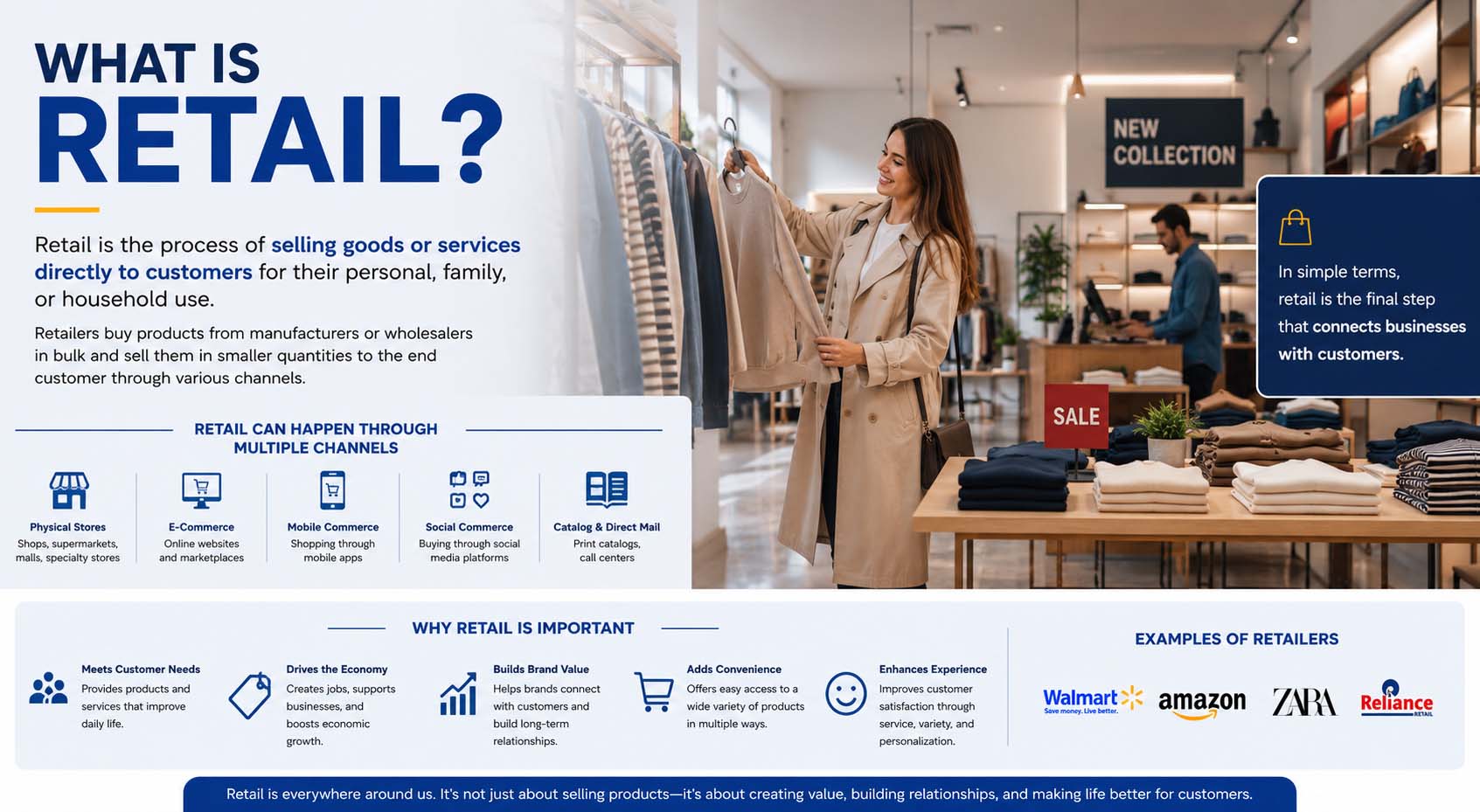
Understanding what is retail is important because it is one of the biggest sectors in the global economy. In fact, it connects manufacturers and wholesalers with everyday buyers.
Whenever people shop at grocery stores, clothing shops, online marketplaces, or pharmacies, they take part in this industry. In short, these businesses deliver products to end customers in convenient ways while earning a profit on each sale.
The industry has changed a lot over the years. Today, physical stores compete with eCommerce websites, mobile shopping apps, and social commerce platforms. Even so, the main goal stays the same: getting products and services to consumers efficiently.
How Does Retail Work?
Stores buy goods from manufacturers or wholesalers and then sell them to consumers at a higher price. In other words, the difference between the buying price and the selling price is the profit margin.
First, manufacturers create products. Next, wholesalers distribute them in bulk. Then, stores buy that inventory. Finally, customers buy the products from those stores.
Along the way, sellers play a major role in customer experience, branding, pricing, and product availability.
For example, a smartphone company may make the devices, but stores and online sellers help customers find and buy them. In addition, What Is a Vendor explains how businesses and individuals provide goods or services for sale.
Moreover, What Is Procurement can help businesses understand purchasing and supplier decisions.
Types of Retail Businesses
The industry includes many different business models.
Physical Retail Stores
Traditional brick-and-mortar stores let customers visit a location and buy products in person. For example, supermarkets, department stores, electronics shops, and clothing stores all fall into this group.
Even today, physical stores stay popular because customers can inspect products before buying.
Online Retail
Online selling, also called eCommerce, lets businesses sell products through websites and mobile apps. For instance, popular examples include online fashion stores, electronics marketplaces, and digital grocery services.
As a result, online sellers enjoy wider customer reach, lower operating costs, round-the-clock availability, and faster growth.
Overall, eCommerce has become one of the fastest-growing industries in the world.
Specialty Retail
Specialty stores focus on specific product categories. For example, bookstores, sports equipment stores, jewelry shops, and beauty stores all fit here.
Generally, these businesses offer expert knowledge and personal customer service.
What Is a Retail Associate?
Many people also ask what a store associate does, since these jobs are common in many industries.
Simply put, a store associate is an employee who helps customers in a shop. For example, they greet shoppers, organize products, process payments, answer questions, and manage inventory.
Because they work directly with shoppers, associates strongly influence customer satisfaction.
Ultimately, strong communication skills and product knowledge are essential for success in this role.
What Is a Retail Sales Associate?
A sales associate focuses specifically on helping customers make purchases.
Although the job is similar to a general store associate, it puts more weight on sales results and customer engagement.
For example, their duties may include recommending products, upselling items, and explaining features and benefits. In addition, they handle customer concerns and work toward sales goals.
Typically, these roles are common in electronics, fashion, cosmetics, and automotive stores.
As a result, businesses rely on skilled sales associates to increase revenue and build customer loyalty.
What Is a Retail Pharmacy?
Another common search is what a community pharmacy is, because pharmacies play an important role in healthcare.
In simple terms, it is a business that sells prescription drugs, health products, and wellness items directly to consumers.
For example, these pharmacies fill prescriptions and sell over-the-counter medicines. In addition, many offer health consultations, vaccinations, and wellness products.
Common examples include local drugstores and large pharmacy chains.
Overall, pharmacies combine healthcare services with everyday store operations, which makes them essential in many communities.
Retail Banks vs. Credit Unions
Financial services also include consumer-focused banks. That is why many people ask about the main difference between banks and credit unions, since both serve everyday customers.
In short, the main difference is ownership.
Retail Banks
First, consumer banks are for-profit institutions that shareholders own.
Typically, they offer checking accounts, savings accounts, credit cards, personal loans, and mortgages.
As a result, these banks aim to earn profits while serving customers.
Credit Unions
By contrast, credit unions are nonprofit cooperatives that their members own.
For example, they often offer lower fees, better loan rates, and more personal service.
However, credit unions may have stricter membership rules than banks.
Although both provide similar services, their goals differ significantly.
Why Retail Is Important in Business
This sector plays a major role in economic growth and employment.
For example, it helps businesses reach customers directly, build brand awareness, and generate revenue. It also helps them understand consumers and launch new products.
Additionally, the industry creates millions of jobs in sales, management, logistics, marketing, and customer support. For official data, the U.S. Bureau of Labor Statistics retail trade overview tracks jobs, wages, and trends in this sector.
Retail Business Strategies for Success
Modern sellers must adapt to changing customer preferences and technology trends.
Focus on Customer Experience
First, excellent customer service increases loyalty and repeat purchases. For example, successful stores focus on friendly staff, easy navigation, fast checkout, and personal experiences.
Use Digital Marketing
Next, most stores now rely heavily on digital marketing. For instance, popular methods include social media, search engine optimization, email marketing, influencer partnerships, and paid ads.
As a result, strong online visibility helps sellers attract more customers.
Improve Inventory Management
Also, efficient inventory practices prevent shortages and reduce waste.
Today, many sellers use inventory software to monitor stock levels in real time. In addition, What Is FIFO explains a method in which older stock is sold before newer stock.
Moreover, understanding the benefits of inventory visibility can help stores make better stock decisions.
Offer Omnichannel Shopping
Finally, customers expect smooth shopping across physical stores and online platforms. For example, omnichannel selling combines website shopping, mobile apps, in-store pickup, and home delivery.
Ultimately, this strategy improves convenience and customer satisfaction.
Common Challenges in Retail
Stores face several challenges in competitive markets.
Changing Consumer Trends
For one, customer preferences change quickly, so sellers must adapt fast.
High Competition
In addition, markets are crowded with both local and global competitors.
Supply Chain Problems
Also, shipping delays and stock shortages can hurt sales.
Technology Costs
Likewise, sellers must invest in digital systems, security, and automation tools.
Overall, businesses that innovate and respond to customer needs usually perform better over time. Additionally, understanding What Is a Merchant helps when handling payments and commercial transactions.
Frequently Asked Questions About Retail
What Is Retail in Simple Words?
It is the sale of products or services directly to customers for their own use.
What Are Examples of Retail Businesses?
Examples include supermarkets, clothing stores, pharmacies, electronics stores, and online shops.
What Is the Purpose of Retail?
It connects manufacturers and consumers while making products easy for buyers to get.
Is Online Shopping Considered Retail?
Yes. In fact, online shopping is a form of selling called eCommerce.
What Skills Are Important in Retail Jobs?
Communication, customer service, problem-solving, and product knowledge are all important skills.
Why Is Retail Important to the Economy?
It creates jobs, supports businesses, gives consumers access to products, and adds to economic growth.
Conclusion
In short, understanding what is retail gives valuable insight into how businesses sell products and serve customers. After all, it covers everything from local stores and pharmacies to online platforms and global chains.
As technology keeps changing customer behavior, the industry continues to grow through eCommerce, digital marketing, and omnichannel shopping. Whether you want to start a business, work in sales, or understand commerce better, learning about this sector is essential.