What Is Procurement? Complete Beginner Guide to Business Procurement
Understanding what is procurement is important because it is one of the key processes that helps modern companies obtain the goods and services they need. It can directly affect costs, efficiency, supplier relationships, supply chain stability, and overall company performance.
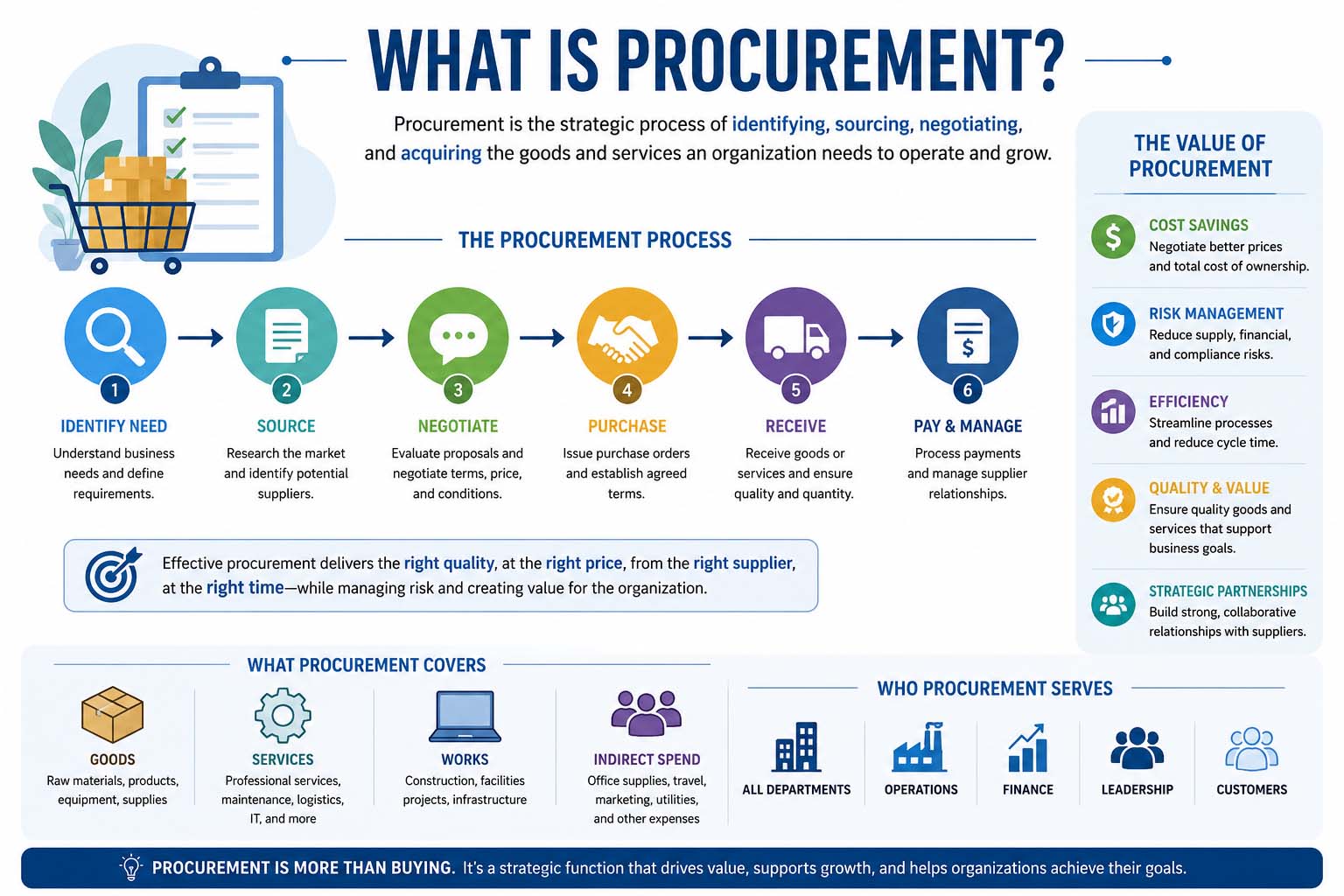
In simple terms, procurement is the process businesses use to acquire goods, services, or materials needed for their operations. It involves more than simply buying products. The process can include supplier selection, negotiations, budgeting, contract management, quality control, and long-term planning.
Every company relies on purchasing and sourcing activities in some form. Whether a business needs office supplies, manufacturing materials, software subscriptions, or logistics services, an organized approach helps keep operations running smoothly and cost-effectively.
What Is Procurement in Business?
Procurement in business refers to the organized process a company uses to identify, source, purchase, and manage products and services required for its operations.
The process usually includes:
- Identifying business needs
- Finding suitable suppliers
- Comparing prices and terms
- Negotiating agreements
- Creating purchase orders
- Managing contracts
- Monitoring supplier performance
Effective business procurement can help companies control spending while maintaining suitable quality and reliable access to essential resources.
For example, a restaurant may source food ingredients, kitchen equipment, cleaning supplies, and delivery services.
Meanwhile, a technology company may purchase software licenses, cloud storage, computer hardware, and cybersecurity services.
Although requirements differ between industries, almost every organization needs an effective way to source essential resources.
Why Is Procurement Important?
The purchasing function plays an important role because sourcing decisions can directly influence a company’s costs, operational efficiency, product quality, and ability to serve customers.
Cost Management
A strong procurement strategy can help companies control expenses through supplier comparisons, negotiations, contract management, and planned purchasing.
Quality Control
Businesses can maintain more consistent standards by carefully evaluating suppliers and choosing the right What Is a Vendor for long-term partnerships.
Supply Chain Stability
Purchasing teams can reduce disruption risks by monitoring suppliers, delivery schedules, inventory requirements, and alternative sourcing options.
Risk Reduction
Supplier evaluation, clear contracts, and diversified sourcing can reduce operational, financial, and supply-chain risks.
Long-Term Growth
Efficient purchasing and supplier management can support profitability and make it easier for a company to expand its operations.
For these reasons, many organizations now treat procurement as a strategic business function rather than simply an administrative task.
How Does the Procurement Process Work?
The exact procedure varies by company and industry, but it commonly follows several important stages.
Step 1: Identify Business Needs
The company determines which goods or services are required, how much is needed, and when they are required.
Step 2: Research Suppliers
Businesses compare potential vendors based on factors such as:
- Pricing
- Product or service quality
- Delivery capabilities
- Reliability
- Contract terms
- Reputation
Step 3: Request Quotes or Proposals
Potential suppliers may be asked to provide prices, specifications, delivery schedules, and service terms.
Step 4: Negotiate and Select a Supplier
The company evaluates available options and may negotiate pricing, payment terms, delivery timelines, warranties, or service conditions.
Step 5: Purchase and Receive the Order
Once an agreement is reached, the business places its order. Goods or services are then delivered according to the agreed terms.
Step 6: Evaluate Performance
Supplier reliability, product quality, costs, and delivery performance can be reviewed to determine whether the relationship should continue.
The U.S. General Services Administration provides additional information about government purchasing and acquisition programs, which also demonstrates how structured purchasing systems can organize the acquisition of goods and services.
Types of Procurement
Different types of procurement are used depending on what a company needs and how those purchases support its operations.
Direct Procurement
Direct sourcing involves obtaining goods or materials that directly contribute to a company’s products or services.
Examples can include:
- Manufacturing materials
- Product components
- Raw materials
- Packaging used for finished products
For manufacturers, these purchases can have an immediate effect on production capacity, product quality, and costs.
What Is Indirect Procurement?
Indirect procurement involves purchasing goods and services that support business operations but are not directly incorporated into finished products.
Examples include:
- Office supplies
- Marketing software
- IT services
- Cleaning services
- Employee training
Individual indirect purchases may appear small, but collectively they can represent a meaningful part of company spending.
Services Procurement
Services procurement focuses on obtaining work or expertise from outside service providers.
This may include:
- Legal consulting
- Marketing agencies
- Security companies
- Freelancers
- Technology consultants
In addition, Human Resources Outsourcing Services may provide external administrative and workforce support.
External services have become increasingly important as companies use specialized providers to support different areas of their operations.
What Is a Procurement Specialist?
A procurement specialist is a professional responsible for supporting or managing purchasing activities and supplier relationships.
Typical responsibilities can include:
- Researching suppliers
- Requesting quotations
- Comparing supplier offers
- Negotiating prices
- Managing purchase orders
- Reviewing contracts
- Analyzing purchasing costs
- Communicating with vendors
A specialist helps a company obtain suitable goods and services while balancing cost, quality, reliability, and operational requirements.
What Is a Procurement Manager?
A procurement manager typically oversees purchasing strategies, teams, supplier relationships, and important sourcing decisions.
Responsibilities may include:
- Managing supplier contracts
- Approving significant purchases
- Developing sourcing strategies
- Identifying cost-saving opportunities
- Creating purchasing policies
- Monitoring supplier performance
- Managing supply risks
In larger organizations, these managers can play an important strategic role because major sourcing decisions may directly affect operating costs and supply-chain performance.
Procurement vs. Purchasing: What Is the Difference?
Procurement and purchasing are closely connected, but they do not always describe the same scope of activity.
| Procurement | Purchasing |
|---|---|
| Broader strategic process | More transaction-focused |
| Includes supplier selection and management | Focuses primarily on buying |
| Can involve long-term planning | Often handles individual transactions |
| Includes negotiations and contracts | Includes ordering and payment |
| Can affect company-wide strategy | Primarily supports operational buying |
Put simply, purchasing is generally one component of the broader procurement process.
A company might purchase a laptop by placing an order and paying the supplier. The broader process can include everything that happens before and around that transaction, such as determining specifications, evaluating vendors, negotiating prices, setting contract terms, and reviewing supplier performance.
Business Procurement Examples by Industry
The way companies source goods and services varies significantly between industries.
Retail Industry
Retail businesses obtain products from manufacturers, distributors, and wholesalers for resale to customers.
Understanding the benefits of inventory visibility can also help retailers coordinate purchasing decisions with current stock levels.
Construction Industry
Construction companies may purchase building materials, machinery, safety equipment, subcontractor services, and specialized tools.
Healthcare Industry
Healthcare organizations may source medical equipment, pharmaceuticals, protective equipment, cleaning products, technology, and professional services.
Technology Companies
Technology businesses may purchase computers, servers, software subscriptions, cloud infrastructure, cybersecurity solutions, and professional services.
These examples demonstrate why company procurement requirements differ according to industry, size, operations, and supply chain.
Modern Procurement Technology
Technology has changed how many companies manage sourcing and purchasing.
Modern systems may use:
- Automation software
- Artificial intelligence
- Data analytics
- Cloud-based platforms
- Digital supplier portals
- Electronic purchase orders
- Spend analysis tools
These technologies can make it easier to track spending, compare suppliers, manage approvals, store contracts, and monitor purchasing activity.
In addition, Managed IT Support Services can help organizations maintain some of the technology infrastructure used throughout their operations.
However, technology does not eliminate the need for sound supplier evaluation, negotiation, risk management, and human oversight.
Common Procurement Challenges
Businesses can encounter several problems when managing suppliers and purchasing activities.
Supplier Delays
Late deliveries can interrupt production or normal operations.
Solution: Maintain alternative suppliers for critical purchases and monitor important inventory levels.
Rising Costs
Inflation, shortages, transportation expenses, and market conditions can affect supplier pricing.
Solution: Compare vendors, review spending data, negotiate terms, and evaluate longer-term agreements where appropriate.
Poor Supplier Communication
Unclear requirements or communication problems can lead to incorrect orders and delays.
Solution: Establish clear specifications, responsibilities, communication channels, and documentation.
Quality Problems
Poor-quality materials or services can affect operations and customer satisfaction.
Solution: Establish quality requirements and periodically evaluate supplier performance.
Overdependence on One Supplier
Depending heavily on a single source can create additional risk if that supplier experiences disruption.
Solution: Consider alternative or backup suppliers for critical goods and services.
Procurement Strategy Tips for Businesses
A strong procurement strategy should balance cost savings with quality, reliability, operational requirements, and risk.
Build Strong Supplier Relationships
Reliable long-term relationships can improve communication and make it easier to resolve supply or delivery problems.
Analyze Spending Data
Tracking purchasing activity can help businesses identify unnecessary expenses, duplicate suppliers, and potential savings opportunities.
Diversify Critical Suppliers
Using backup suppliers can reduce dependence on a single company for essential products or materials.
Use Purchasing Software Where Appropriate
Digital systems can streamline approvals, purchase orders, contract records, and supplier information.
Review Contracts Regularly
Businesses should periodically review supplier agreements, pricing, service levels, and changing operational requirements.
Additionally, What Is FIFO explains an inventory approach that can support organized stock movement after goods have been purchased.
Skills Needed for Procurement Careers
Professionals working in this field often need a combination of commercial, analytical, communication, and technology skills.
Negotiation Skills
Negotiation can help businesses obtain appropriate pricing, contract terms, and service conditions.
Communication Skills
Teams regularly communicate with suppliers, managers, finance departments, and other internal departments.
Financial Understanding
Purchasing decisions frequently involve budgets, cost comparisons, payment terms, and financial analysis.
Problem-Solving Skills
Supplier shortages, delays, quality issues, and unexpected price changes may require quick decisions.
Technology Skills
Modern professionals increasingly work with digital purchasing platforms, analytics tools, and supplier-management systems.
Future of Procurement
The field continues to evolve as technology, supply chains, regulations, and business priorities change.
Important developments include:
- AI-assisted procurement
- Purchasing automation
- Sustainable sourcing
- Supplier risk analytics
- Digital contract management
- Supply-chain visibility
- Data-driven sourcing decisions
Technology can automate routine tasks and provide better purchasing data, while professionals remain responsible for evaluating suppliers, managing relationships, negotiating agreements, and making strategic decisions.
Frequently Asked Questions About Procurement
What Is Procurement?
Procurement is the structured process businesses use to source and acquire goods, services, and materials needed for their operations. It can include supplier research, negotiations, contracts, purchasing, and supplier management.
What Is Procurement in Business?
Procurement in business involves identifying purchasing needs, finding and evaluating suppliers, negotiating terms, acquiring goods or services, and managing supplier relationships.
What Is Business Procurement?
Business procurement refers to the sourcing and purchasing activities an organization uses to obtain the resources required to operate.
What Is a Procurement Specialist?
A procurement specialist helps manage sourcing, supplier communication, quotations, negotiations, purchase orders, and other purchasing activities.
What Is a Procurement Manager?
A procurement manager oversees sourcing strategies, supplier relationships, contracts, purchasing teams, and significant acquisition decisions.
What Is Indirect Procurement?
Indirect procurement covers goods and services that support business operations but are not directly incorporated into the products a company sells.
What Is the Difference Between Procurement and Purchasing?
Purchasing mainly concerns ordering and paying for goods or services. Procurement is broader and can include needs assessment, supplier selection, negotiation, contracting, purchasing, and supplier management.
Why Is Procurement Important?
It can help businesses manage costs, maintain quality, reduce supplier risks, support supply continuity, and improve operational efficiency.
Conclusion
Understanding what is procurement makes it easier to see how businesses obtain the resources they need while managing costs, suppliers, quality, and operational risk.
It is much more than simply buying products. An organized sourcing process can include identifying business needs, researching suppliers, negotiating terms, managing contracts, purchasing goods or services, and evaluating supplier performance.
For businesses of almost any size, effective procurement can support better purchasing decisions, stronger supplier relationships, more reliable operations, and sustainable long-term growth.