
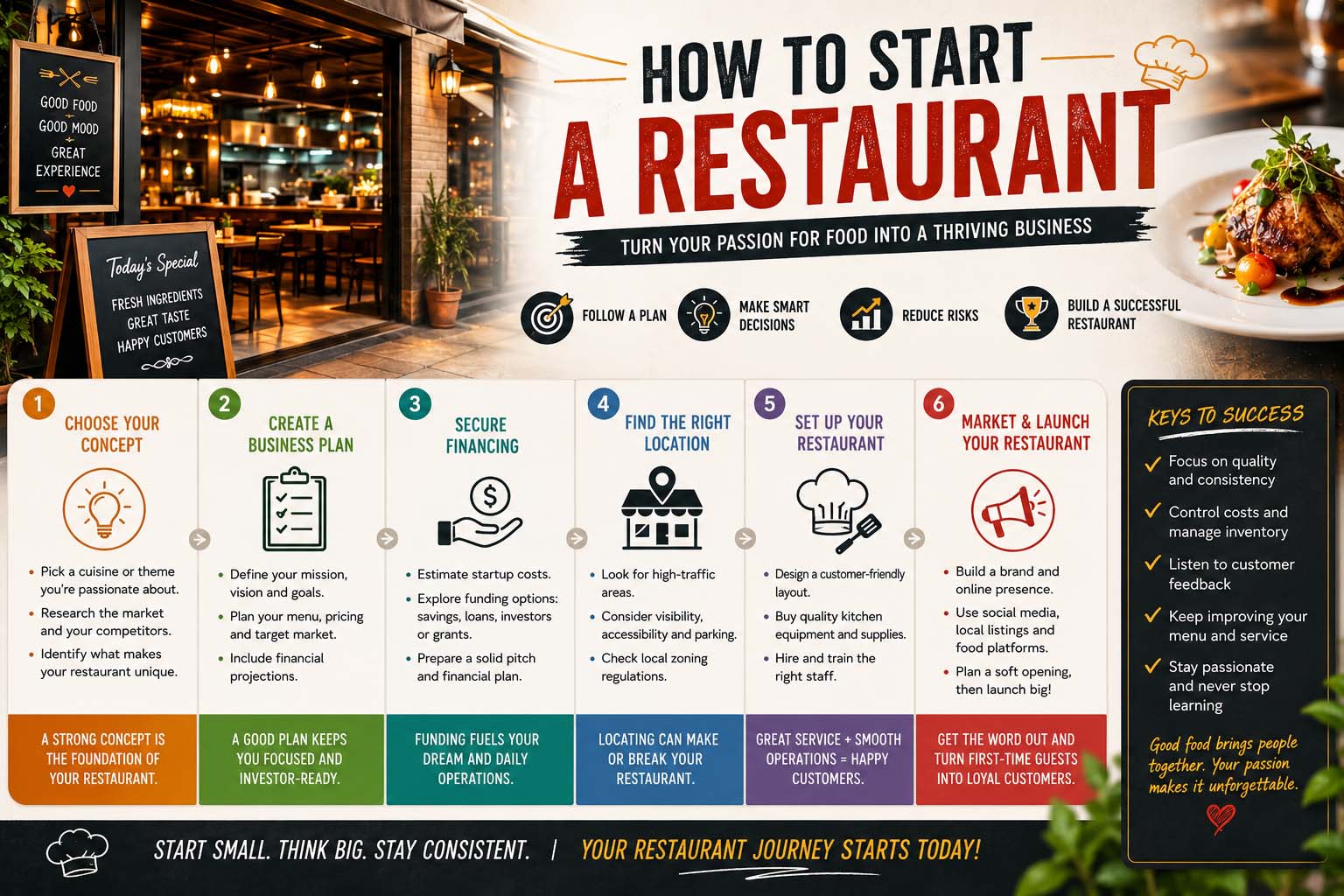
How to Start a Restaurant: A Step-by-Step Guide for First-Time Entrepreneurs
Learning how to start a restaurant begins with turning a business idea into a realistic plan. Whether you imagine a neighborhood café, a family-owned diner, or a modern dining establishment, opening a restaurant requires preparation, financial planning, and effective management.
However, serving delicious food is only one part of building a successful restaurant. You also need a suitable location, reliable suppliers, trained employees, effective marketing, and a clear understanding of operating expenses. In addition, you must develop systems that maintain consistent food quality and customer satisfaction.
In this guide, you’ll learn the essential steps to launch a restaurant, estimate startup costs, secure funding, obtain permits, and build a sustainable food business. As a result, you’ll have a clearer understanding of what to prepare before opening your doors.
Why Start a Restaurant? Benefits and Challenges
Restaurants do more than serve meals. In fact, they create memorable experiences, bring communities together, and give entrepreneurs opportunities to establish recognizable local brands.
For example, owning a restaurant can offer several advantages:
- Creative freedom to develop unique dishes and menus
- Strong relationships with local customers
- Opportunities to generate repeat business
- Multiple revenue streams through dine-in, takeout, and catering
- Potential for long-term business growth
However, restaurant ownership also involves financial risks, demanding schedules, and operational challenges. Therefore, understanding the industry before investing can help you make better decisions.
Step 1: How to Start a Restaurant With the Right Concept
First, every successful restaurant needs a clear concept that guides its menu, atmosphere, pricing, and customer experience. Without a defined concept, making consistent business decisions becomes more difficult.
Before making major investments, answer these questions:
- What type of food will you serve?
- Who are your ideal customers?
- What price range suits your target audience?
- Will you offer dine-in, takeout, delivery, or a combination?
- What makes your restaurant different from competitors?
Popular Restaurant Business Models
Common restaurant concepts include:
- Casual dining restaurants
- Fast-casual establishments
- Cafés and coffee shops
- Food trucks
- Family restaurants
- Fine dining establishments
- Buffets
- Pizzerias
- Bakeries
- Specialty cuisine restaurants
For example, a fast-casual restaurant may focus on affordable meals and quick service. In contrast, a fine dining establishment may emphasize premium ingredients, atmosphere, and personalized service.
Therefore, choosing a focused concept makes decisions about staffing, equipment, location, and marketing easier. Once you understand your concept, you can begin evaluating local customer demand.
Step 2: Research the Market to Start a Restaurant
Before making a financial commitment, research the local market to understand customer demand and competition. Otherwise, you may invest in a concept that does not match local preferences.
In particular, examine:
- Nearby restaurants and their specialties
- Customer demographics and spending habits
- Average menu prices
- Peak dining hours
- Local food preferences
- Opportunities competitors may have overlooked
Additionally, understanding What Is a Target Market can help you identify the customers your restaurant should serve.
For example, visit competing restaurants as a customer and observe their service, menu selection, pricing, and atmosphere. As a result, you may discover opportunities to offer a better or more distinctive dining experience.
Step 3: How to Start a Restaurant With a Business Plan
Next, a detailed business plan provides a roadmap for launching and managing your restaurant. More importantly, it helps you organize your financial goals and operational priorities.
In addition, a business plan helps potential lenders and investors understand your business model.
Executive Summary for Your Restaurant Business Plan
Start by describing your restaurant concept, location, target customers, and primary business goals. Then, explain what makes your restaurant different from competitors.
Identify Your Restaurant’s Target Audience
Identify your ideal customers.
For example, your audience may include:
- Families
- Office workers
- College students
- Tourists
- Young professionals
Develop a Restaurant Menu and Pricing Strategy
Explain your proposed menu, ingredient costs, pricing approach, and competitive advantages. At the same time, consider whether your prices match the spending habits of your target customers.
Create a Restaurant Marketing Strategy
Describe how you plan to attract customers through local advertising, social media, online search, and promotional events. For instance, a neighborhood restaurant may benefit from local partnerships and community promotions.
Prepare Your Restaurant Financial Forecast
Estimate:
- Startup expenses
- Monthly operating costs
- Expected revenue
- Food and labor expenses
- Profit margins
- Break-even timeline
For additional guidance, the U.S. Small Business Administration’s business planning resources explain how entrepreneurs can research markets, prepare business plans, and calculate startup costs.
Therefore, developing a realistic plan before opening can help you avoid expensive mistakes. Reviewing the plan regularly also allows you to adjust your strategy as conditions change.
Step 4: Calculate the Cost to Start a Restaurant
One of the biggest questions entrepreneurs face is how much money they need to open a restaurant. Unfortunately, there is no single startup budget that fits every business.
For this reason, startup costs vary significantly depending on location, property condition, restaurant size, equipment requirements, and service model.
Estimated Costs of Starting a Restaurant
The following figures are illustrative planning ranges in U.S. dollars, not verified industry averages or quotes for a particular location.
| Expense | Illustrative Planning Range |
|---|---|
| Business registration | $100–$1,000 |
| Licenses and permits | $500–$5,000+ |
| Kitchen equipment | $20,000–$150,000+ |
| Furniture and seating | $5,000–$50,000 |
| Renovations | $10,000–$250,000+ |
| Initial food inventory | $2,000–$20,000 |
| Opening marketing | $1,000–$10,000 |
| Working capital | Several months of operating expenses |
These figures are not a substitute for local supplier estimates, contractor quotes, or permit schedules.
For example, opening a small takeout restaurant in an existing commercial kitchen may cost considerably less than renovating a large full-service establishment. Similarly, equipment needs may differ depending on your menu and cooking methods.
In addition, include an emergency reserve for unexpected repairs, equipment problems, or slower-than-expected sales. This way, you can manage financial surprises without immediately disrupting operations.
Step 5: Find the Best Location to Open a Restaurant
Choosing the right location is another essential step when learning how to start a restaurant. After all, your location affects customer accessibility, operating costs, and potential sales.
Therefore, evaluate several properties before committing to a lease.
What to Look for in a Restaurant Location
Look for areas with:
- Strong visibility
- Convenient parking
- Consistent foot traffic
- Nearby offices or residential communities
- Accessible public transportation
- Customers who match your restaurant concept
However, avoid choosing a property based solely on low rent.
For example, a cheaper location may attract fewer customers, while a more expensive property could offer stronger sales potential. Nevertheless, higher rent only makes sense when realistic revenue projections support it.
Before signing a lease, confirm that local zoning rules allow your intended restaurant activities. Also, assess ventilation, utilities, accessibility, and renovation requirements.
Step 6: Register Your Business to Start a Restaurant
Once you have developed your concept and financial plan, choose an appropriate legal structure. This decision affects taxes, ownership responsibilities, and potential liability.
Common business structures in the United States include:
- Sole proprietorship
- Partnership
- Limited liability company (LLC)
- Corporation
For example, an LLC may offer liability protection for its owners, although its legal and tax treatment depends on applicable laws and circumstances.
In contrast, sole proprietorships are generally simpler to establish but do not provide the same separation between personal and business liabilities.
Essential Restaurant Business Registration Steps
Depending on your location and structure, you may need to:
- Register your business name
- Obtain an Employer Identification Number (EIN)
- Open a business bank account
- Register for applicable taxes
- Set up accounting and payroll systems
As a result, separating personal and business finances can simplify bookkeeping, financial reporting, and tax preparation. In addition, organized financial records can make it easier to evaluate business performance.
Step 7: Get the Licenses Needed to Start a Restaurant
Before opening, restaurants must satisfy applicable legal, health, and safety requirements. Otherwise, missing approvals may delay your launch or create additional expenses.
Depending on your location, these may include:
- Business license
- Food service license
- Health department approval
- Fire safety inspection
- Building and occupancy permits
- Sales tax registration
- Food handler certifications
- Alcohol licensing, if applicable
However, requirements vary between cities, states, and countries.
Therefore, contact your local licensing authorities and health department before purchasing equipment or making major property changes. In addition, allow sufficient time for inspections and permit processing.
Step 8: Prepare Your Kitchen to Start a Restaurant
An efficient kitchen layout supports food quality, employee safety, and faster service. As a result, thoughtful kitchen planning can improve daily operations.
A well-organized kitchen should provide suitable areas for:
- Food preparation
- Cooking stations
- Refrigeration
- Dry storage
- Dishwashing
- Waste management
For example, placing frequently used ingredients near preparation stations can reduce unnecessary movement. Similarly, arranging equipment according to cooking workflows may improve efficiency.
In addition, separating raw food handling from ready-to-eat food preparation helps reduce contamination risks.
Therefore, work with qualified professionals when planning ventilation, plumbing, fire suppression, and other regulated systems.
Step 9: Plan Your New Restaurant Menu
At the same time, your menu influences customer satisfaction, inventory costs, and kitchen efficiency. Consequently, menu planning deserves careful attention.
Therefore, focus on dishes that match your restaurant concept and target audience.
Restaurant Menu Planning Tips for Beginners
Consider these strategies:
- Prioritize food quality over menu size.
- Use ingredients across multiple dishes when practical.
- Highlight signature menu items.
- Calculate ingredient costs before setting prices.
- Consider seasonal availability.
- Review customer preferences regularly.
For example, using the same vegetables in several dishes may simplify purchasing and reduce waste. Likewise, a focused menu can make staff training easier.
However, avoid creating an oversized menu during your first months of operation.
Instead, begin with a manageable selection of dishes. Over time, you can expand your offerings based on sales data and customer feedback.
Step 10: Hire Staff to Start a Restaurant
Likewise, your employees influence service quality, food preparation, and the overall dining experience. Therefore, hiring should focus on both technical skills and professional behavior.
Depending on your restaurant concept, common positions include:
- Head chef
- Line cooks
- Servers
- Hosts
- Bartenders
- Dishwashers
- Restaurant manager
Restaurant Hiring and Staff Training Tips
Consider candidates with:
- Relevant professional skills
- Strong communication abilities
- Reliability
- Customer service experience
- Willingness to learn
- Teamwork skills
In addition, provide training on food safety, service standards, workplace procedures, and emergency protocols.
For instance, clear instructions help new employees understand their responsibilities. As a result, consistent employee training can help maintain service quality during busy periods.
Step 11: Manage Your Restaurant Business Operations
Understanding how to start a restaurant also means learning how to manage daily operations. Although food quality is important, successful management involves many other responsibilities.
In addition, restaurant owners must coordinate several activities beyond cooking and serving food.
These include:
- Financial management
- Inventory control
- Employee scheduling
- Marketing
- Customer service
- Hiring
- Supplier relationships
- Quality control
For example, a restaurant may serve excellent meals but still struggle financially because of excessive labor costs or poor inventory management.
Therefore, create clear operating procedures and review business performance regularly. Meanwhile, encourage employees to communicate problems before they affect customers.
Step 12: How to Start a Small Restaurant
Many entrepreneurs choose to begin with a smaller food business before expanding. In some cases, this approach makes the initial investment easier to manage.
As a result, starting small may reduce financial exposure and simplify daily management.
Small Restaurant Business Ideas
Potential options include:
- Neighborhood cafés
- Sandwich shops
- Takeout restaurants
- Small diners
- Dessert shops
- Limited-menu food counters
Advantages of Starting a Small Restaurant
Depending on the concept, smaller establishments may require:
- Lower rent
- Fewer employees
- Less equipment
- Smaller inventories
- Simpler operations
However, a small restaurant still needs sufficient revenue to cover fixed expenses.
Therefore, evaluate customer demand and operating costs before deciding whether a smaller concept is financially practical. Additionally, consider whether your chosen location offers room for future growth.
Step 13: Secure Funding to Start a Restaurant
Because rent, equipment, licenses, and inventory require upfront investment, opening a restaurant without sufficient capital is challenging.
However, several financing methods may help entrepreneurs raise the necessary funds.
Restaurant Startup Funding Options
Consider:
- Small business loans
- Business partners
- Private investors
- Equipment financing
- Personal savings
- Crowdfunding
- Grants available in certain regions
For example, equipment financing may help spread the cost of expensive commercial kitchen appliances.
Alternatively, some entrepreneurs begin with catering services, food trucks, or delivery-focused kitchens before investing in a traditional restaurant.
Nevertheless, each business model has its own operating expenses and regulatory requirements. Therefore, compare financing terms and repayment obligations before accepting funds.
Step 14: Find Suppliers for Your New Restaurant
Reliable suppliers help restaurants maintain consistent food quality and inventory availability. In addition, dependable deliveries can reduce unexpected disruptions.
Therefore, compare potential vendors before signing long-term agreements.
How to Choose Restaurant Suppliers
Evaluate vendors based on:
- Product quality
- Competitive pricing
- Delivery reliability
- Customer service
- Food safety practices
- Consistency
Understanding What Is a Vendor can also clarify how suppliers support business operations.
For example, working with dependable food distributors may help restaurants maintain predictable ingredient availability.
In addition, building strong supplier relationships may create opportunities for improved pricing and more consistent deliveries.
Similarly, learning What Is Procurement can help restaurant owners make better purchasing decisions and control inventory expenses.
Step 15: Create a Marketing Plan for Your Restaurant Launch
Ideally, marketing should begin before your restaurant welcomes its first customers. This way, potential customers can learn about your business before opening day.
An effective promotional strategy helps introduce your concept and generate local interest.
Create a Restaurant Website
Your website should clearly display:
- Menu
- Opening hours
- Address
- Contact information
- Online reservations, if available
- Ordering options
In addition, ensure your website works properly on mobile devices because many customers search for restaurants using smartphones.
Use Social Media for Restaurant Marketing
Social platforms allow restaurants to showcase their food and atmosphere.
For example, share:
- High-quality food photographs
- Behind-the-scenes videos
- Menu announcements
- Special events
- Staff introductions
Meanwhile, respond to customer questions and comments to encourage engagement.
Encourage Restaurant Customer Reviews
Customer feedback helps potential guests evaluate your restaurant. Therefore, encourage genuine reviews and respond professionally to customer concerns.
For instance, thanking customers for positive feedback can strengthen relationships. Similarly, addressing complaints constructively demonstrates professionalism.
Organize a Restaurant Grand Opening Promotion
A grand opening can introduce your restaurant to the surrounding community.
For example, you might offer a limited opening menu, host a neighborhood event, or promote a special introductory offer.
In addition, understanding What Is Retail provides broader context about customer-facing businesses and consumer purchasing behavior.
Step 16: Manage Restaurant Startup Finances and Inventory
Strong financial management helps restaurant owners identify problems before they become serious. As a result, consistent financial monitoring supports better decisions.
Therefore, monitor operating expenses and sales performance regularly.
Essential Restaurant Financial Metrics
Track:
- Daily sales
- Food costs
- Labor expenses
- Inventory
- Payroll
- Utilities
- Profit margins
- Cash flow
For example, rising ingredient costs may reduce profitability even when customer demand remains strong. Consequently, restaurant owners should review menu pricing and purchasing costs regularly.
Improve Restaurant Inventory Management
Use a consistent system for tracking stock, expiration dates, and purchasing needs.
Understanding What Is FIFO can help explain the first-in, first-out inventory approach.
However, food safety also requires attention to expiration dates and proper storage conditions.
Finally, review financial reports regularly to identify waste, unnecessary expenses, and opportunities for improvement. This way, you can address financial problems before they become more difficult to manage.
Common Mistakes When Starting a Restaurant
Although restaurant ownership offers exciting opportunities, new entrepreneurs often face avoidable challenges. Fortunately, careful planning can reduce many of these risks.
Choosing the Wrong Restaurant Location
A restaurant may struggle if its location does not attract enough suitable customers.
Therefore, research demand, accessibility, and competition before signing a lease.
Overspending Before Your Restaurant Opens
Expensive renovations and unnecessary equipment can reduce available working capital.
Instead, prioritize essential investments and maintain an emergency reserve. As a result, your restaurant may be better prepared for unexpected expenses.
Offering Too Many Restaurant Menu Items
An oversized menu can increase food waste and complicate kitchen operations.
Consequently, begin with a focused selection and expand when customer demand supports it.
Ignoring Restaurant Customer Feedback
Customer complaints may reveal service problems, inconsistent food quality, or pricing concerns.
Therefore, review feedback and make practical improvements. In addition, monitor recurring complaints to identify problems that need immediate attention.
Weak Restaurant Cost Control
Poor inventory management and uncontrolled labor expenses can reduce profits.
As a result, regularly review food waste, staffing schedules, and operating costs.
Restaurant Startup Checklist for Beginners
Before opening your restaurant, review the following checklist to confirm that essential preparations are complete.
- Finalize your restaurant concept.
- Research your local market.
- Identify your target customers.
- Prepare a business plan.
- Estimate startup and operating costs.
- Secure adequate funding.
- Register your business.
- Obtain required licenses and permits.
- Lease or purchase a suitable location.
- Purchase essential kitchen equipment.
- Develop and price your menu.
- Select reliable suppliers.
- Hire and train employees.
- Establish financial and inventory systems.
- Launch your marketing campaigns.
- Schedule your grand opening.
Once you complete these steps, review your operational readiness before opening day. Consequently, you can reduce avoidable problems and focus on delivering a positive customer experience.
Frequently Asked Questions About How to Start a Restaurant
How Much Does It Cost to Start a Restaurant?
Startup costs depend on the restaurant concept, location, equipment, and property requirements.
For example, a small establishment may require tens of thousands of dollars, while a larger full-service restaurant may need several hundred thousand dollars or more.
However, actual costs should come from local estimates and a detailed business budget.
Can I Start a Restaurant With No Experience?
Yes, but relevant industry knowledge can improve your preparation.
For example, aspiring owners can gain experience through restaurant employment, business courses, mentoring, or partnerships with experienced operators.
In addition, working with experienced professionals can help you understand common operational challenges.
Is Starting a Restaurant Profitable?
Restaurant ownership can be profitable, but results vary considerably.
In particular, profitability depends on customer demand, menu pricing, operating costs, food quality, and management.
Therefore, maintaining financial discipline is essential.
How Long Does It Take to Start a Restaurant?
The timeline depends on licensing, financing, construction, equipment installation, and hiring.
For example, some businesses may open within several months, while complex projects can take considerably longer.
As a result, building flexibility into your opening schedule is important.
Should I Start With a Small Restaurant?
A smaller restaurant may be suitable for entrepreneurs who want to limit initial investment and simplify operations.
However, you should still confirm that expected sales can cover operating expenses.
Therefore, compare different restaurant models before making your final decision.
Your Next Steps to Start a Restaurant
Learning how to start a restaurant involves combining a clear business concept with careful financial planning and effective daily management.
From selecting the right location and developing a profitable menu to hiring employees and building customer relationships, each decision influences long-term performance.
Therefore, begin with realistic financial projections, research your market, and develop reliable operating procedures before opening.
Above all, focus on delivering consistent food quality, dependable service, and a positive customer experience. Over time, these foundations can help your restaurant build customer loyalty and support sustainable growth.