
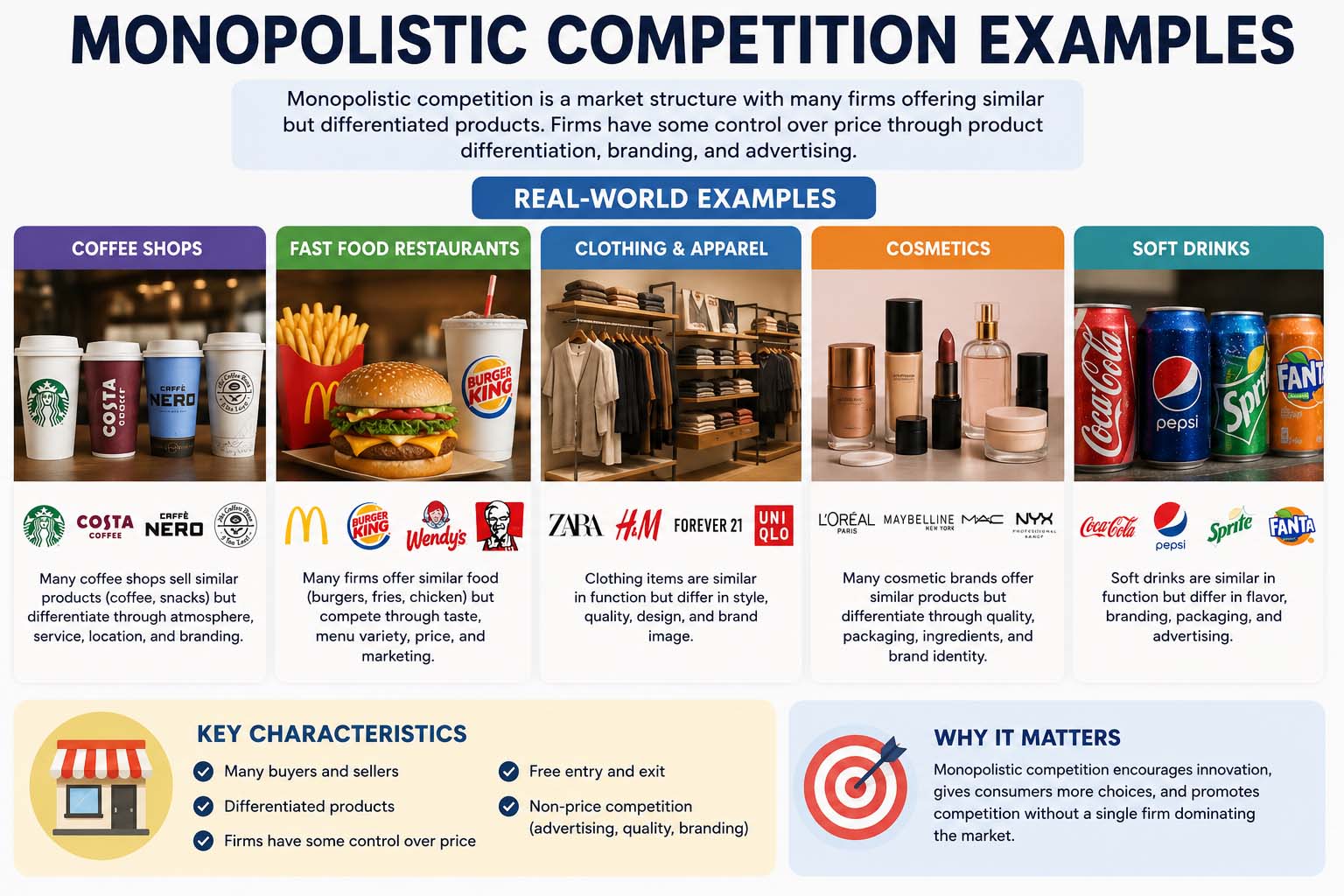
Monopolistic Competition Examples: Understanding Real-World Market Competition
Understanding monopolistic competition examples is one of the best ways to learn about important market structures in business and economics. After all, monopolistic competition is a market model that appears frequently in everyday life.
Many entrepreneurs, students, and business professionals search for real-world cases because this market structure explains how many modern businesses compete successfully despite having numerous rivals.
From coffee shops and restaurants to clothing brands and beauty salons, monopolistic competition exists in industries where companies offer similar products while differentiating themselves through branding, quality, customer service, or unique features.
This guide explains monopolistic competition, its characteristics, real-world examples, and strategies businesses use to succeed in these markets.
What Is Monopolistic Competition?
Monopolistic competition is a market structure where many businesses sell similar products or services, but each company attempts to distinguish itself from competitors.
Unlike perfect competition, businesses in monopolistic competition have some control over pricing because customers may perceive their products as unique.
For example, key characteristics include:
- Many competing firms
- Product differentiation
- Relatively easy market entry
- Independent pricing decisions
- Strong emphasis on marketing and branding
Overall, this market structure is common across many industries worldwide.
Key Features Behind Monopolistic Competition Examples
Before examining specific examples, it’s important to understand the main characteristics.
Many Sellers
Numerous companies operate within the same market.
Therefore, no single business dominates the entire industry.
Product Differentiation
Products are similar but not identical.
For example, companies differentiate through:
- Brand image
- Quality
- Features
- Customer service
- Packaging
Competitive Marketing
Advertising plays a major role in attracting customers.
For example, businesses often compete through:
- Social media campaigns
- Promotions
- Loyalty programs
- Influencer marketing
Low Barriers to Entry
New companies can generally enter the market without excessive restrictions.
As a result, this increases competition and encourages innovation.
Quick Comparison of Market Structures
| Feature | Perfect Competition | Monopolistic Competition | Monopoly |
|---|---|---|---|
| Number of Sellers | Many | Many | One |
| Product Type | Identical | Differentiated | Unique |
| Pricing Power | Very Low | Moderate | High |
| Entry Barriers | Low | Low | High |
| Marketing Importance | Low | High | Moderate |
Overall, this comparison highlights why monopolistic competition is often considered a middle ground between perfect competition and monopoly.
Examples of Monopolistic Competition
Many everyday businesses operate in monopolistically competitive markets.
Restaurants
Restaurants provide one of the most common examples of monopolistic competition.
Although many restaurants sell food, each business differentiates itself through:
- Cuisine type
- Service quality
- Location
- Atmosphere
- Pricing
For example, two Italian restaurants may offer similar menus but attract customers for different reasons.
Coffee Shops
Coffee shops compete heavily while offering similar core products.
For example, differentiation factors include:
- Brand identity
- Store design
- Specialty beverages
- Customer experience
Therefore, this makes coffee shops a classic example of monopolistic competition.
Hair Salons
Hair salons often provide similar services but compete based on:
- Stylist expertise
- Customer reviews
- Pricing
- Convenience
As a result, customers may remain loyal to specific salons even when alternatives exist nearby.
Clothing Retailers
Fashion brands compete by creating distinct identities despite selling similar products.
For example:
- Casual wear brands
- Athletic apparel companies
- Luxury fashion retailers
Ultimately, brand perception plays a significant role in purchasing decisions.
Monopolistic Competition Examples in Real Life
Many people ask for monopolistic competition examples in real life because the concept becomes easier to understand through familiar businesses.
Common examples include:
Fast Food Chains
Fast food companies offer similar products but compete through:
- Menu variety
- Branding
- Pricing
- Convenience
Therefore, consumers often choose based on preference rather than necessity.
Hotels
Hotels provide accommodations but differentiate through:
- Amenities
- Service levels
- Locations
- Pricing strategies
Gyms and Fitness Centers
Fitness facilities compete by offering:
- Specialized classes
- Premium equipment
- Membership benefits
- Personal training services
Although the basic service is similar, businesses create unique selling points.
Monopolistic Competition Examples: Companies and Industries
When discussing monopolistic competition examples companies, several well-known industries fit this model.
Retail Brands
Retail companies frequently compete through:
- Product quality
- Store experience
- Customer service
- Brand recognition
Cosmetic Companies
Beauty brands often sell similar products but distinguish themselves through:
- Packaging
- Ingredients
- Marketing campaigns
- Celebrity endorsements
Smartphone Accessory Businesses
Phone case manufacturers provide another example.
Products serve the same purpose but differ in:
- Design
- Materials
- Branding
- Features
As a result, this allows companies to maintain customer loyalty despite intense competition.
Why Product Differentiation Matters in Monopolistic Competition
Businesses create perceived value through:
Branding
Strong branding helps companies stand out.
For example:
- Logos
- Brand colors
- Messaging
Quality Improvements
Higher-quality products often justify premium pricing.
Customer Service
Exceptional service can encourage repeat purchases and positive reviews.
Innovation
Businesses continually introduce new features to remain competitive.
Business Strategy Using Monopolistic Competition Examples
Success in monopolistic competition requires strategic planning.
Step 1: Identify Your Target Audience
Understand:
- Customer needs
- Preferences
- Buying behaviors
In addition, What Is a Target Market can help businesses define the specific audience they want to reach.
Step 2: Differentiate Your Product
Develop unique selling points such as:
- Superior quality
- Better service
- Specialized features
Step 3: Build Brand Recognition
Many businesses strengthen their positioning by following a Business Level Strategy that clearly defines their competitive advantage.
Step 4: Invest in Marketing
Marketing helps businesses communicate their unique value.
Step 5: Monitor Competitors
Analyze competitor strategies and adapt when necessary.
Advantages of Monopolistic Competition
Consumer Choice
Customers benefit from numerous options.
Innovation
Competition encourages businesses to improve products and services.
Entrepreneurial Opportunities
Low entry barriers make it easier for new businesses to enter the market.
Brand Development
Companies can establish strong identities and loyal customer bases. Moreover, many growing companies seek advice from a Business Strategy Consultant to strengthen their market position.
Disadvantages of Monopolistic Competition
High Marketing Costs
Businesses often spend heavily on advertising.
Intense Competition
Large numbers of competitors can reduce profit margins.
Customer Switching
Consumers may switch brands frequently when alternatives are available.
Market Saturation
Some industries become crowded, making differentiation more difficult. Therefore, businesses often address this challenge by adopting a Market Development Strategy to reach new customer segments.
Examples of Monopolistic Competition in Local Markets
Many local businesses operate within monopolistic competition.
For example:
- Bakeries
- Cafes
- Pet grooming services
- Landscaping companies
- Auto repair shops
Each business provides similar services while attempting to attract customers through unique advantages.
Frequently Asked Questions About Monopolistic Competition Examples
What Is Monopolistic Competition?
Monopolistic competition is a market structure where many businesses sell similar but differentiated products.
What Are Examples of Monopolistic Competition?
Restaurants, coffee shops, clothing retailers, salons, hotels, and gyms are common examples.
Why Is Product Differentiation Important?
Differentiation helps businesses stand out and attract customers despite strong competition.
What Are Monopolistic Competition Examples in Real Life?
Fast food chains, fitness centers, beauty brands, and local service businesses are common real-world examples.
Can Businesses Set Their Own Prices?
Yes. Businesses have some pricing power because customers may perceive their products as unique.
What Is the Biggest Advantage of Monopolistic Competition?
Consumers benefit from greater choice, and businesses have opportunities to innovate and build strong brands.
Conclusion
Understanding monopolistic competition examples helps entrepreneurs, students, and business professionals better understand how many industries operate. From restaurants and coffee shops to retail brands and fitness centers, businesses compete by offering similar products while creating unique identities through branding, service, quality, and innovation.