
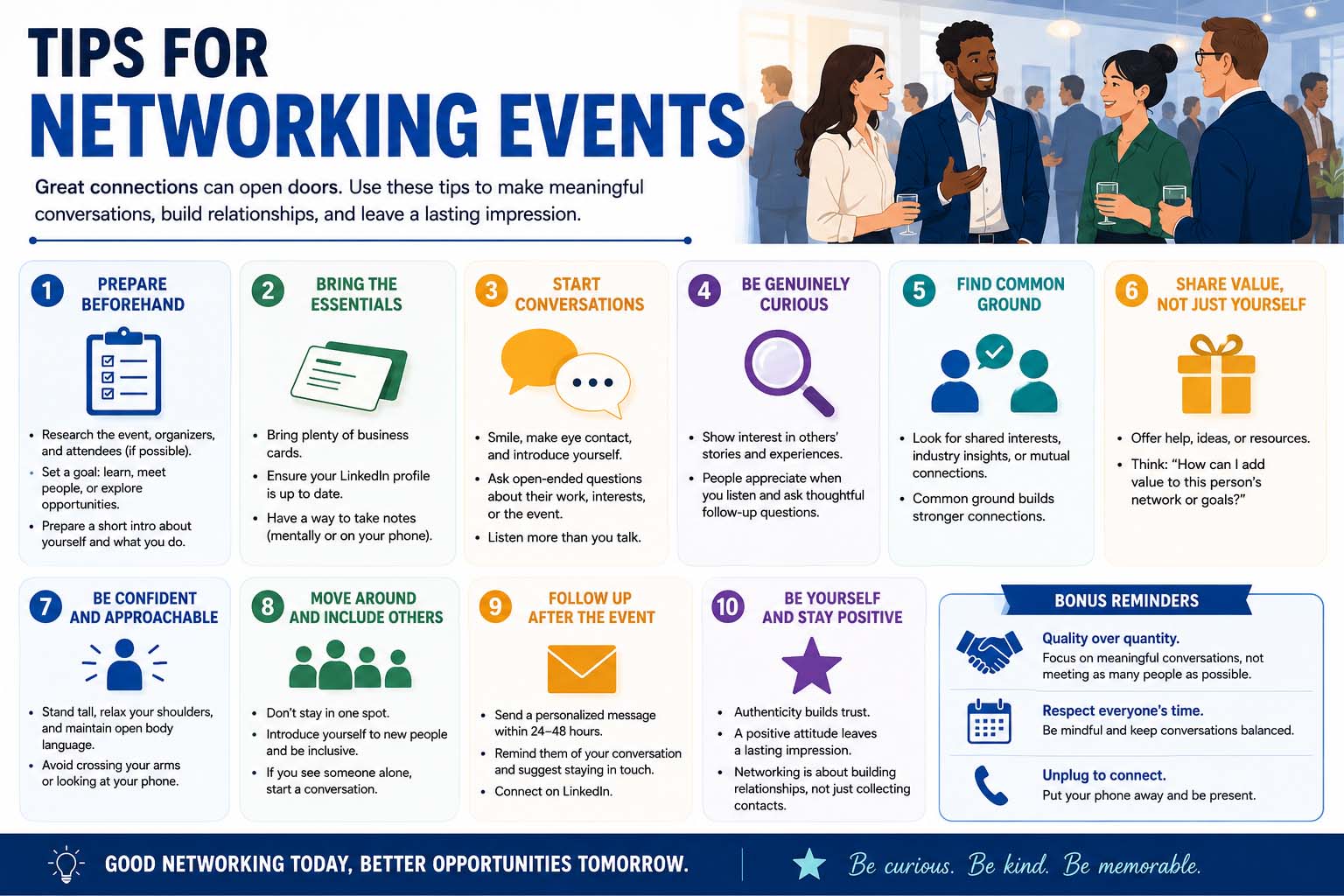
Tips for Networking Events: How to Build Strong Professional Connections
Networking events offer valuable opportunities for professionals, entrepreneurs, students, and business owners to build relationships and advance their careers. Learning effective tips for networking events can help you make meaningful connections at conferences, seminars, trade shows, and business meetups.
Many people feel nervous before meeting strangers or industry experts. However, successful networking involves more than promoting yourself. It requires genuine conversations, active listening, and an interest in learning from others. With the right preparation and communication skills, you can turn professional events into opportunities for career growth and business development.
Why Networking Events Matter
Networking events bring together professionals from different industries, backgrounds, and experience levels. These gatherings create opportunities to exchange ideas, discuss industry trends, and explore career or business opportunities.
Strong professional relationships can lead to mentorships, partnerships, job opportunities, and business collaborations. For example, a Business Strategy Consultant often relies on networking to establish trust, understand client needs, and develop lasting professional relationships.
Networking also helps you learn from people with different skills and perspectives. Instead of collecting as many business cards as possible, focus on building relationships that offer mutual value over time.
Tips for Networking Events: Prepare Before Attending
Preparation helps you approach conversations with greater confidence. Before attending an event, research the schedule, speakers, participating companies, and attendees when that information is available.
This research helps you identify people you would like to meet and topics you can discuss. In addition, it gives you a clearer idea of which sessions or activities best match your professional goals.
Prepare a short introduction, commonly known as an elevator pitch. Explain who you are, what you do, and what interests you professionally. Keep it conversational rather than turning it into a sales presentation.
A clear introduction also demonstrates What Is the Main Purpose of Developing a Business Pitch, as it helps others understand your background and professional value.
Finally, choose appropriate attire, check the event details, and arrive early when practical. These simple steps can help you settle in before the venue becomes crowded.
Tips for Networking Events: Set Clear Goals
Before attending, decide what you want to achieve. A clear purpose helps you focus your conversations instead of feeling overwhelmed by the number of people in the room.
Your goals might include:
- Meeting professionals in your industry.
- Exploring potential job opportunities.
- Finding mentors or experienced advisers.
- Building relationships with potential business partners.
- Learning about industry developments.
- Introducing your products or services to relevant contacts.
For example, a student might aim to speak with two professionals in a field of interest, while a business owner might look for potential collaborators.
Set realistic goals that encourage meaningful conversations rather than simply increasing the number of people you meet. This approach also gives you a practical way to evaluate whether the event was worthwhile.
Tips for Networking Events: Communicate and Listen Actively
Good communication helps create positive first impressions and encourages people to continue conversations. Start with a friendly greeting, maintain comfortable eye contact, and show genuine interest in the person you are speaking with.
Open-ended questions are particularly useful because they invite more detailed answers. Instead of asking questions that require only a yes or no, encourage the other person to share their experiences and opinions.
For example, you could ask:
- What do you enjoy most about your current role?
- How did you get started in this industry?
- What changes are you noticing in your field?
- What advice would you give someone entering this profession?
Listening matters just as much as asking questions. Rather than planning your next response while someone speaks, pay attention to their answers and ask relevant follow-up questions.
These skills are also valuable for professionals providing Human Resources Outsourcing Services, where clear communication and strong relationships support effective collaboration.
Build Confidence While Staying Genuine
One of the best approaches to networking is to build authentic relationships instead of trying to impress everyone you meet. People generally respond better to natural conversations than to overly rehearsed introductions or aggressive sales pitches.
If you feel nervous, start with a simple greeting or a question about the event. For instance, you could ask someone which session they found most useful or what brought them to the gathering.
You do not need to sound impressive in every conversation. Instead, share your experiences honestly, express curiosity, and look for common interests.
Confidence often grows with practice. As you become more comfortable starting conversations, you may find it easier to approach new people and participate in group discussions.
Tips for Networking Events: Ask Meaningful Questions
Thoughtful questions can turn a brief introduction into a useful conversation. Focus on the other person’s professional experience, current interests, or challenges rather than asking questions that feel intrusive.
For example, you might discuss a recent industry development, ask about a career transition, or explore how someone approaches a common professional challenge.
However, let the conversation develop naturally. Avoid asking several questions in rapid succession, as this can make the interaction feel like an interview.
Share relevant experiences of your own, too. A balanced exchange allows both people to contribute and helps establish a more comfortable connection.
Exchange Contact Information at Networking Events
Exchanging contact information makes it easier to continue a conversation after the event. Traditional business cards remain useful in many professional settings, while digital options provide convenient alternatives.
For instance, you can connect through LinkedIn or exchange professional email addresses. Before the event, update your online profiles so that new contacts can understand your experience and interests.
When sharing contact details, consider whether the other person would prefer a digital connection or a business card. Respect their preference and avoid pressuring anyone to share personal information.
These tips for networking events can help you build professional relationships, communicate confidently, and create opportunities for future collaboration. The goal is to make future communication easy and appropriate, not to collect the largest possible number of contacts.
Focus on Quality Connections
Meeting many people can be useful, but meaningful relationships often require more attention than a brief introduction allows.
Give yourself time to have thoughtful conversations with people whose interests, experience, or goals align with yours. You do not need to speak with every attendee to make an event worthwhile.
Similarly, professionals developing a Market Development Strategy often benefit from identifying relevant relationships and understanding their long-term potential.
After a promising conversation, take a moment to remember the person’s name, professional interests, and any topics you discussed. These details can help you reconnect naturally and personalize your follow-up message.
Follow Up After Networking Events
Following up helps turn an initial introduction into an ongoing professional relationship. Many useful connections fade simply because neither person makes an effort to reconnect.
Within a few days, send a brief email or LinkedIn message to someone you would like to stay in touch with. Mention where you met, refer to something you discussed, and express appreciation for the conversation.
For example, you could thank the person for sharing career advice or send a relevant article that relates to your discussion. If you agreed to share information or arrange another conversation, follow through on that commitment.
The Harvard Extension School guide to building a professional network offers additional guidance on building and maintaining professional relationships.
Keep subsequent messages relevant and considerate. Rather than contacting someone only when you need help, look for appropriate opportunities to share useful information, offer assistance, or congratulate them on a professional achievement.
Use Positive Body Language at Networking Events
Body language can influence how approachable and engaged you appear during networking conversations. Open posture, a natural smile, and appropriate eye contact can help create a welcoming impression.
Avoid checking your phone repeatedly or looking around the room while someone is speaking. These habits may suggest that you are distracted or uninterested.
At the same time, respect personal space and recognize that people have different communication styles. Not everyone maintains eye contact in the same way, and a comfortable interaction matters more than following rigid rules.
When joining a group conversation, listen briefly before contributing. This gives you a better understanding of the discussion and helps you enter naturally.
Manage Networking Anxiety
Networking can feel uncomfortable, especially for introverts, first-time attendees, or people arriving alone. Fortunately, you can make the experience more manageable with preparation and gradual practice.
Start with smaller interactions rather than trying to approach a large group immediately. You might introduce yourself to an event organizer, speak with someone waiting for a session, or join a conversation about a shared interest.
In addition, give yourself a realistic goal for the event. A few useful conversations can be more rewarding than spending the entire evening trying to meet everyone.
If you need a break, step away briefly, gather your thoughts, and return when you feel ready. Remember that networking is a skill you can develop over time, not a performance that requires constant confidence.
Turn Networking Into Career Growth
Networking events can help students, job seekers, entrepreneurs, and experienced professionals discover opportunities and learn from others. The benefits often extend beyond the event itself because professional relationships can develop over months or years.
Students and early-career professionals can use these gatherings to explore career paths, understand employer expectations, and seek guidance from experienced people.
Entrepreneurs and business owners, meanwhile, can connect with potential partners, learn about customer needs, and exchange industry insights. These relationships may also support a Business Level Strategy by helping organizations understand their markets and identify opportunities to compete effectively.
To make networking a consistent habit, attend relevant industry events, participate in professional communities, and maintain contact with people you meet. Over time, these efforts can help you build a network based on shared interests, trust, and mutual support.
Frequently Asked Questions About Networking Events
What should I do before attending a networking event?
Research the event, review the speakers or participating organizations, and decide what you want to achieve. Prepare a short introduction and a few questions that can help you start meaningful conversations.
How do I start a conversation at a networking event?
Begin with a friendly greeting or a question about the event, a session, or the other person’s professional interests. Then listen to the response and ask a relevant follow-up question to keep the discussion natural.
How many people should I meet at a networking event?
There is no universal target. Focus on having a few meaningful conversations rather than meeting a specific number of attendees. The right goal depends on the event, your available time, and your professional objectives.
How soon should I follow up after networking?
A message within a few days is a practical starting point. Mention your conversation, thank the person for their time, and suggest a relevant next step if appropriate.
What if I feel nervous about networking?
Start with smaller conversations, prepare a few opening questions, and set a manageable goal. With practice, you can become more comfortable approaching people and participating in professional discussions.
Build Lasting Professional Relationships
Successful networking depends on preparation, genuine curiosity, clear communication, and consistent follow-up. These habits help you create connections that extend beyond a single conference, seminar, or business meetup.
Focus on understanding people, exchanging useful ideas, and maintaining relationships that offer mutual value. By approaching networking with patience and authenticity, you can make professional events more productive and build connections that support your long-term career and business goals.