
How to Start a Consulting Business: A Complete Beginner’s Guide
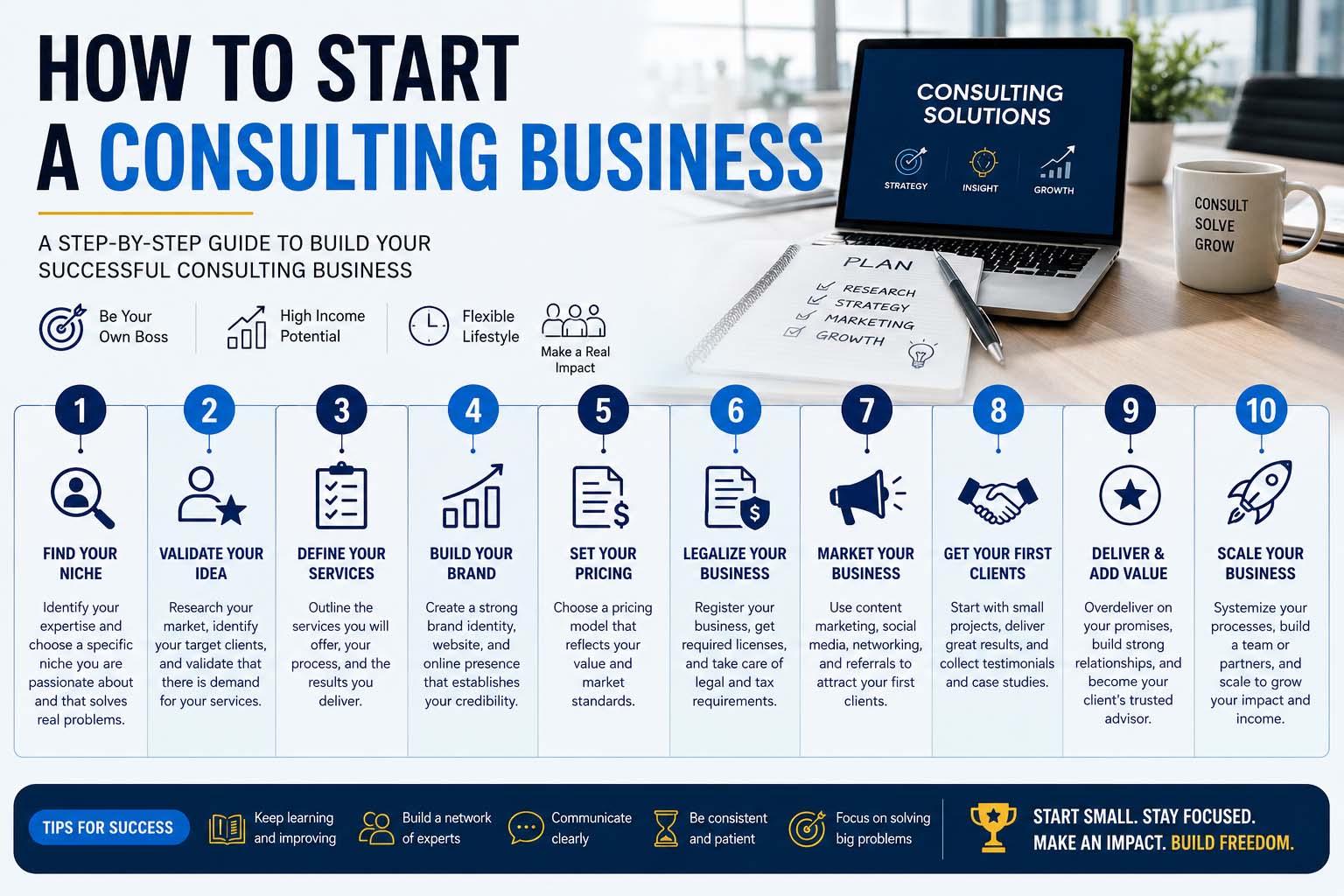
How to start a consulting business is an important question for professionals who want to turn their knowledge and experience into a profitable service. Whether you specialize in marketing, technology, human resources, or business strategy, consulting allows you to help clients solve problems using your expertise. However, building a successful consulting business requires more than professional knowledge. You also need a clear niche, suitable pricing, a plan to attract clients, and an understanding of the legal requirements in your location.
Starting a consulting business can be an excellent way to turn your professional knowledge into a source of income. Whether you have experience in marketing, technology, human resources, or business strategy, companies may pay for your expertise to solve specific problems. However, success requires more than professional knowledge. You also need a clear service offering, a realistic business plan, and an effective way to attract clients.
If you are learning how to start a consulting business, this guide explains the essential steps, from choosing a niche to finding your first customers. In addition, it covers common mistakes and practical strategies that can help you build a sustainable consulting career.
What Is a Consulting Business and How Does It Work?
A consulting business provides professional advice, specialized knowledge, or practical solutions to individuals and organizations. Consultants help clients understand problems, improve processes, reduce costs, and achieve specific goals.
For example, a marketing consultant may develop a campaign strategy, while an IT consultant may recommend technology improvements. Similarly, a business consultant can evaluate operations and suggest ways to improve performance.
Unlike traditional employees, independent consultants generally work with multiple clients under agreed contracts. As a result, they can often choose their projects, service packages, and working arrangements.
Why Learn How to Start a Consulting Business?
Consulting can offer flexibility, professional independence, and opportunities to earn money from existing skills. Moreover, you may be able to begin from a home office without investing in expensive equipment or commercial space.
However, consulting income is not guaranteed. You must identify paying customers, deliver valuable results, and manage your business expenses carefully. Therefore, evaluate your experience, financial position, and target market before committing to the business.
A successful consultant focuses on solving valuable problems rather than simply selling advice. This approach helps build trust, encourages repeat business, and creates opportunities for referrals.
Step 1: Choose the Right Consulting Business Niche
Choosing a niche helps you distinguish your services from competitors. Instead of offering general advice to every type of business, concentrate on a specific industry, skill, or problem you understand well.
Consider the following consulting niches:
- Business consulting: Improve business planning, operations, and organizational performance.
- Marketing consulting: Help companies develop campaigns and reach suitable customers.
- IT consulting: Recommend software, infrastructure, and technology solutions.
- SEO consulting: Improve website visibility and organic search performance.
- Human resources consulting: Support recruitment, employee development, and HR processes.
- Financial consulting: Help eligible clients with budgeting, financial planning, or business analysis within your qualifications and local regulations.
To select your niche, review your professional experience and research what potential clients need. In addition, consider whether businesses are willing to pay for the solution you offer.
For example, if you have helped companies improve search rankings, SEO consulting may be a suitable starting point. A focused niche also makes your marketing message clearer.
Step 2: Identify Your Ideal Consulting Clients
After selecting a niche, determine who is most likely to purchase your services. Your ideal client could be a startup, a small business, a growing company, or a large organization.
First, identify the industry you want to serve. Next, consider the size of the businesses you can realistically support. Then, examine their budgets, common challenges, and decision-making processes.
For example, a small business may need affordable marketing support, whereas a larger company may require detailed strategy development. Understanding these differences helps you create relevant service packages.
You can also research potential customers through professional communities, industry events, and resources such as Tips for Networking Events.
Step 3: Find Problems Your Consulting Business Can Solve
Clients typically hire consultants because they need a problem solved, a process improved, or a goal achieved. Therefore, explain the practical outcomes your services can provide.
Start by listing the problems you understand well. Then, determine which problems are costly, urgent, or difficult for your target audience to solve internally.
For instance, a company might struggle with low website traffic, inefficient operations, or outdated technology. You can build your offer around a measurable improvement, provided you can reasonably deliver it.
Additionally, review your previous professional achievements. Relevant examples, case studies, and client testimonials can help demonstrate your expertise. If you are new to consulting, use suitable sample projects or clearly labeled demonstrations instead of inventing client results.
Step 4: Create Consulting Services Clients Will Buy
Once you understand your audience’s needs, turn your expertise into clear services. Clients should be able to understand what they receive, how the engagement works, and what the expected deliverables are.
Common consulting service formats include:
- Consultation sessions: Provide advice during scheduled meetings.
- Business audits: Evaluate an existing process and recommend improvements.
- Project-based consulting: Complete a defined project with agreed deliverables.
- Ongoing advisory services: Support clients through regular meetings and reviews.
For example, a consultant could offer a website audit, a marketing strategy project, or monthly business advisory sessions. However, avoid promising results that depend on factors outside your control.
Furthermore, describe the scope of each service clearly. This helps prevent misunderstandings and makes it easier to explain your value to potential clients.
Step 5: How to Start a Consulting Business Legally
Before accepting clients, choose an appropriate business structure and understand the rules that apply in your location. Depending on where you operate, you may need to register a business name, obtain licenses, collect applicable taxes, or meet industry-specific requirements.
Common structures include sole proprietorships, partnerships, and limited liability companies (LLCs). Each option has different legal, tax, administrative, and liability implications.
Review the U.S. Small Business Administration’s guide to choosing a business structure if you operate in the United States. Otherwise, consult the official business-registration and tax resources for your country or region.
How to Set Up an LLC for Your Consulting Business
An LLC may be appropriate for some U.S.-based consultants because it can separate certain business liabilities from personal assets. Nevertheless, protection is not absolute, and legal requirements vary by state.
Generally, the process involves choosing an available business name, filing the required formation documents, paying applicable fees, and meeting ongoing reporting obligations. You may also need separate business banking and appropriate insurance.
Before choosing an LLC, compare its costs and administrative requirements with other business structures. Professional legal or tax advice can help you make an informed decision.
Step 6: Set Profitable Consulting Rates and Prices
Pricing affects both your income and how potential clients perceive your services. Therefore, consider your experience, operating costs, the value you provide, and the rates charged by comparable consultants.
Common pricing methods include:
- Hourly pricing: Charge for the time spent working with a client.
- Project-based pricing: Set a fee for defined deliverables.
- Retainer pricing: Receive an agreed recurring payment for ongoing support.
- Value-based pricing: Set fees according to the value of the engagement, where appropriate and clearly agreed.
For example, a short advisory session might suit hourly pricing, while a complete business audit may be easier to price as a project.
Before finalizing your rates, calculate your expected business expenses, taxes, and non-billable hours. In addition, explain what your fee includes and establish how additional work will be charged.
Step 7: Build Your Consulting Business Brand
A professional brand helps clients understand who you serve and why they should consider hiring you. It includes your business name, messaging, visual identity, reputation, and communication style.
Start with a clear statement describing your audience, the problem you solve, and the service you provide. For example, instead of saying that you offer general business advice, explain how you help small companies improve their sales processes.
You can also develop a consistent visual identity and professional email address. Meanwhile, make sure your public profiles communicate the same services and expertise.
If your work involves technology or digital transformation, you may also want to learn how IT Strategy Consulting supports organizations in aligning technology with business goals.
Step 8: Create a Website for Your Consulting Business
A website gives potential clients a place to learn about your services, experience, and contact options. Although a complicated website is not necessary at first, a clear and professional online presence can strengthen your credibility.
Include these essential pages or sections:
- Home: Explain whom you help and what you offer.
- Services: Describe your consulting packages and deliverables.
- About: Share relevant experience and qualifications.
- Case studies or testimonials: Present authentic evidence of your work, with permission.
- Contact: Make it easy for potential clients to reach you.
In addition, publish useful content that answers common questions in your niche. For example, a digital consultant could explain website performance, analytics, or online marketing strategy.
You can explore Digital Strategy Consulting to understand how digital planning can support modern business objectives.
Step 9: How to Find Clients for a Consulting Business
Finding clients is one of the most important parts of building a consulting business. Even highly skilled consultants need a repeatable method for reaching prospects and explaining their value.
Start with your existing professional network. Contact former colleagues, business contacts, and relevant industry connections without pressuring them to purchase your services. Also, participate in professional communities where your target clients seek advice.
Other useful client-acquisition methods include:
- Publishing helpful articles and professional insights.
- Sharing relevant case studies and project examples.
- Contacting suitable businesses with personalized messages.
- Partnering with complementary service providers.
- Asking satisfied clients for referrals.
- Applying for suitable consulting projects on professional platforms.
However, avoid sending generic mass messages or making unrealistic promises. Instead, explain a specific problem you can help solve and suggest a practical next step.
Over time, track where your leads come from and which activities generate qualified inquiries. Consequently, you can spend more time on the marketing channels that work best.
Step 10: Choose Profitable Consulting Services
Specialized services can help you develop a recognizable position in the market. Nevertheless, choose them based on your skills, client demand, and ability to deliver reliable work.
How to Start a Marketing Consulting Business
Marketing consultants help businesses understand their audiences, improve messaging, and plan promotional campaigns. Depending on their expertise, they may provide market research, content planning, brand positioning, or campaign analysis.
To build this service, identify the marketing problems your target clients face most often. Then, create a clearly defined offer and explain how you will evaluate progress.
How to Start an SEO Consulting Business
SEO consultants help websites improve their search visibility through activities such as technical audits, keyword research, content recommendations, and performance analysis.
Start by choosing the types of websites or industries you understand best. Next, develop a process for auditing websites, prioritizing improvements, and reporting results. Since rankings depend on many factors, avoid guaranteeing a specific position in search results.
Legal Requirements for Starting a Consulting Business in California
If you plan to operate in California, research state and local registration requirements before launching. Depending on your business structure and location, you may need to register a business name, obtain local permits, or meet tax and reporting obligations.
Check official California and local government resources for current requirements. Furthermore, confirm whether your consulting specialty requires particular credentials, insurance, or professional authorization.
Common Consulting Business Startup Mistakes to Avoid
New consultants can lose time and money by overlooking basic business practices. Fortunately, many of these problems are preventable.
Charging Too Little
Setting rates too low can make it difficult to cover expenses and maintain a sustainable workload. Instead, calculate your costs and evaluate the value and scope of your services before setting prices.
Offering Too Many Services
Trying to serve every possible client can make your business difficult to explain. Therefore, start with a focused set of services and expand when customer demand supports it.
Ignoring Contracts
A written agreement should explain the scope of work, payment terms, deadlines, responsibilities, confidentiality, and procedures for additional work. As a result, both parties have a clearer understanding of the engagement.
Neglecting Marketing
Even experienced consultants need to maintain visibility. Set aside regular time for networking, publishing useful content, contacting prospects, and following up on inquiries.
Failing to Track Finances
Record revenue, expenses, invoices, taxes, and outstanding payments from the beginning. In addition, keep appropriate business records and seek qualified accounting advice when necessary.
Best Practices for Growing a Consulting Business
Once your first clients arrive, focus on delivering consistent value and improving your processes. Request feedback after projects and use it to refine your services.
You should also document repeatable tasks, create templates, and establish clear onboarding procedures. These improvements can save time while maintaining service quality.
If your services involve recruitment or employee management, research Human Resources Outsourcing Services to understand related solutions businesses may need.
Finally, continue learning about developments in your niche. As client needs change, updating your skills and offers can help you remain competitive.
How to Start a Consulting Business: Startup Checklist
Before launching, review this practical checklist:
- Choose a niche that matches your expertise.
- Research your target clients and competitors.
- Define your services and deliverables.
- Select a suitable business structure.
- Check registration, licensing, and tax requirements.
- Set prices that account for costs and time.
- Prepare a contract and payment process.
- Create a professional online presence.
- Develop a plan to find your first clients.
- Track your finances and review performance regularly.
Completing these tasks will not guarantee immediate success. However, it gives you a structured foundation and helps you identify important gaps before they become expensive problems.
Frequently Asked Questions About Starting a Consulting Business
How much money do you need to start a consulting business?
Startup costs vary depending on your industry, location, and business model. A home-based consultant may need only a computer, internet access, basic software, registration fees, and suitable insurance. Meanwhile, specialized fields may require additional equipment, certifications, or professional services.
Can you start a consulting business with no experience?
You can start with limited consulting experience if you have relevant skills and can demonstrate your ability to solve a specific problem. However, you should be honest about your qualifications and begin with projects that match your capabilities.
How do consulting businesses find their first clients?
Many consultants begin with professional contacts, referrals, targeted outreach, networking, and helpful online content. In addition, a focused service offer makes it easier for prospective clients to understand why they should contact you.
Is consulting a profitable business?
Consulting can be profitable when clients are willing to pay for your expertise and your revenue covers business expenses. However, profitability depends on demand, pricing, workload, operating costs, and the consistency of your client pipeline.
Do you need a website to start consulting?
A website is helpful but may not be essential on day one. You can begin by using a professional profile and direct networking, then build a website as your services and client base develop.
Your Next Steps for Starting a Consulting Business
Learning how to start a consulting business involves choosing a valuable niche, identifying the right clients, defining your services, setting suitable prices, and meeting applicable legal requirements. Equally important, you need a practical approach to marketing, client communication, and financial management.
Start small, focus on solving real problems, and improve your offer as you gain experience. With consistent effort, honest communication, and careful planning, you can build a consulting business that supports your professional goals and delivers meaningful value to clients.