
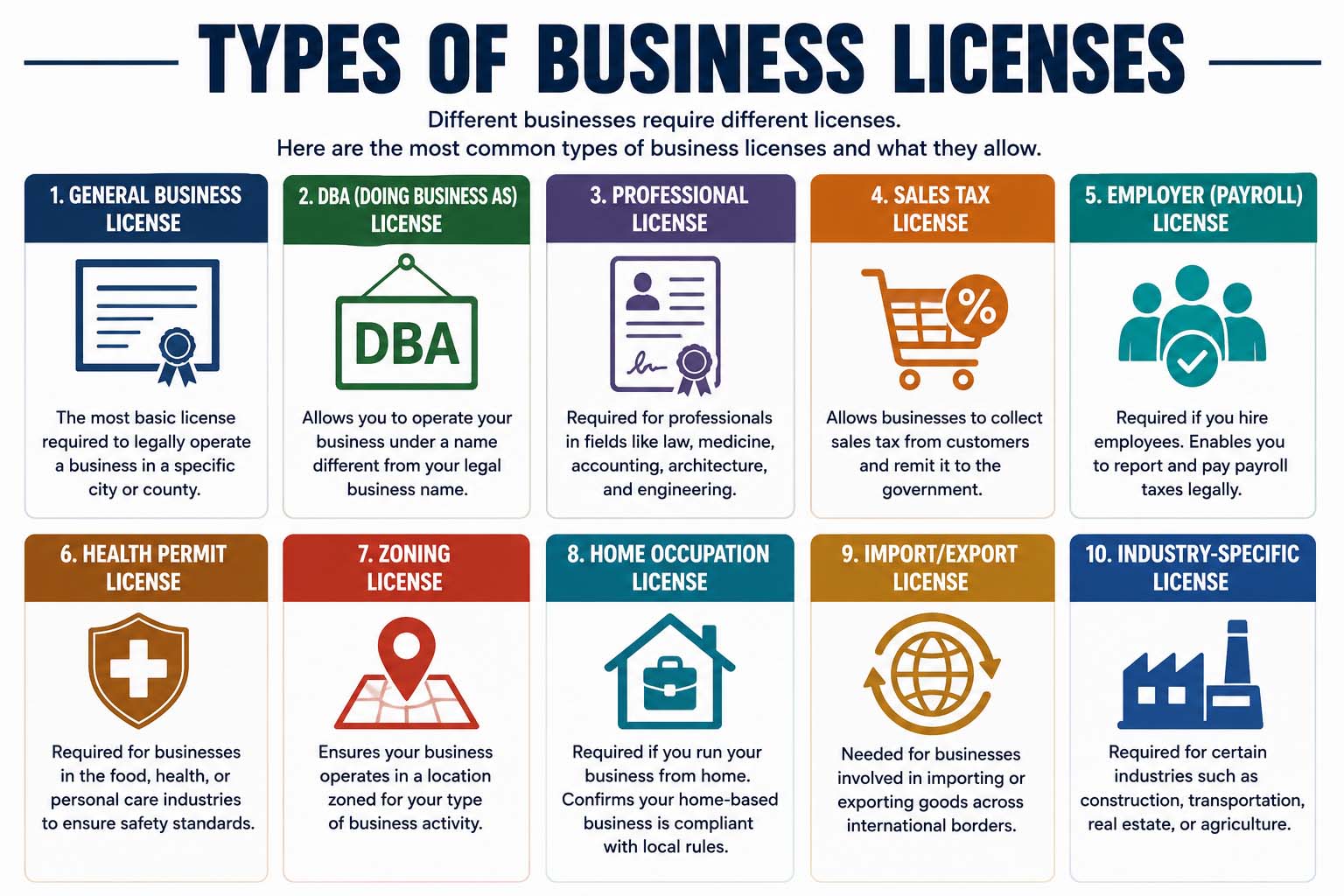
Types of Business Licenses: A Complete Guide for Entrepreneurs
Starting a business is exciting, but before opening your doors or launching your website, you need to understand the types of business licenses that may apply to your company. Every business operates under different rules depending on its industry, location, and activities. Having the correct licenses not only keeps your business compliant but also builds trust with customers and helps you avoid fines or legal issues.
Whether you’re launching a local shop, an online business, or a nationwide company, knowing which licenses you need is an essential first step.
What Are Business Licenses?
A business license is an official authorization issued by a government agency that allows a company to operate legally within a specific location or industry.
Business licenses exist to ensure companies meet health, safety, zoning, tax, and professional standards. Depending on where your business operates, you may need licenses from federal, state, county, or local governments.
The different types of business licenses vary based on the services you provide, the products you sell, and the regulations that apply to your industry.
Why Business Licenses Matter
Many new business owners assume they only need to register their company. In reality, registration and licensing are different requirements.
A proper business license helps you:
- Operate legally
- Avoid penalties and fines
- Build customer confidence
- Meet insurance requirements
- Open business bank accounts more easily
- Qualify for contracts and permits
- Protect your business reputation
Without the required licenses, even profitable businesses can face delays, lawsuits, or forced closures.
Types of Business Licenses Every Entrepreneur Should Know
The exact licenses you’ll need depend on your business model. Some companies require only one license, while others may need several approvals before they can begin operating.
General Business License
A general business license is the most common license required by cities or counties.
It gives your business permission to operate within a specific jurisdiction.
Many businesses require this license, including:
- Retail stores
- Service businesses
- Consulting firms
- Online businesses
- Home-based businesses
This license is often the first document entrepreneurs obtain after registering their company.
Professional License
Certain professions require specialized licensing before services can legally be offered.
Examples include:
- Doctors
- Dentists
- Lawyers
- Accountants
- Architects
- Electricians
- Plumbers
Professional licenses help ensure practitioners meet education, examination, and ethical standards.
Sales Tax Permit
Businesses that sell taxable goods or services often need a sales tax permit, sometimes called a seller’s permit or resale certificate.
This permit allows businesses to collect sales tax from customers and submit those taxes to the appropriate government agency.
Retail stores, e-commerce businesses, and wholesalers commonly require this permit.
Home Occupation Permit
Running a business from home doesn’t always eliminate licensing requirements.
Many local governments issue home occupation permits to ensure home-based businesses comply with zoning regulations and neighborhood rules.
These permits may regulate:
- Customer traffic
- Parking
- Business signage
- Equipment usage
- Noise levels
Before launching a home business, check your local requirements to avoid unexpected restrictions.
Types of Business Licenses and Permits
Many entrepreneurs hear the terms “license” and “permit” used interchangeably, but they often serve different purposes.
The types of business licenses and permits commonly required include:
| License or Permit | Primary Purpose |
|---|---|
| General business license | Legal operation |
| Sales tax permit | Tax collection |
| Health permit | Food and health compliance |
| Building permit | Construction approval |
| Fire permit | Fire safety compliance |
| Professional license | Industry qualification |
| Environmental permit | Environmental protection |
| Sign permit | Outdoor business signage |
Some businesses may require only one approval, while others need several licenses before opening.
For example, entrepreneurs researching How to Start a Restaurant quickly discover that food businesses often need health permits, food handling certifications, occupancy permits, and local business licenses in addition to general registration.
Industry-Specific Business Licenses
Some industries operate under additional regulations because they affect public health, transportation, finance, or safety.
Food Service Licenses
Restaurants, bakeries, food trucks, and catering businesses usually require:
- Food establishment licenses
- Health department inspections
- Food handler certifications
- Fire safety approvals
Licensing helps ensure food is prepared and served safely.
Transportation Licenses
Companies involved in moving goods or passengers often need transportation-related permits.
These may include:
- Commercial vehicle registrations
- Operating authority
- Fuel tax permits
- Driver certifications
Anyone researching How to Start a Trucking Company should expect licensing requirements that vary by state and, in some cases, federal transportation regulations.
Retail Licenses
Retail businesses frequently require:
- General business licenses
- Sales tax permits
- Sign permits
- Occupancy permits
Some retailers selling regulated products such as alcohol, tobacco, or firearms must obtain additional specialized licenses.
Vending Machine Licenses
Although vending machines appear simple to operate, many cities and states require licenses or permits for each machine or business location.
Entrepreneurs exploring How to Start a Vending Machine Business should review local regulations because licensing requirements often differ between municipalities.
Federal, State, and Local Licensing
One of the most common mistakes new entrepreneurs make is assuming one license covers every requirement.
In reality, licensing often happens at multiple government levels.
Federal Licenses
Only certain industries require federal licenses.
Examples include:
- Aviation
- Alcohol production
- Firearms
- Commercial fishing
- Broadcasting
- Transportation across state lines
Most small businesses never need a federal business license.
State Licenses
States regulate many professional occupations and specialized industries.
Examples include:
- Healthcare
- Construction
- Financial services
- Insurance
- Real estate
- Childcare
Each state maintains its own licensing rules, renewal schedules, and application procedures.
Local Licenses
Cities and counties commonly issue licenses covering:
- Business operation
- Zoning compliance
- Building safety
- Fire inspections
- Health requirements
Local governments often have the greatest influence over small businesses operating within their communities.
Choosing the Right Licenses for Your Business
Because licensing requirements vary, start by answering a few basic questions:
- What products or services will you sell?
- Where will your business operate?
- Will customers visit your location?
- Will employees work on-site?
- Does your industry require professional certification?
- Will you collect sales tax?
Answering these questions helps narrow down which licenses are likely to apply before beginning the application process.
Many states also provide online lookup tools that help entrepreneurs verify business registration and licensing information. For example, resources like Pennsylvania Business Entity Search make it easier to confirm whether a company name is already registered and whether a business is in good standing.
Types of Business Licenses in California
California has one of the largest business communities in the United States, and licensing requirements vary depending on the city, county, and industry.
The types of business licenses in California often include:
- Local business license
- Seller’s permit for taxable sales
- Professional or occupational license
- Health permits for food-related businesses
- Building and zoning permits
- Environmental permits for certain industries
For example, a retail clothing store may only need a local business license and a seller’s permit, while a restaurant or medical practice will likely need several additional approvals.
Since licensing rules differ by municipality, business owners should check both state and local government requirements before opening.
Types of Business Licenses in Washington State
Businesses operating in Washington may also need multiple licenses depending on their activities.
Common types of business licenses in Washington State include:
- Washington State Business License
- City business license
- Professional licenses
- Contractor registration
- Specialty endorsements
- Sales tax registration
Washington uses a Business Licensing Service (BLS) that allows many businesses to apply for multiple state licenses through one application. However, some local governments still require separate city licenses.
Checking requirements early can help prevent delays when launching a new business.
How to Apply for Business Licenses
Although every jurisdiction has its own process, the application steps are generally similar.
Step 1: Register Your Business
Choose your business structure and register your company with the appropriate state agency if required.
Step 2: Apply for a Tax Identification Number
Many businesses need an Employer Identification Number (EIN) from the IRS before applying for certain licenses or hiring employees.
Step 3: Research Licensing Requirements
Review federal, state, county, and city regulations to identify every license or permit your business needs.
Step 4: Submit Applications
Complete each application accurately and provide any required supporting documents, such as identification, insurance certificates, floor plans, or professional qualifications.
Step 5: Pay Applicable Fees
Most licenses require an application fee. Costs vary widely depending on the industry and location.
Step 6: Schedule Inspections if Needed
Food establishments, childcare centers, healthcare facilities, and construction-related businesses often require inspections before receiving final approval.
Step 7: Renew Licenses on Time
Many licenses expire annually or every few years. Missing a renewal deadline can result in penalties or temporary suspension of business operations.
Quick Comparison of Common Business Licenses
| License Type | Who Typically Needs It | Issued By |
|---|---|---|
| General Business License | Most businesses | City or county |
| Professional License | Licensed professionals | State agency |
| Sales Tax Permit | Retailers and sellers | State tax authority |
| Health Permit | Food and healthcare businesses | Local health department |
| Building Permit | Construction projects | Local building department |
| Fire Permit | Businesses with public premises | Fire department |
| Environmental Permit | Manufacturing and regulated industries | State or federal agency |
| Home Occupation Permit | Home-based businesses | Local government |
Common Mistakes Business Owners Make
Licensing mistakes can slow business growth and create unnecessary expenses. Fortunately, most are easy to avoid with proper planning.
Assuming One License Covers Everything
Many entrepreneurs believe a single business license satisfies every legal requirement. In reality, businesses often need several licenses issued by different government agencies.
Ignoring Local Regulations
State approval doesn’t automatically satisfy city or county requirements. Local governments frequently require their own permits, inspections, or zoning approvals.
Waiting Until Opening Day
Applying for licenses at the last minute can delay your launch. Some permits require inspections or background checks that take several weeks.
Forgetting Renewal Deadlines
Business owners should maintain a renewal calendar to avoid expired licenses and potential fines.
Best Practices for Staying Compliant
Licensing requirements don’t end after your business opens.
To stay compliant:
- Review your licenses every year.
- Monitor changes in local regulations.
- Keep copies of licenses in a secure location.
- Display required licenses where applicable.
- Update licenses after changing your business address or ownership.
- Renew permits before they expire.
These habits help reduce compliance risks and keep daily operations running smoothly.
Do Franchise Businesses Need Special Licenses?
Buying a franchise doesn’t eliminate licensing responsibilities.
Anyone researching How to Start a Franchise should understand that franchise owners still need the same local, state, and federal licenses required for their specific industry. While the franchisor often provides operational guidance, the franchise owner remains responsible for meeting local licensing and permit requirements.
Frequently Asked Questions
Do all businesses need a business license?
Not every business needs the same license, but most businesses require at least one license or permit before operating legally. Requirements depend on your location and industry.
What’s the difference between a business license and a permit?
A business license generally authorizes your company to operate, while a permit usually approves a specific activity, such as construction, food handling, or signage.
Can I run a business without a license?
If your business requires a license, operating without one can lead to fines, penalties, or business closure. Always verify local requirements before starting operations.
How much does a business license cost?
Costs vary significantly. Some local licenses cost less than $50, while specialized professional licenses or regulated industries may require hundreds or even thousands of dollars in fees.
How long does it take to get a business license?
Some licenses are issued within a few days, while others require inspections or background checks and may take several weeks.
Build Your Business on the Right Foundation
Understanding the types of business licenses is one of the first steps toward building a compliant and successful business. While the exact requirements vary by industry and location, taking the time to identify the correct licenses before opening can save money, prevent delays, and reduce legal risks.
As your business grows, review your licensing obligations regularly, especially if you expand into new products, services, or locations. Staying informed and organized helps ensure your business remains compliant while giving you the confidence to focus on serving customers and growing your company.