
Types of Meetings: A Complete Guide for Better Business Communication
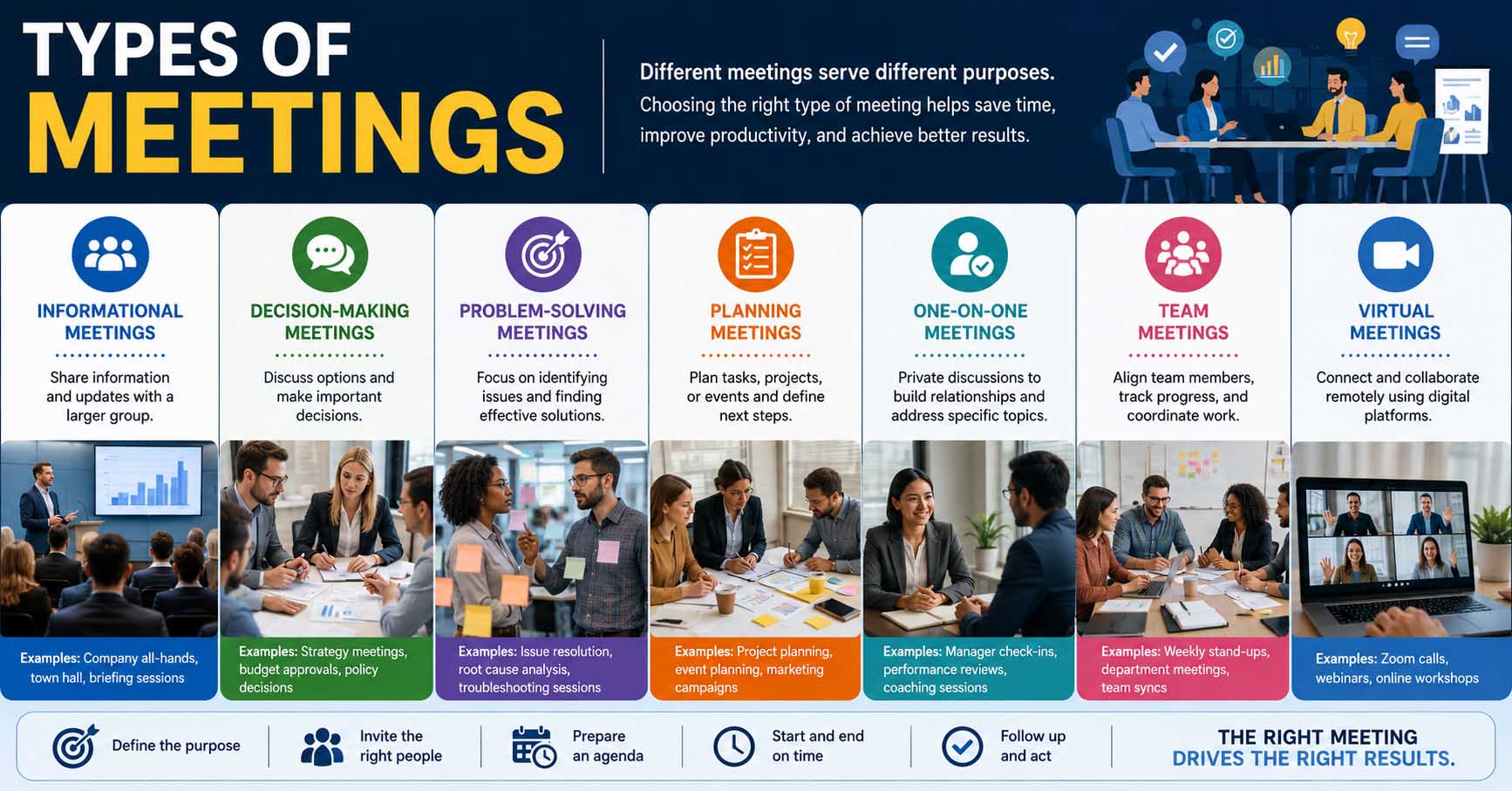
Every business relies on meetings to share information, make decisions, solve problems, and keep projects moving forward. Yet not every meeting should look the same. Understanding the different types of meetings helps leaders and teams choose the right format for each situation, making discussions more productive and reducing wasted time.
Whether you manage a small business, lead a department, or work as part of a growing team, selecting the appropriate meeting type improves communication and keeps everyone focused on shared goals. This guide explains the most common meeting formats, when to use them, and how to run meetings that produce real results.
What Are Types of Meetings?
Types of meetings are different formats organizations use to accomplish specific objectives. Each meeting has its own purpose, participants, structure, and expected outcome.
For example, a weekly project update has a different goal than a brainstorming session or a performance review. Choosing the right meeting type helps participants prepare, contribute effectively, and leave with clear next steps.
Instead of scheduling every discussion as a general meeting, businesses benefit from matching the meeting format to the task.
Types of Meetings and Their Purpose
Businesses use many different types of meetings, each designed for a specific situation.
| Meeting Type | Primary Purpose | Typical Participants |
|---|---|---|
| Team Meeting | Share updates and coordinate work | Team members |
| One-on-One Meeting | Coaching and feedback | Manager and employee |
| Project Meeting | Track project progress | Project team |
| Brainstorming Meeting | Generate ideas | Cross-functional team |
| Decision-Making Meeting | Choose a solution | Leaders or stakeholders |
| Client Meeting | Build relationships and discuss business | Company and client |
| Board Meeting | Strategic oversight | Board members |
| Training Meeting | Develop skills | Employees |
| Virtual Meeting | Remote collaboration | Distributed teams |
Each format supports different business goals and should have a clear agenda.
Team Meetings
Team meetings are among the most common workplace gatherings.
Managers use them to:
- Share company updates
- Review priorities
- Discuss upcoming deadlines
- Address challenges
- Celebrate achievements
These meetings work best when they remain focused and encourage participation from everyone.
The meeting style often depends on the organization’s culture and types of work environments, since remote, hybrid, and in-office teams may communicate differently.
Best Practices
- Start with key priorities.
- Keep updates concise.
- Assign action items.
- End with clear responsibilities.
One-on-One Meetings
One-on-one meetings allow managers and employees to discuss individual performance, career development, and ongoing challenges.
Unlike team meetings, these conversations provide a private setting for honest feedback.
Common discussion topics include:
- Goal progress
- Skill development
- Workload concerns
- Career planning
- Coaching opportunities
Managers who hold regular one-on-one meetings often build stronger relationships with their teams.
Project Meetings
Project meetings help teams coordinate work from planning through completion.
Typical agenda items include:
- Status updates
- Timeline reviews
- Budget discussions
- Risk identification
- Resource planning
- Upcoming milestones
Project managers usually schedule these meetings weekly or biweekly depending on project complexity.
Different types of managers may run project meetings differently, but successful sessions always end with assigned responsibilities and deadlines.
Brainstorming Meetings
Brainstorming meetings encourage creative thinking before evaluating ideas.
Participants focus on generating as many solutions as possible without immediate criticism.
Helpful brainstorming techniques include:
- Mind mapping
- Round-robin idea sharing
- Sticky note exercises
- “What if” scenarios
- Silent brainstorming
Once ideas have been collected, the group can organize and prioritize them.
Decision-Making Meetings
Some meetings exist primarily to reach a decision.
These meetings often involve:
- Reviewing available information
- Comparing options
- Discussing risks
- Evaluating costs
- Selecting the best course of action
A structured agenda prevents conversations from drifting away from the decision that needs to be made.
Client Meetings
Client meetings strengthen business relationships while ensuring projects stay aligned with customer expectations.
Common objectives include:
- Understanding client needs
- Presenting solutions
- Reviewing project progress
- Negotiating contracts
- Resolving concerns
Preparation makes a significant difference. Researching the client’s business and defining meeting objectives ahead of time helps build trust.
Professionals attending conferences or industry gatherings can also benefit from reviewing Tips for Networking Events, since many client relationships begin through networking conversations.
Board Meetings
Board meetings focus on governance and long-term strategy rather than daily operations.
Topics may include:
- Financial performance
- Strategic planning
- Risk management
- Executive leadership
- Major investments
- Policy approvals
These meetings usually follow formal procedures and documented agendas.
Training Meetings
Training meetings help employees build new knowledge and improve workplace skills.
Examples include:
- Software training
- Safety instruction
- Sales workshops
- Leadership development
- Compliance updates
- Customer service training
Interactive activities often increase engagement and improve information retention.
Types of Virtual Meetings
Remote work has made types of virtual meetings an essential part of modern business.
Organizations commonly use video conferencing platforms for collaboration across different locations.
Popular virtual meeting formats include:
Daily Stand-Up Meetings
Short meetings lasting 10 to 15 minutes where team members briefly share:
- What they completed
- What they’re working on
- Any obstacles
Remote Team Meetings
These resemble traditional team meetings but rely on video conferencing and collaboration software.
Virtual Client Meetings
Businesses often present proposals, review contracts, and discuss projects remotely, eliminating the need for travel.
Webinar-Style Meetings
One or more presenters share information with larger audiences while participants ask questions through chat or Q&A sessions.
Virtual meetings save travel time while allowing organizations to collaborate across cities and countries.
What About Types of AA Meetings?
Some people searching online for types of meetings are actually looking for types of AA meetings.
Alcoholics Anonymous (AA) meetings serve a very different purpose than business meetings. They provide peer support for individuals recovering from alcohol addiction.
Common formats include:
- Open meetings
- Closed meetings
- Speaker meetings
- Discussion meetings
- Step meetings
- Literature meetings
Likewise, different types of AA meetings vary based on participation rules and discussion topics. While these meetings are valuable for personal recovery, they are separate from workplace meeting formats.
How to Choose the Right Meeting Type
Before scheduling a meeting, ask yourself a few simple questions.
What is the goal?
Do you need to:
- Share information?
- Make a decision?
- Solve a problem?
- Build relationships?
- Train employees?
Your objective determines the best format.
Who needs to attend?
Invite only people who contribute to the discussion or need the information.
Keeping attendance focused improves productivity.
Can the discussion happen another way?
Some updates can be handled through email, chat, or project management software instead of a meeting.
Reducing unnecessary meetings gives employees more time for focused work.
Common Meeting Mistakes
Even well-planned meetings can become ineffective when simple mistakes occur.
Avoid these common problems:
- No agenda
- Inviting too many participants
- Starting late
- Allowing side conversations
- No clear decisions
- No follow-up actions
- Meetings that run too long
Small improvements often make meetings much more productive.
Best Practices for Productive Meetings
Successful organizations follow a consistent meeting process.
Before the Meeting
- Define the objective.
- Create an agenda.
- Share materials in advance.
- Invite only necessary participants.
During the Meeting
- Start on time.
- Stay focused on the agenda.
- Encourage balanced participation.
- Record decisions.
- Assign action items.
After the Meeting
- Send meeting notes.
- Confirm responsibilities.
- Track progress.
- Schedule follow-ups only if needed.
Consistency builds better meeting habits over time.
Leadership’s Role in Effective Meetings
Meeting quality often reflects leadership quality.
Leaders should encourage open discussion while keeping conversations focused and respectful.
Understanding what is the difference between leadership and management helps explain why successful meetings require both strong people skills and effective organization. Great leaders inspire participation, while good managers ensure plans are executed.
Real-World Example
Imagine a marketing team preparing for a product launch.
Instead of scheduling one long meeting, they use several meeting types throughout the project:
- A brainstorming meeting generates campaign ideas.
- Weekly project meetings track deadlines.
- Client meetings review creative concepts.
- Decision-making meetings approve final materials.
- Training meetings prepare the sales team.
- Virtual meetings connect remote employees.
Using the right meeting for each stage keeps the project organized and efficient.
Frequently Asked Questions
What are the most common types of meetings?
The most common business meetings include team meetings, one-on-one meetings, project meetings, brainstorming sessions, client meetings, training meetings, board meetings, and virtual meetings.
How do I know which meeting type to choose?
Start with your objective. If you need ideas, hold a brainstorming meeting. If you need updates, schedule a team meeting.
What are types of virtual meetings?
Common virtual meetings include daily stand-ups, remote team meetings, client video calls, webinars, online training sessions, and virtual workshops.
What are types of AA meetings?
AA meetings include open meetings, closed meetings, speaker meetings, discussion meetings, literature meetings, and step meetings. These are support meetings and are unrelated to business meetings.
How long should a business meeting last?
Many productive meetings last between 30 and 60 minutes. Daily stand-ups are often completed in 15 minutes or less.
Make Every Meeting Count
The best meetings aren’t necessarily the longest—they’re the ones with a clear purpose, the right participants, and actionable outcomes. By understanding the various types of meetings, you can choose the format that matches your business goals, reduce wasted time, and improve collaboration across your organization.
Before sending your next calendar invite, define the objective, prepare an agenda, and decide whether a meeting is truly the best communication method. Small changes like these can lead to better decisions, stronger teamwork, and a more productive workplace.
As your business grows, documenting communication expectations alongside How to Write a Mission Statement can also help teams understand how meetings support your organization’s broader goals